the short answer:
No solid evidence.
There's no solid evidence that it does. Surveys disagree: studies in China link spicy food to acne, while studies in Iran and Egypt found no link to how bad acne was. Chili can flush your face, but that's redness, not a pimple.
How sure is the science?
- Strong
- Moderate
- Limited
- Too little
No trials, and the surveys disagree.
How we grade the scienceWhat did the top-ranked study on spicy food and acne find?
It pointed at salt more than spice. In a study from Egypt, spicy food didn't track with how bad people's acne was or how long it lasted, but people with acne ate more salt. It only asked about one day of eating, though, and a study like this can't prove cause.
the nerdy bit
The study that ranks first for this question points at salt more than spice. In Egypt, 200 people with acne and 200 matched controls described what they'd eaten in the previous 24 hours (El Darouti et al., 2016). Spicy food didn't correlate with the severity of their acne or how long it had lasted.
Here's what the abstract does report: people with acne ate more sodium chloride, better known as table salt. Their median was 3,367.54 mg a day, against 2,271.8 mg in the controls. The abstract doesn't say whether the two groups ate different amounts of spicy food, even though spice is in the title.
A case-control study is one that compares people who have a condition with similar people who don't, then looks back for differences. It can identify an association but can't prove a cause, and one day of food recall is a thin slice of anyone's diet. Did the extra salt come from spicy dishes, or from bread and snacks?
Why do so many people think spicy food causes acne?
It's a common belief, especially in China: in one big survey there, over 80% of people with acne named spicy food as a trigger. Blame seems to vary by country, though, and even those researchers said chili's role in acne remains to be explored.
the nerdy bit
Blaming spicy food is common, at least in China. In a survey of 13,085 people with acne there, over 80% named spicy food as something that triggered or aggravated their skin (Zhu et al., 2024). Yet the authors wrote that the role of spicy food in acne "remains to be explored".
How much people blame chili seems to depend on where they live. In a survey of 400 male secondary school students in Saudi Arabia, 23.3% of those with acne connected it to spicy food. Far more pointed at skin cleanliness (59.8%) or the summer months (60.7%) (Abo El-Fetoh et al., 2016).
People also connect spicy meals with flare-ups. In a 2020 online survey of 508 people with acne in China, 30.3% of those whose skin deteriorated reported eating spicy food, against 14.3% of those whose skin didn't (Cheng et al., 2022). But would you remember Tuesday's plain rice as clearly as Tuesday's chili?
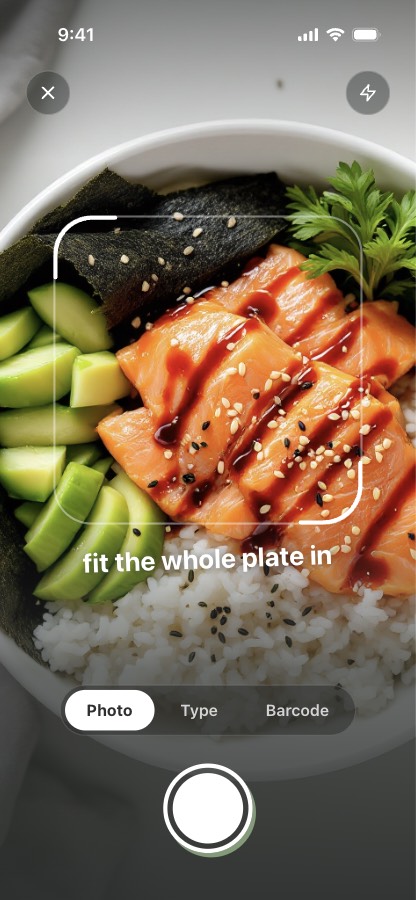
what about your plate?
Snap your curry in Glowcast
See how it rates for your skin. 7-day trial on iPhone.


What do the surveys show about spicy food and acne?
They point in different directions, and none tested chili on anyone's skin. Surveys in China link spicy food to acne, though in one it came 13th of 15 risk factors, behind stress and a high-fat diet. Studies in Iran and Egypt found no link to how bad acne was.
the nerdy bit
We found seven studies that asked about spicy food and acne, and none gave anyone chili and then examined their skin. They point in different directions. In north-east China, a survey of 5,696 undergraduates did identify spicy food as an acne risk factor. However, it came 13th of the 15 factors named, behind family history, mental stress and a high-fat diet (Wei et al., 2010).
An odds ratio is a measure of how strongly two things go together: 1.0 means no association, and higher numbers mean a stronger one. A 2020 systematic review listed Wei's spicy-food odds ratio as 1.146, with no confidence interval (Heng and Chew, 2020). That's weak. A 2026 survey of 819 Chinese college students found a stronger one: 1.739 (Chen et al., 2026).
| Study | Who took part | What it found for spicy food |
|---|---|---|
| Wei et al., 2010 | 5,696 undergraduates, China | A risk factor, 13th of 15 named. |
| Chen et al., 2026 | 819 college students, China | 29.7% of those with acne preferred spicy food, against 20.0% without. |
| Zhu et al., 2024 | 13,085 people with acne, China | Over 80% named it a trigger; no comparison group. |
| Cheng et al., 2022 | 508 people with acne, China | Reported by 30.3% whose acne worsened, against 14.3% whose didn't. |
| Ghodsi et al., 2009 | 1,002 school pupils, Iran | Not associated with acne severity. |
| El Darouti et al., 2016 | 200 patients and 200 controls, Egypt | Not associated with severity or duration; salt intake differed. |
| Abo El-Fetoh et al., 2016 | 400 male students, Saudi Arabia | Blamed by 23.3% of those with acne. |
Why can't these surveys settle it?
Because they show links, not causes. You may remember the meal that burned, a spicy dish might also be fried or salty, and a one-time snapshot can't show what came first. Still, one Chinese link held up after allowing for stress and sleep, so if chili seems to set you off, take it seriously.
the nerdy bit
Every study above is observational, so none can demonstrate that chili causes a single pimple. The 2020 review found that only "relatively few studies" linked spicy food to acne risk (Heng and Chew, 2020). Even Chen's odds ratio of 1.739 came from one questionnaire, in which students reported diet and skin at the same time. Three problems keep this evidence in the "maybe" category.
People remember the meal that burned
If you already believe chili causes breakouts, you may notice the blemish after a curry and forget the one after a salad. Zhu's survey, for example, asked 13,085 people with acne to identify their triggers, with no clear-skinned group for comparison (Zhu et al., 2024).
A spicy dish is more than chili
"Spicy food" in a survey means a whole dish, not capsaicin alone. It might be fried, salty or served with a sugary drink. In Wei's survey, a high-fat diet and fried food both ranked above spicy food. In Chen's, sugary drinks had their own odds ratio of 1.561, which fits our guide to sugar and acne. So which ingredient on the plate matters?
A snapshot can't show what came first
A cross-sectional study is a one-time snapshot of a group, more like a photograph than a video. It can't show whether the spicy food came before the acne. Stress or poor sleep could influence both diet and skin, and Chen's survey associated both of those with acne too. That's why we grade the human evidence as Limited.
The strongest case against our reading is that the Chinese results are consistent. Chen's association held after adjusting for stress, sleep, screen time and other habits, at an odds ratio of 1.739 (Chen et al., 2026). Spicy food may matter most for heavy consumers, which other surveys could miss.
Individuals also differ. If you notice blemishes after chili, take the pattern seriously, and ask whether it's the chili or what accompanies it. For foods with stronger evidence, see the best foods for clear skin and our anti-inflammatory diet guide.
What does capsaicin actually do to your skin?
It makes chili burn by switching on heat-sensing nerves, and it can flush your face. We found no study showing it causes a pimple. If anything, in lab cells capsaicin cut oil production, the opposite of "chili makes skin oily", though a dish of cells isn't you eating dinner.
the nerdy bit
Capsaicin is the main compound that makes chili peppers hot. It activates a receptor on sensory nerves that also responds to painful heat, which is why chili burns (Caterina et al., 1997). TRPV1 is that receptor's name. We found no study showing that activating it by eating chili causes a pimple.
Flushing is a reddening of the skin when small blood vessels widen, and chili can trigger it. A 1995 study monitored blood flow and sweating on the face while two groups of patients (21 and 13 people) ate chillies or tasted Tabasco sauce (Drummond, 1995). A facial nerve reflex helped produce the forehead flush.
What about oil? Sebum is the oil your skin's glands make, and excess sebum can lead to acne, according to the American Academy of Dermatology (AAD). In contrast, in laboratory cultures of human oil-gland cells, capsaicin reduced fat production (Tóth et al., 2009). A dish of cells isn't a person eating dinner, but it's the opposite of "chili makes skin oily".
Insulin points the same way. The AAD says foods that raise blood sugar quickly, such as white bread and fries, may worsen acne. In a trial of 36 adults, insulin rose least after a chili meal on a 4-week chili diet, and most after a bland meal on a bland diet (Ahuja et al., 2006). Nobody measured skin, so it's only a hint.
How can you tell acne from flushing?
If your face goes red and hot while you eat something spicy, that's flushing, a normal reaction, not acne. Facial redness, easy flushing and tiny spider-like blood vessels are signs of rosacea, a separate skin condition where spicy food is a commonly reported trigger. Even there, the evidence is mixed.
the nerdy bit
If your face goes red and hot during a spicy meal, that's flushing, not acne. Where spicy food does come up as a trigger is rosacea, a separate skin condition. A 2021 review of diet research listed spicy food among the most frequently reported rosacea triggers (Searle et al., 2021). Here's how the two differ, and why the rosacea evidence is mixed:
- A gustatory flush comes on while you eat, sometimes with a sweaty forehead, and it's a normal response to taste (Drummond, 1995).
- Facial redness, flushing easily and numerous small, spider-like blood vessels are listed rosacea symptoms (MedlinePlus).
- A Chinese study of 1,347 people with rosacea and 1,290 controls found spicy food "appeared to be independent of any subset of rosacea" (Yuan et al., 2019).
- MedlinePlus still suggests that people with rosacea limit spicy foods, and notes that triggers vary from person to person.
Breaking out every month? Is it your cycle or your curry?
Check your cycle first: it's a better-documented suspect than chili. In one study, 63% of women had a 25% rise in inflamed spots before their period. So a spicy takeaway the week before can look guilty on timing alone.
the nerdy bit
If your breakouts follow a monthly rhythm, your cycle is a better-documented suspect than chili. When one study counted blemishes across 2 full menstrual cycles, 63% of the women had a 25% rise in inflammatory lesions before their period (Lucky, 2004).
Another study interviewed 400 women and found that 177 of them, or 44%, had premenstrual flares (Stoll et al., 2001). In the Iranian survey, the premenstrual phase was a risk factor for moderate to severe acne, while spicy food wasn't (Ghodsi et al., 2009). So a spicy takeaway the week before your period can look guilty on timing alone. Our hormonal acne diet guide covers the cycle side.
Cut spicy food and nothing changed? How do you run a fair test?
A few weeks is too soon to judge: the diet trials that improved acne ran 10 to 12 weeks. For a fair test, change one thing at a time, log the whole meal and your cycle, and note flushing separately from spots. And if you want to test one change, the better-studied one is fewer fast carbs, not less heat.
the nerdy bit
If a few weeks without chili changed nothing, you haven't failed. We found no trial that tested eliminating spicy food, and the American Academy of Dermatology's 2024 acne guidelines found too little evidence for any diet recommendation (AAD, 2024). The diet trials that did improve acne ran 10 to 12 weeks (Kwon et al., 2012; Smith et al., 2007). A fairer test:
- Change one thing at a time. If you drop chili, fried food and sugary drinks together, you won't know which change mattered.
- Record the whole meal, not just the heat: what was fried, salty or sweet, and what you drank with it.
- Note flushing and blemishes separately, since a red, warm face during the meal isn't a breakout.
- Mark your cycle, so a premenstrual flare doesn't get blamed on dinner.
- Give it time. The AAD's patient page suggests noticing what happens when you skip a suspect food "for a day, a week, or a month" (AAD), but the trials above needed 10 to 12 weeks.
If you want to test one diet change, the better-studied one targets blood sugar, not heat. In the 12-week trial of 43 young men, lesion counts fell by 23.5 on a low-glycemic-load diet, against 12.0 on the usual diet (Smith et al., 2007). Our low-glycemic diet explainer shows how, and foods linked to breakouts covers the usual suspects.
Quick questions
Does spicy food make your skin oily?
There's no clear evidence. A survey of 1,787 Chinese women linked oily skin with eating spicy or sweet food (Nouveau-Richard et al., 2007). But in lab-grown human oil-gland cells, capsaicin cut fat production (Tóth et al., 2009). Neither study tested what eating chili does to your face.
Why does my face go red when I eat spicy food?
That's gustatory flushing, a normal reflex. Capsaicin switches on the nerve receptor that senses painful heat (Caterina et al., 1997). In a 1995 study, chillies and Tabasco sauce set off facial flushing and sweating in two groups of patients (21 and 13 people) (Drummond, 1995). A flush isn't a breakout.
Can spicy food make rosacea worse?
Many people with rosacea report it: a 2021 review listed spicy food among the most frequently reported rosacea triggers (Searle et al., 2021). But a study of 1,347 patients and 1,290 controls found spicy food appeared independent of rosacea (Yuan et al., 2019). Triggers vary from person to person (MedlinePlus).
How long should I stop eating spicy food to see if it helps?
We found no trial that tested this, so there's no proven timeline. Diet trials that changed acne ran 10 to 12 weeks (Kwon et al., 2012). If your skin follows your cycle, track at least two cycles: the study that counted premenstrual flares followed women over 2 full cycles (Lucky, 2004).
Is salty food linked to acne?
One study suggests it might be. In Egypt, 200 people with acne ate a median of 3,367.54 mg of sodium chloride a day, against 2,271.8 mg in 200 people without acne (El Darouti et al., 2016). It's one case-control study based on a single day of food recall, so treat it as a lead.
Sources
- El Darouti MA et al. Salty and spicy food; are they involved in the pathogenesis of acne vulgaris? A case controlled study. J Cosmet Dermatol. 2016. pubmed.ncbi.nlm.nih.gov
- Drummond PD. Mechanisms of physiological gustatory sweating and flushing in the face. J Auton Nerv Syst. 1995. pubmed.ncbi.nlm.nih.gov
- Stoll S et al. The effect of the menstrual cycle on acne. J Am Acad Dermatol. 2001. pubmed.ncbi.nlm.nih.gov
- Zhu T et al. Gender-related characterization of acne in Chinese: a multiple-center cross-sectional survey on 13085 cases. Clin Cosmet Investig Dermatol. 2024. pmc.ncbi.nlm.nih.gov
- Abo El-Fetoh NM et al. Epidemiology of acne vulgaris in adolescent male students in Arar, Kingdom of Saudi Arabia. J Egypt Public Health Assoc. 2016. pubmed.ncbi.nlm.nih.gov
- Cheng YF et al. Factors aggravating acne vulgaris during the COVID-19 pandemic in China: a web-based cross-sectional survey. Eur Rev Med Pharmacol Sci. 2022. pubmed.ncbi.nlm.nih.gov
- Wei B et al. The epidemiology of adolescent acne in North East China. J Eur Acad Dermatol Venereol. 2010. pubmed.ncbi.nlm.nih.gov
- Heng AHS, Chew FT. Systematic review of the epidemiology of acne vulgaris. Sci Rep. 2020. pmc.ncbi.nlm.nih.gov
- Chen MH et al. Mediating effect of sleep quality on the association between psychological stress and acne vulgaris in Chinese college students: a cross-sectional study. Healthcare (Basel). 2026. pmc.ncbi.nlm.nih.gov
- Ghodsi SZ, Orawa H, Zouboulis CC. Prevalence, severity, and severity risk factors of acne in high school pupils: a community-based study. J Invest Dermatol. 2009. pubmed.ncbi.nlm.nih.gov
- Caterina MJ et al. The capsaicin receptor: a heat-activated ion channel in the pain pathway. Nature. 1997. pubmed.ncbi.nlm.nih.gov
- American Academy of Dermatology. Can the right diet get rid of acne? Patient information page. aad.org
- Tóth BI et al. Transient receptor potential vanilloid-1 signaling as a regulator of human sebocyte biology. J Invest Dermatol. 2009. pubmed.ncbi.nlm.nih.gov
- Ahuja KD et al. Effects of chili consumption on postprandial glucose, insulin, and energy metabolism. Am J Clin Nutr. 2006. pubmed.ncbi.nlm.nih.gov
- Searle T et al. Rosacea and diet: what is new in 2021? J Clin Aesthet Dermatol. 2021. pubmed.ncbi.nlm.nih.gov
- Yuan X et al. Relationship between rosacea and dietary factors: a multicenter retrospective case-control survey. J Dermatol. 2019. pubmed.ncbi.nlm.nih.gov
- MedlinePlus, US National Library of Medicine. Rosacea. Medical encyclopedia. medlineplus.gov
- Lucky AW. Quantitative documentation of a premenstrual flare of facial acne in adult women. Arch Dermatol. 2004. pubmed.ncbi.nlm.nih.gov
- Kwon HH et al. Clinical and histological effect of a low glycaemic load diet in treatment of acne vulgaris in Korean patients: a randomized, controlled trial. Acta Derm Venereol. 2012. pubmed.ncbi.nlm.nih.gov
- Smith RN et al. A low-glycemic-load diet improves symptoms in acne vulgaris patients: a randomized controlled trial. Am J Clin Nutr. 2007. pubmed.ncbi.nlm.nih.gov
- American Academy of Dermatology. American Academy of Dermatology issues updated guidelines for the management of acne. News release. 2024. aad.org
- Nouveau-Richard S et al. Oily skin: specific features in Chinese women. Skin Res Technol. 2007. pubmed.ncbi.nlm.nih.gov
Written and fact-checked by Glowcast against the sources above. Food inspo, not medical advice. For skin that worries you, see a dermatologist. How we check the science