at a glance
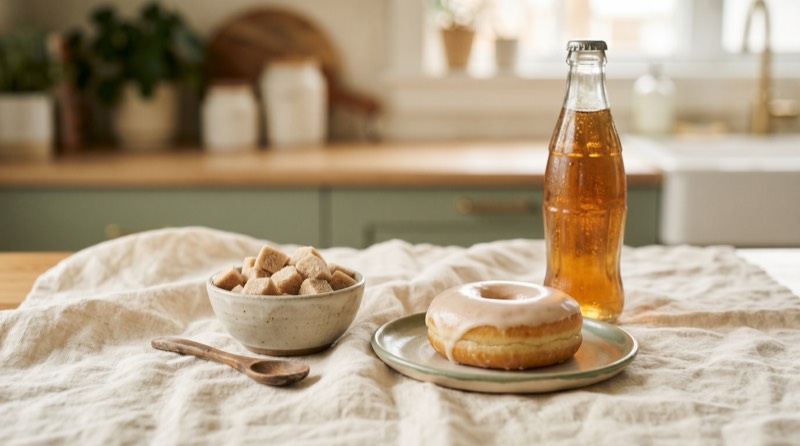
Drinks and sweets, mainly.
Swap soda for water or unsweetened tea. People who drank soda every day had worse breakouts. Give a swap about 12 weeks.
What can you have instead?
A daily soda→Water or unsweetened tea
If soda is daily, start there. People who drank it every day had worse breakouts.
see the researchSweets and pastries→Fruit, or skip dessert
People who ate fatty, sugary snacks had more current acne. Treat dessert as a sometimes food.
see the researchWhite bread or white rice→Oats, beans or grainy bread
White bread and white rice spike blood sugar fast. White-rice eaters had worse acne.
see the research
What else helps if sugar is the issue?
Unsweetened tea
A cup instead of soda
People who drank tea without sugar or milk had milder breakouts. It is the easiest drink swap here.
the science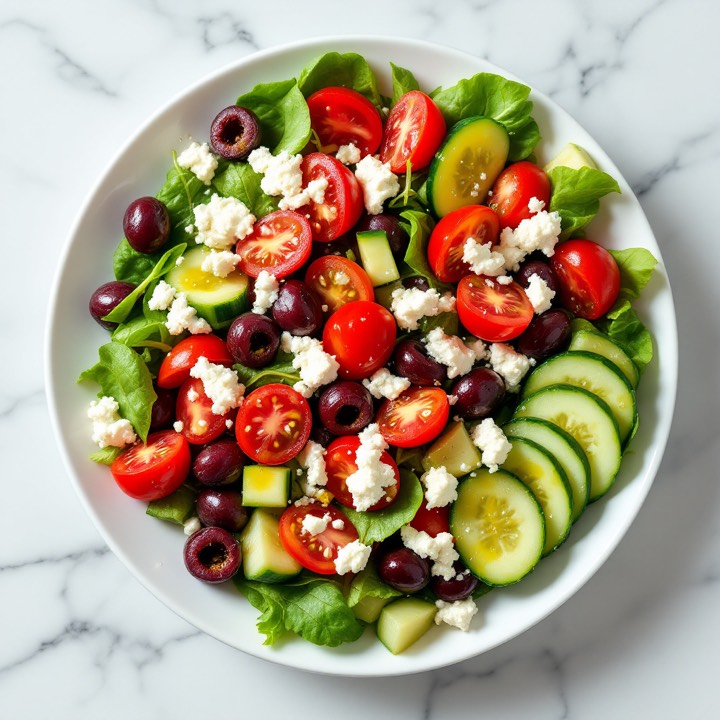
Vegetables
At most meals
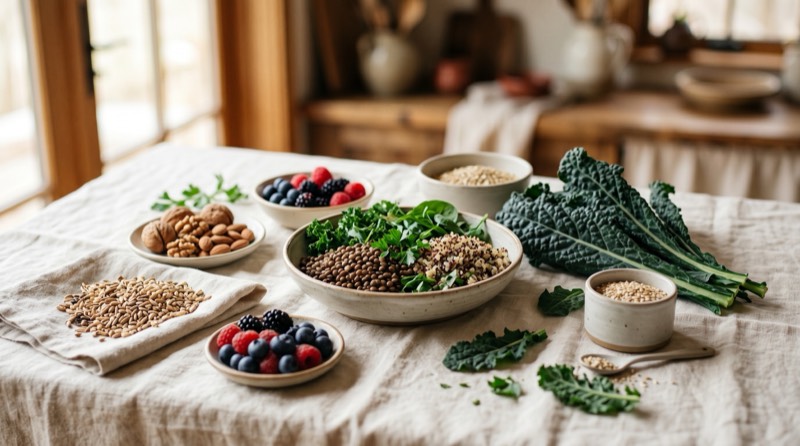
People who ate more vegetables had milder breakouts. Cover about half the plate.
the science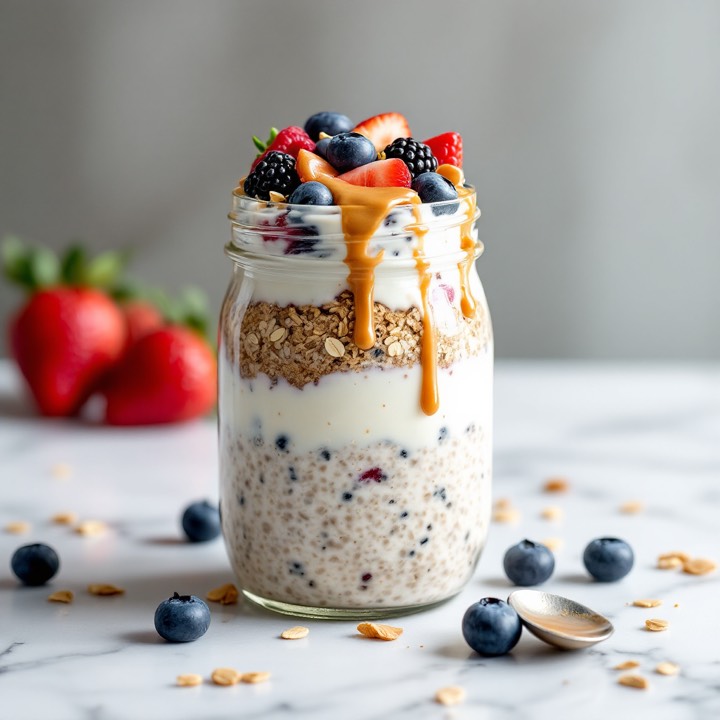
Oats and beans
Most of your carbs
Slow carbs raise blood sugar gently. A slow-carb plate cut spots more than a fast-carb one.
the science
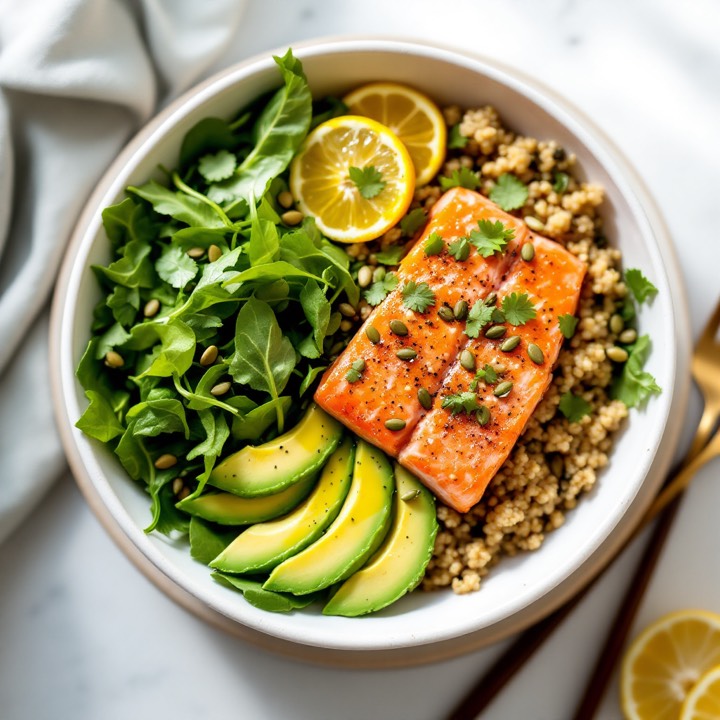
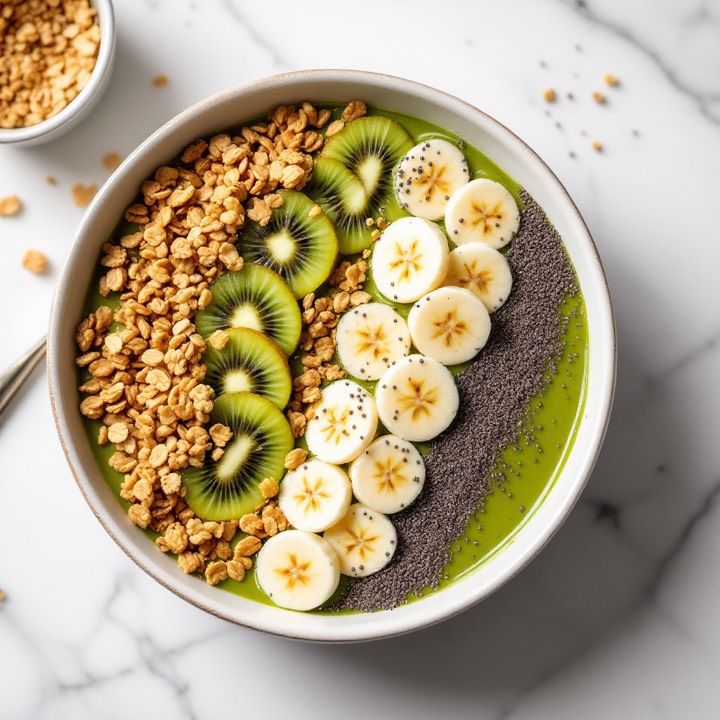
Make it tonight
recipes from the app
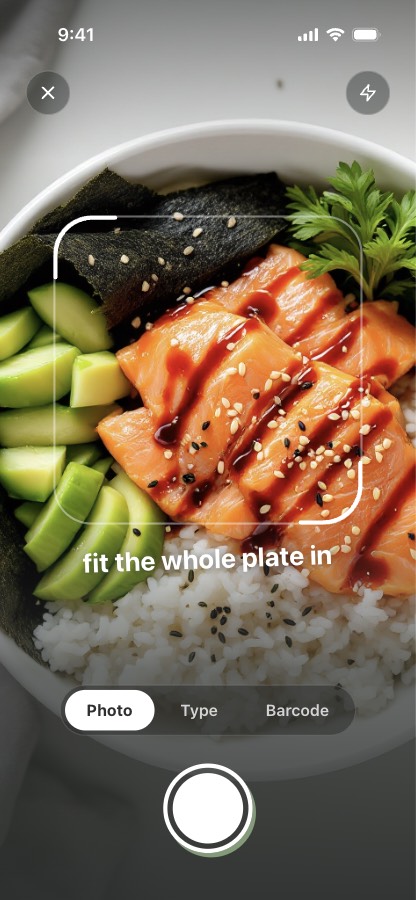
what about your plate?
Snap your soda in Glowcast
See how it rates for your skin. 7-day trial on iPhone.


What's overhyped?
Fruit juice
The WHO counts fruit juice with added sugar. The acne surveys measured sugary drinks, not a glass of juice on its own.
see the researchHoney
Honey still counts as added sugar, with syrups and fruit juices. Nobody has tested honey on acne.
see the researchGlycation as acne's cause
Sugar can stiffen collagen. That is an ageing story. Nobody has shown that is why spots appear.
see the research
Does eating sugar cause acne?
Sugar itself has not been tested as a single food. Sugary drinks and a fast-carb plate have. In 24,452 French adults, sugary drinks lined up with more current acne. In 8,226 students, daily soda lined up with worse acne past 100 g of sugar from drinks.
How long after cutting sugar does skin change?
Nobody has timed cutting sugar alone. Give a swap about 10 to 12 weeks. Skin that is going to improve often starts to in 4 to 6 weeks, and clearing can take two to three months.
Is fruit sugar bad for acne?
Whole fruit is a slow carb, and apple sits low on the blood-sugar tables. Fruit juice is a different drink: the WHO counts juice sugar with added sugar.
Does honey cause acne?
Honey still counts as added sugar, with syrups and fruit juices. Nobody has tested honey on acne. If you use it, treat it like other added sugar, not as a pass.
Will cutting sugar clear acne?
A slow-carb plate is what the trials tested, not a sugar ban. In 43 men, spots dropped more on that plate than a fast-carb one over 12 weeks.
Does glycation from sugar cause acne?
Glycation is how sugar stiffens collagen. That is an ageing pathway, sped up by high blood sugar and sun. Nobody has shown that is why spots appear.
The research, in full
at a glance
| Food | Result | Human evidence | Mechanism |
|---|---|---|---|
| Sugary drinks | linked to worse skin | Limited | Supported |
| Sweets | linked to worse skin | Limited | Plausible |
| High-GI carbs | linked to worse skin | Limited | Supported |
| Low-GI carbs | helped | Limited | Supported |
| Unsweetened tea | helped | Limited | Speculative |
| Vegetables | helped | Limited | Speculative |
| Fruit juice | not tested yet | Too little | Plausible |
| Honey | not tested yet | Too little | Speculative |
| Glycation | not tested yet | Too little | Speculative |
Sugary drinks
Sugary drinks are sodas, sweetened teas and fruit-flavoured drinks with added sugar.
In a study of 24,452 French adults, sugary beverages went with 1.18 times the odds of current acne after adjustment. Fatty and sugary products went with 1.54 times the odds (Penso et al., 2020).
Among 8,226 Chinese students, daily soft drinks went with moderate-to-severe acne. Sugar from drinks at 100 g a day or more went with 3.12 times the odds (Huang et al., 2019).
Sweetened tea drinks seven or more times a week went with 2.52 times the odds. Fruit-flavoured drinks went with 1.90 (Huang et al., 2019).
Later surveys found the same pattern. Sugar-sweetened drinks went with 1.56 times the odds in 1,299 Shanghai students (Cai et al., 2026). Sugary drinks went with an odds ratio of 1.561 in 819 Wuhan students (Chen et al., 2026).
We found no trial that took sugary drinks out and measured acne. The nearest trials changed a whole high-GI plate. Cans of energy drink are a sugar question too; see energy drinks and acne.
Sweets
In the same French study of 24,452 adults, fatty and sugary products went with 1.54 times the odds of current acne (Penso et al., 2020).
In 248 young adults in New York, those with moderate-to-severe acne reported more added sugar and a higher dietary GI than those with none or mild acne (Burris et al., 2014).
We still grade this Limited: two surveys, no trial of cutting sweets alone. The sweets row is not the same as a glass of milk; that story is on dairy and acne.
Low-GI carbs
Glycemic index (GI) is a measure of how quickly a food raises your blood sugar. It runs from 0 to 100, with pure glucose at the top. Foods at 55 or below count as low-GI (MedlinePlus).
A 2022 review found high-GI diets were linked to more acne, "an observation supported by randomized controlled trials" (Meixiong et al., 2022). A 2026 review lists high glycaemic load diets among the foods observational studies have linked to acne (Dessinioti and Dreno, 2026).
In a 12-week trial of 43 young men, spots fell by 23.5 on a low-GI diet against 12.0 on a control diet. The diet group also lost 2.9 kg (Smith et al., 2007). In a 2012 trial of 32 people, a low-GI diet for 10 weeks led to fewer spots and smaller oil glands (Kwon et al., 2012).
A 2024 controlled trial of 50 women aged 15 to 35 used dietary counseling plus low-GL foods for 12 weeks. Average acne severity in the treatment group fell from 2.68 to 1.56 (Raza et al., 2024). In a trial of 66 adults, IGF-1 decreased after 2 weeks on a low-GI diet (Burris et al., 2018).
Not every trial found a benefit. In 58 teenage boys, facial acne improved on both a low-GI and a high-GI diet over 8 weeks (by 26% and 16%), with no clear difference between them (Reynolds et al., 2010).
| Instead of | GI | Try | GI |
|---|---|---|---|
| White bread | 75 | Apple, raw | 36 |
| White rice | 73 | Kidney beans | 24 |
| Boiled potato | 78 | Barley | 28 |
Among 2,467 Thai teens and adults, white rice went with more severe acne, with an adjusted odds ratio of 1.80 (Roengritthidet et al., 2021). The carb swaps those trials used sit on our low-glycemic guide and the bread page.
Unsweetened tea and vegetables
In a survey of 2,467 Thai teens and adults, tea without sugar or milk went with milder acne, with an adjusted odds ratio of 0.61. Eating vegetables went with milder acne too, with an adjusted odds ratio of 0.74 (Roengritthidet et al., 2021).
The WHO suggests at least 400 g of fruit and vegetables a day (WHO, 2026). We found no trial that tested unsweetened tea, or vegetables alone, for acne. The acne plate is on foods for clear skin.
Fruit juice and honey
Free sugars include sugars added to foods and drinks, and sugars naturally present in honey, syrups, fruit juices and fruit juice concentrates. The WHO advises keeping free sugars under 10% of daily energy, about 12 level teaspoons (WHO, 2026).
While fruit juice can be consumed, most varieties including those without added sugars contain significant amounts of free sugars (WHO, 2026). Huang's survey linked fruit-flavoured drinks, not named as 100% juice, with moderate-to-severe acne (adjusted odds ratio 1.90) (Huang et al., 2019).
We found no acne trial of honey, and no acne trial of 100% fruit juice. Apple, as whole fruit, sits at 36 on the GI tables (Atkinson et al., 2008).
Glycation
Glucose and fructose link the amino acids present in the collagen and elastin that support the dermis, producing advanced glycation end products or AGEs. This process is accelerated in all body tissues when sugar is elevated and is further stimulated by ultraviolet light in the skin (Danby, 2010).
We found no acne trial that measured AGEs in skin as the reason spots appear. Glycation is an ageing pathway, not a proven acne pathway. When the American Academy of Dermatology updated its acne guidelines in 2024, available evidence was insufficient to develop recommendations for dietary changes (AAD, 2024).
How long to give a swap
We found no trial of cutting sugar that reported a timeline of its own. The closest guides are acne diet trials: 12 weeks in 43 young men (Smith et al., 2007) and 10 weeks in 32 people (Kwon et al., 2012).
The American Academy of Dermatology says a treatment that works should show some improvement in 4 to 6 weeks, and clearing can take two to three months or longer (AAD, 2023). Our "about 12 weeks" comes from those timelines. Track meals against your own skin with the acne food tracker.
Quick questions
Does sugar cause acne?
Sugary drinks lined up with more acne in large surveys. In 24,452 French adults, sugary drinks lined up with more current acne (Penso et al., 2020). Swap soda for water or unsweetened tea, and give it about 12 weeks.
How quickly does sugar affect acne?
Nobody has timed one sugary meal against a pimple. Give a swap about 10 to 12 weeks. Skin that is going to improve often starts to in 4 to 6 weeks, and clearing can take two to three months. Track meals against your own skin.
Which sugars are worst for acne?
Liquid sugar, then sweets, then white bread and white rice. Fruit juice still counts as added sugar. Whole fruit, like an apple, is a slower carb. Start with the drink in your hand, not a fruit bowl ban. Give a drink swap about 12 weeks.
Will cutting sugar clear my acne?
A slow-carb plate is what the trials tested, not a sugar ban. In 43 men, spots dropped more on that plate than a fast-carb one over 12 weeks (Smith et al., 2007). Keep the rest of your routine.
Sources
- Huang X et al. Daily intake of soft drinks and moderate-to-severe acne vulgaris in Chinese adolescents. J Pediatr. 2019. pubmed.ncbi.nlm.nih.gov
- Penso L et al. Association between adult acne and dietary behaviors: findings from the NutriNet-Santé prospective cohort study. JAMA Dermatol. 2020. pubmed.ncbi.nlm.nih.gov
- Meixiong J et al. Diet and acne: a systematic review. JAAD Int. 2022. pmc.ncbi.nlm.nih.gov
- Raza Q et al. Effect of a low-glycemic-load diet and dietary counseling on acne vulgaris severity among female patients aged 15 to 35 years. Cureus. 2024. pubmed.ncbi.nlm.nih.gov
- Smith RN et al. A low-glycemic-load diet improves symptoms in acne vulgaris patients: a randomized controlled trial. Am J Clin Nutr. 2007. pubmed.ncbi.nlm.nih.gov
- Kwon HH et al. Clinical and histological effect of a low glycaemic load diet in treatment of acne vulgaris in Korean patients: a randomized, controlled trial. Acta Derm Venereol. 2012. pubmed.ncbi.nlm.nih.gov
- Atkinson FS et al. International tables of glycemic index and glycemic load values: 2008. Diabetes Care. 2008. pmc.ncbi.nlm.nih.gov
- Roengritthidet K et al. Association between diet and acne severity: a cross-sectional study in Thai adolescents and adults. Acta Derm Venereol. 2021. pubmed.ncbi.nlm.nih.gov
- World Health Organization. Healthy diet fact sheet. 26 Jan 2026. who.int
- Cai R et al. The cumulative effect of multiple high-sugar and high-fat dietary patterns on acne vulgaris in school aged children: a cross-sectional study in Shanghai. Front Public Health. 2026. pmc.ncbi.nlm.nih.gov
- Chen MH et al. Mediating effect of sleep quality on the association between psychological stress and acne vulgaris in Chinese college students: a cross-sectional study. Healthcare (Basel). 2026. pubmed.ncbi.nlm.nih.gov
- Burris J, Rietkerk W, Woolf K. Relationships of self-reported dietary factors and perceived acne severity in a cohort of New York young adults. J Acad Nutr Diet. 2014. pubmed.ncbi.nlm.nih.gov
- Burris J et al. A low glycemic index and glycemic load diet decreases insulin-like growth factor-1 among adults with moderate and severe acne. J Acad Nutr Diet. 2018. pubmed.ncbi.nlm.nih.gov
- Reynolds RC et al. Effect of the glycemic index of carbohydrates on acne vulgaris. Nutrients. 2010. pubmed.ncbi.nlm.nih.gov
- Dessinioti C, Dreno B. Diet and acne: facts and controversies. J Eur Acad Dermatol Venereol. 2026. pubmed.ncbi.nlm.nih.gov
- Danby FW. Nutrition and aging skin: sugar and glycation. Clin Dermatol. 2010. pubmed.ncbi.nlm.nih.gov
- American Academy of Dermatology. American Academy of Dermatology issues updated guidelines for the management of acne. News release. 2024. aad.org
- American Academy of Dermatology. 9 things to try when acne won't clear. 2023. aad.org
- MedlinePlus. Glycemic index and diabetes. US National Library of Medicine. medlineplus.gov
Written and fact-checked by Glowcast against the sources above. Spot an error? Tell us via our About page. Food inspo, not medical advice. For skin that worries you, see a dermatologist. How we check the science