at a glance
Eat omega-3s and vitamin C.
Eat flax, oily fish and vitamin C foods. In trials, flax-style oils helped skin hold water over 8 to 12 weeks. Add ground flaxseed daily, fish once or twice a week, and a kiwi. Keep your moisturiser.
What should you eat for hydrated skin?
Ground flaxseed or flax oil
1 tablespoon of ground flaxseed a day
The plant fat in flax helps your skin hold water. In trials, flax-style oils did that over 8 to 12 weeks.
the science
Kiwi, strawberries and peppers
A kiwi or a cup of strawberries daily
Vitamin C helps skin seal in water. People who got more of it had less dry skin.
the science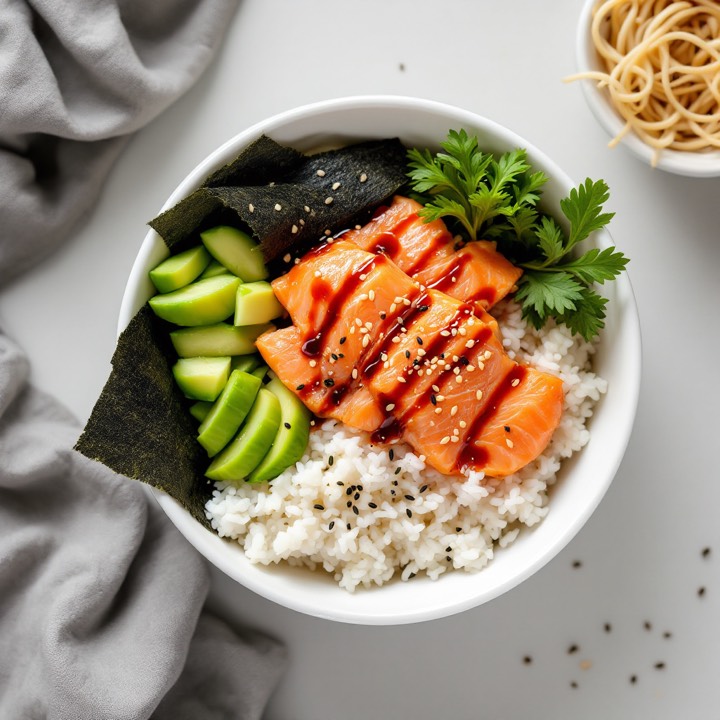
Oily fish
1 to 2 portions a week
Salmon and sardines bring the same kind of fats that helped skin hold water in trials. One or two portions a week.
the science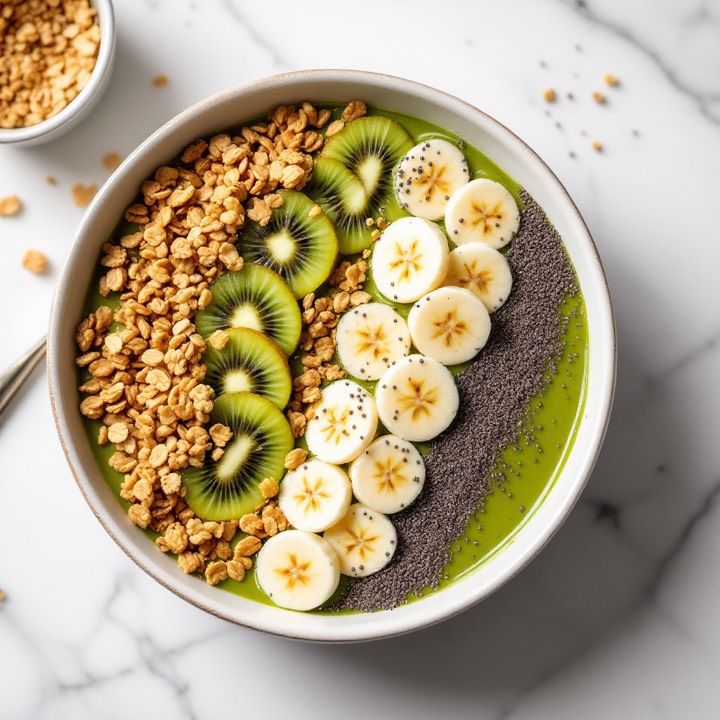
Green tea or matcha
2 to 3 cups a day
Plant compounds in green tea helped skin hold water in a trial of 60 women. Brew it strong and skip the sugar.
the science
Make it tonight
recipes from the app
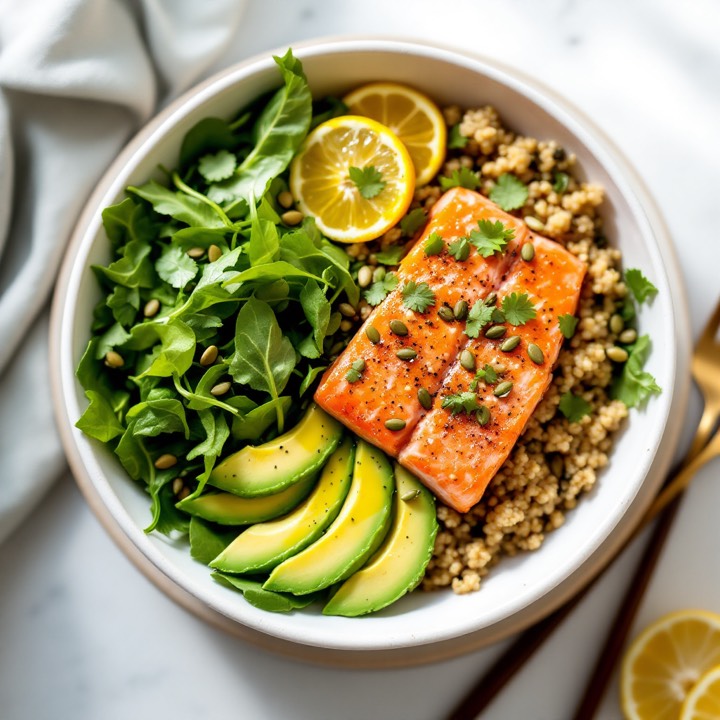

what about your plate?
Snap your plate in Glowcast
See how it rates for your skin. 7-day trial on iPhone.


What's overhyped?
Collagen powder
Pooled trials look good until you split them by who paid. The unpaid ones found no effect on hydration.
see the researchAvocado
A daily avocado for 8 weeks did not change hydration against a usual diet. Skin did get a little firmer.
see the researchAlmonds
A daily almond snack for 12 to 24 weeks did not change how much water skin held.
see the research
Does drinking water hydrate your skin?
Only a little, and mostly if you drink very little now. Women who added 2 litres a day for 30 days saw hydration rise, most in low drinkers. In a small 2024 trial, 2 extra litres a day for 4 weeks changed less than moisturiser did. Drink to thirst.
How long does it take food to hydrate your skin?
Most trials took 8 to 12 weeks to show a change. Water loss fell by week 6 in one flax oil trial, and the krill oil results came at 12 weeks. Expect small shifts, not a makeover, and give any change about three months before you judge it.
Is matcha better for your skin than coffee?
Pick the one you enjoy. A strong green tea drink improved skin's water balance in one trial, and in a lab test of 15 green teas, bagged tea scored higher on antioxidants than matcha. Coffee doesn't seem to dry skin: in a study of about 300 people, recent coffee drinkers had higher readings.
What foods help repair your skin barrier?
Omega-3 fats have the most data. Your barrier is about 50% ceramides, 25% cholesterol and 15% fatty acids, and some of those fats come from outside your skin. ALA-rich oils lowered water loss in two of four small trials, and krill oil did in two more. In lab studies, vitamin C helps skin cells make barrier fats too.
Do cucumber and watermelon hydrate your skin?
They add water to your day, and that counts. Watermelon, strawberries, celery and spinach are 90 to 99% water, and about 22% of Americans' water comes from food. Strawberries bring vitamin C as well, so they earn a spot either way.
The research, in full
at a glance
| Food | Result | Human evidence | Mechanism |
|---|---|---|---|
| Ground flaxseed or flax oil | helped | Limited | Plausible |
| Kiwi, strawberries and peppers | helped | Limited | Plausible |
| Oily fish | helped | Too little | Plausible |
| Green tea or matcha | helped | Too little | Plausible |
| Collagen powder | mixed | Limited | Plausible |
| Avocado | no change | Limited | Speculative |
| Almonds | no change | Limited | Speculative |
| Extra water | mixed | Limited | Speculative |
| Coffee | mixed | Limited | Speculative |
Ground flaxseed or flax oil
Water loss through the skin (TEWL) is the water your skin lets escape into the air; the lower it is, the better your skin barrier is holding on to moisture.
Four small trials have tested oils rich in ALA, the plant omega-3. The biggest gave 120 Japanese women aged 45 to 65 oil blends with 0.97 to 2.13 g of ALA a day, or a placebo, for 12 weeks (Ando et al., 2025). Water loss through the skin, the main outcome, didn't change. Hydration rose in a secondary analysis, though the top dose only trended above placebo. Three of the four authors work for an edible-oil company.
A 2026 trial gave 60 adults aged 20 to 59 with mildly dry, itchy or red skin 2.5 g a day of a manufactured linseed (flax) oil, carrying 0.9 g of ALA, or a sunflower oil placebo, for 8 weeks. Cheek hydration rose compared with placebo, while water loss didn't differ (Fukagawa et al., 2026). Four in five of the volunteers were men.
Two older trials gave flax oil capsules. In one, water loss fell by about 10% within 6 weeks on 2.2 g of oil fats a day, though hydration rose on placebo too (De Spirt et al., 2009). In the other, 13 women per group took flax oil for 12 weeks, and their water loss, roughness and scaling fell while hydration rose (Neukam et al., 2011).
Why fats could matter: your skin barrier is about 50% ceramides, 25% cholesterol and 15% fatty acids. Skin makes some of these fats itself and gets the rest from outside the skin (Feingold and Elias, 2014).
How to eat it: we found no trial of ground flaxseed itself. Flaxseed is the richest plant source of ALA, which makes up about 22% of the whole seed. A tablespoon of ground flaxseed weighs 7 g, and 1 to 2 tablespoons a day is the usual suggestion (Kunutsor et al., 2025). By our arithmetic, 1 tablespoon carries about 1.5 g of ALA, inside the range the trials used. Buy it ground or grind it yourself, since whole seeds need grinding for your body to absorb what's inside. Not into flax? Chia seeds and walnuts are rich in omega-3s too, but we found no skin trial of either.
Kiwi, strawberries and peppers
The newest study, from 2026, looked at 74 healthy Korean adults. Vitamin C and fibre intake went with better skin hydration or skin pH, but only in people with one type of gut bacteria (Kim et al., 2026).
The biggest study is older. In 4,025 US women aged 40 to 74, those who ate more vitamin C had slightly lower odds of age-related dry skin (odds ratio 0.93) (Cosgrove et al., 2007). That's a link, not proof, and the first author worked at Unilever.
Why it might help: in lab studies, vitamin C helps skin cells make barrier fats, which may help skin protect itself from water loss (Pullar et al., 2017).
How much: women need 75 mg a day. Kiwi, strawberries and red peppers are among the richest sources, and raw fruit and vegetables are best (MedlinePlus). In one study, adding half a gold kiwi a day took people's vitamin C intake from about 30 mg to about 75 mg (Carr et al., 2013).
Oily fish
We found no trial that measured skin hydration after people ate fish. The closest evidence is krill oil, a capsule carrying EPA and DHA, which are long-chain omega-3s. A 2024 paper reported two small trials; in one, 50 adults took 2 g of krill oil a day or a placebo (Handeland et al., 2024). Results were checked at 6 and 12 weeks. In both trials, krill oil slightly cut water loss through the skin (in the 2 g group, from 14.25 to 13.02 g/m²/h) and raised hydration compared with placebo. The krill oil maker funded the trials, and two of the three authors work for it.
Oily fish such as salmon and sardines are particularly high in long-chain omega-3s. The NHS suggests at least 2 portions of fish a week, including 1 of oily fish, with a portion around 140 g. Women who haven't been through the menopause should have no more than 2 portions of oily fish a week (NHS). That's why we suggest 1 to 2 portions.
Green tea or matcha
The one trial we found used a drink made from green tea polyphenols, not brewed tea. In 60 women over 12 weeks, it improved skin's "water homeostasis", its water balance, along with elasticity, roughness, scaling and density, compared with a placebo drink (Heinrich et al., 2011). That drink held 1,402 mg of catechins a day. Three cups of brewed green tea supply about 405 mg (Khokhar and Magnusdottir, 2002), so by our arithmetic the drink matched about ten cups.
Our suggestion of 2 to 3 cups a day gives under a third of that dose, so treat it as a nice extra. We found no skin trial of matcha. In a 2023 lab test of 15 green teas, bagged and gunpowder teas scored higher than matcha on phenolics, a family of antioxidants, and on antioxidant capacity (Meyer et al., 2023).
Collagen powder
Collagen is a supplement, not a food, but it's everywhere in hydration talk. A 2025 analysis pooled 23 trials with 1,474 people (Myung and Park, 2025). Overall, collagen looked helpful. Split by funding, though, the trials not funded by companies found no effect on hydration, elasticity or wrinkles, while company-funded ones did. The high-quality trials found no effect either.
A 2026 review counted hydration gains in 10 of 15 trials, but rated most trials at high risk of bias (Bassila et al., 2026). Trials used 1 to 10 g a day (Sun et al., 2022). We found no trial of bone broth and skin hydration.
Avocado
In a 2022 trial, 39 women aged 27 to 73 ate one avocado a day or kept to their usual diet for 8 weeks. Hydration didn't change compared with the usual-diet group, though forehead skin got firmer in the avocado group (Henning et al., 2022). So enjoy it for its taste, not for hydration.
Almonds
Three trials have tested almonds, and none found a change in hydration or water loss. In the longest, women past menopause got 20% of their daily calories from almonds or a matched snack for 24 weeks (Rybak et al., 2021). In another, 39 women ate 1.5 oz of almonds or pretzels daily for 12 weeks (Li et al., 2021). A 16-week trial found no change in water loss (Foolad et al., 2019).
Water and coffee
The best water trial is small. In a 2024 study, 43 women in their 20s to 40s finished 4 weeks of 2 extra litres of water a day, moisturiser three times a day, both, or neither (Seol et al., 2024). Extra water didn't change hydration, and moisturiser did more.
In an older study with no comparison group, 49 young women added 2 litres a day for 30 days, and hydration rose, most in those drinking under 3,200 mL a day (Palma et al., 2015). A 2018 review called the evidence weak and said the reason water might help is unknown (Akdeniz et al., 2018).
A 2024 snapshot of about 300 people found no hydration difference between those drinking under 1 litre and over 3 litres a day (Ding et al., 2024). The same study found that people who'd had coffee in the previous 2 hours had higher hydration readings. It was one reading with a new kind of probe, so it only suggests coffee doesn't dry skin. Pooled trials of coffee polyphenol supplements didn't raise hydration (Sun et al., 2022).
Food counts toward your water: about 22% of Americans' water comes from food, and watermelon, strawberries, celery and spinach are 90 to 99% water (Popkin et al., 2010). We found no trial of water-rich foods and skin hydration. For comparison, creams raised hydration in all six labs of a 349-person study (Heinrich et al., 2003).
Quick questions
Can eating well replace a moisturiser?
No. In a 2024 trial, moisturiser did more for skin hydration than 2 extra litres of water a day (Seol et al., 2024). In a 349-person study, creams raised hydration in all six labs (Heinrich et al., 2003). Food is a slow, small helper next to that.
Do ceramide or hyaluronic acid supplements help?
Possibly a little. A 2022 pooled analysis of 66 trials found that ceramide supplements, often made from wheat or rice lipids, raised skin hydration and cut water loss against placebo (Sun et al., 2022). In 7 small trials, oral hyaluronic acid raised hydration too (Amin et al., 2025). Most of these trials were small, and they're supplements, not foods.
Are there foods that dry out your skin?
No food has been shown to dry skin out. Coffee often gets the blame, but in one study, people who'd had coffee in the previous 2 hours had higher hydration readings (Ding et al., 2024). Keep moisturising either way.
How do you hydrate your skin from the inside?
Eat flax and oily fish most weeks, get your vitamin C, drink to thirst, and keep moisturising. In the flax-oil trials, changes showed up after 8 to 12 weeks (Fukagawa et al., 2026; Ando et al., 2025), so give it time. Want the dewy look too? Our glass skin diet builds on this, and if your skin feels oily rather than dry, see foods for oily skin.
Sources
- Ando N, Nosaka N, Arai C, Kato K. The effects of α-linolenic acid intake on skin and blood vessel health and subjective fatigue in middle-aged Japanese females: a randomized, double-blind, placebo-controlled, parallel-group comparative trial. J Nutr. 2025. pubmed.ncbi.nlm.nih.gov
- Fukagawa S et al. Effects of diacylglycerol-enriched alpha-linolenic acid oil on skin properties in mild skin discomfort: a randomized, double-blind, placebo-controlled study. Sci Rep. 2026. pmc.ncbi.nlm.nih.gov
- De Spirt S et al. Intervention with flaxseed and borage oil supplements modulates skin condition in women. Br J Nutr. 2009. pubmed.ncbi.nlm.nih.gov
- Neukam K et al. Supplementation of flaxseed oil diminishes skin sensitivity and improves skin barrier function and condition. Skin Pharmacol Physiol. 2011. pubmed.ncbi.nlm.nih.gov
- Kunutsor SK, Jassal DS, Ravandi A, Lehoczki A. Dietary flaxseed: cardiometabolic benefits and its role in promoting healthy aging. GeroScience. 2025. pmc.ncbi.nlm.nih.gov
- Feingold KR, Elias PM. Role of lipids in the formation and maintenance of the cutaneous permeability barrier. Biochim Biophys Acta. 2014. pubmed.ncbi.nlm.nih.gov
- Kim D et al. Differences in skin health parameters and dietary associations based on gut enterotypes in healthy Korean adults. Food Res Int. 2026. pubmed.ncbi.nlm.nih.gov
- Cosgrove MC et al. Dietary nutrient intakes and skin-aging appearance among middle-aged American women. Am J Clin Nutr. 2007. pubmed.ncbi.nlm.nih.gov
- Pullar JM, Carr AC, Vissers MCM. The roles of vitamin C in skin health. Nutrients. 2017. pmc.ncbi.nlm.nih.gov
- MedlinePlus (US National Library of Medicine). Vitamin C. Reviewed 2025. medlineplus.gov
- Carr AC et al. A randomized steady-state bioavailability study of synthetic versus natural (kiwifruit-derived) vitamin C. Nutrients. 2013. pmc.ncbi.nlm.nih.gov
- Handeland K, Wakeman M, Burri L. Krill oil supplementation improves transepidermal water loss, hydration and elasticity of the skin in healthy adults: results from two randomized, double-blind, placebo-controlled, dose-finding pilot studies. J Cosmet Dermatol. 2024. pubmed.ncbi.nlm.nih.gov
- NHS. Fish and shellfish. Last reviewed 26 June 2026. nhs.uk
- Heinrich U et al. Green tea polyphenols provide photoprotection, increase microcirculation, and modulate skin properties of women. J Nutr. 2011. pubmed.ncbi.nlm.nih.gov
- Khokhar S, Magnusdottir SG. Total phenol, catechin, and caffeine contents of teas commonly consumed in the United Kingdom. J Agric Food Chem. 2002. pubmed.ncbi.nlm.nih.gov
- Meyer BR et al. Catechin composition, phenolic content, and antioxidant properties of commercially-available bagged, gunpowder, and matcha green teas. Plant Foods Hum Nutr. 2023. pubmed.ncbi.nlm.nih.gov
- Myung SK, Park Y. Effects of collagen supplements on skin aging: a systematic review and meta-analysis of randomized controlled trials. Am J Med. 2025. pubmed.ncbi.nlm.nih.gov
- Bassila C, Bassila JC, Slim M. Efficacy and safety of hydrolyzed collagen supplementation on skin health outcomes: a systematic literature review of randomized controlled trials. Eur J Clin Nutr. 2026. pubmed.ncbi.nlm.nih.gov
- Sun Q, Wu J, Qian G, Cheng H. Effectiveness of dietary supplement for skin moisturizing in healthy adults: a systematic review and meta-analysis of randomized controlled trials. Front Nutr. 2022. pmc.ncbi.nlm.nih.gov
- Henning SM et al. Avocado consumption increased skin elasticity and firmness in women: a pilot study. J Cosmet Dermatol. 2022. pubmed.ncbi.nlm.nih.gov
- Rybak I et al. Prospective randomized controlled trial on the effects of almonds on facial wrinkles and pigmentation. Nutrients. 2021. pubmed.ncbi.nlm.nih.gov
- Li JN et al. Almond consumption increased UVB resistance in healthy Asian women. J Cosmet Dermatol. 2021. pubmed.ncbi.nlm.nih.gov
- Foolad N et al. Prospective randomized controlled pilot study on the effects of almond consumption on skin lipids and wrinkles. Phytother Res. 2019. pubmed.ncbi.nlm.nih.gov
- Seol JE et al. Effect of amount of daily water intake and use of moisturizer on skin barrier function in healthy female participants. Ann Dermatol. 2024. pmc.ncbi.nlm.nih.gov
- Palma L, Marques LT, Bujan J, Rodrigues LM. Dietary water affects human skin hydration and biomechanics. Clin Cosmet Investig Dermatol. 2015. pubmed.ncbi.nlm.nih.gov
- Akdeniz M et al. Does dietary fluid intake affect skin hydration in healthy humans? A systematic literature review. Skin Res Technol. 2018. pubmed.ncbi.nlm.nih.gov
- Ding X, Hernandez-Serrano AI, Young JJ, Pickwell-MacPherson E. Variation of skin hydration profile with biophysical factors and lifestyle revealed by in vivo terahertz sensing. Biomed Opt Express. 2024. pmc.ncbi.nlm.nih.gov
- Popkin BM, D'Anci KE, Rosenberg IH. Water, hydration, and health. Nutr Rev. 2010. pmc.ncbi.nlm.nih.gov
- Heinrich U et al. Multicentre comparison of skin hydration in terms of physical-, physiological- and product-dependent parameters by the capacitive method (Corneometer CM 825). Int J Cosmet Sci. 2003. pubmed.ncbi.nlm.nih.gov
- Amin P et al. Oral hyaluronic acid supplement: efficacy in skin hydration, elasticity, and wrinkle depth reduction. J Drugs Dermatol. 2025. pubmed.ncbi.nlm.nih.gov
Written and fact-checked by Glowcast against the sources above. Spot an error? Tell us via our About page. Food inspo, not medical advice. For skin that worries you, see a dermatologist. How we check the science