at a glance
Eat colour. Wear SPF.
Eat colour at most meals, a spoon of ground flaxseed, and unsweetened green tea. In a trial, 30 women who ate seven colourful servings a day for 4 weeks got a more golden tone. Daily sunscreen still does more for even skin than any food.
What should you eat for glass skin?
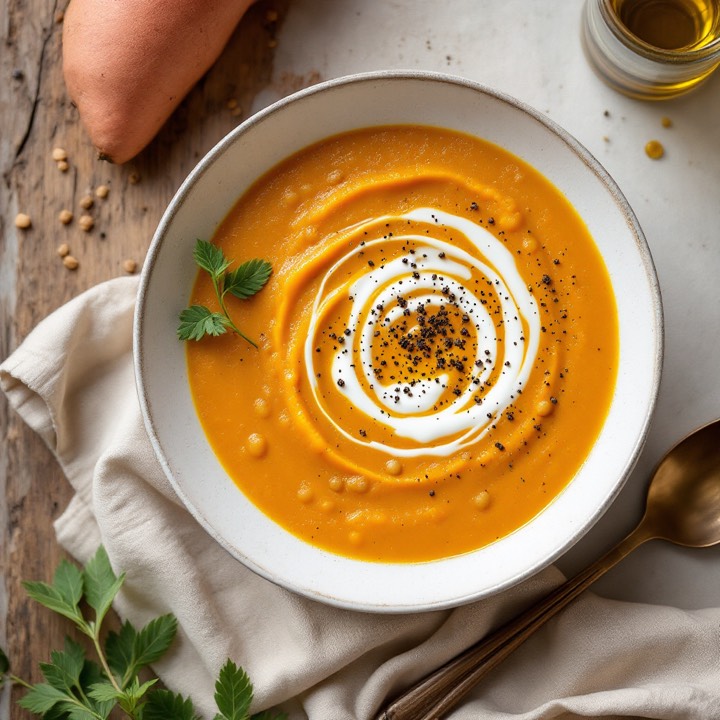
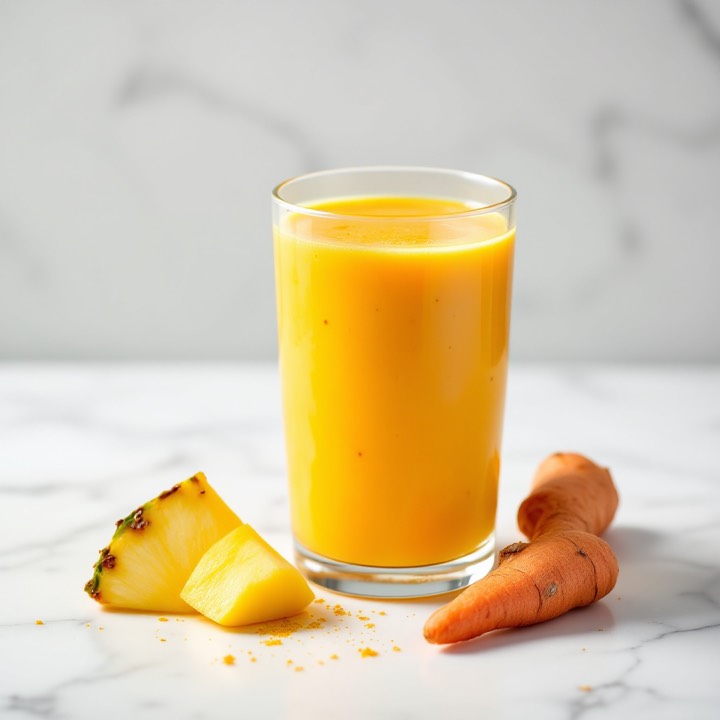
Carrots, pumpkin and peppers
Colour at most meals
Colour from carrots, pumpkin and peppers builds up in skin. In 4 weeks, colourful plates looked more golden.
the scienceGround flaxseed or flax oil
1 tablespoon of ground flaxseed a day
The plant fat in flax helps your skin hold water. In trials, flax-style oils did that over 8 to 12 weeks.
the science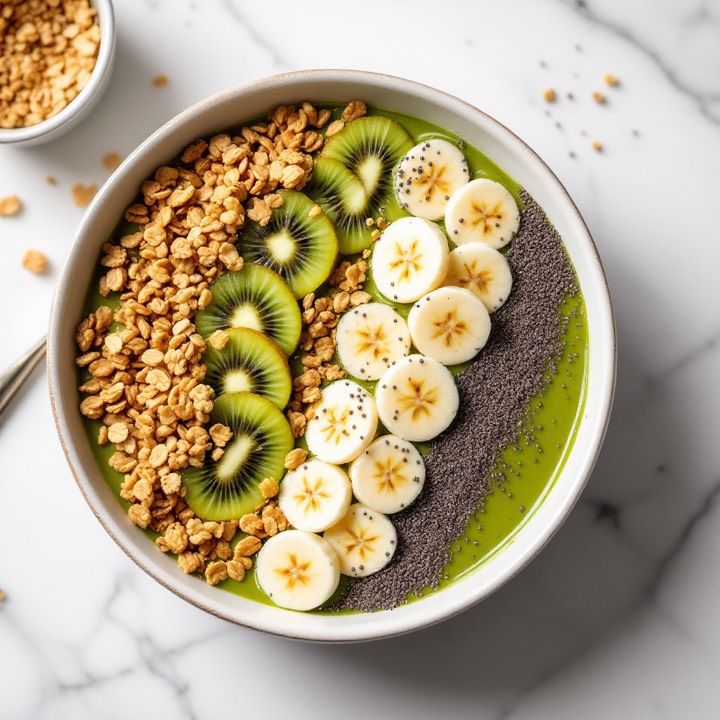
Green tea or matcha
2 to 3 cups a day
Green tea drinkers had fewer sun-related dark spots. Brew it unsweetened.
the science
Make it tonight
recipes from the app
What can you swap?
Sugary drinks→Water or unsweetened tea
A plate heavy in sugars went with drier skin. The sugars, not the fish, seemed to explain most of that.
see the research
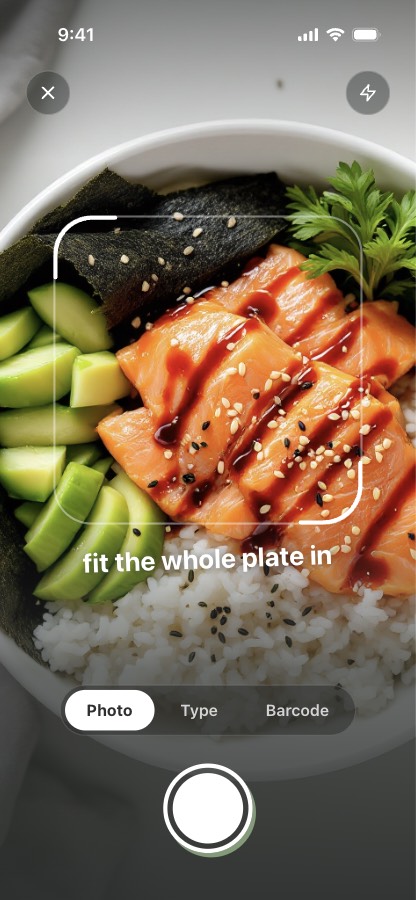
what about your plate?
Snap your lunch in Glowcast
See how it rates for your skin. 7-day trial on iPhone.


What's overhyped?
Kimchi
Nobody has tested a bowl of kimchi on skin. A candy made with a kimchi bacterium is not kimchi.
see the researchFermented milk drinks
One fermented milk drink kept hydration steady in a dry season. A bigger look found no overall moisture gain.
see the researchSoy foods
A soy powder with extra plant compounds raised cheek hydration. That is a powder, not tofu or soy milk.
see the research
What is glass skin?
Glass skin is a Korean beauty term for skin so smooth, even and hydrated it looks almost see-through. The look is water in the outer layer, a smooth surface, and an even tone. Food can support the water and the colour. Moisturiser and daily SPF do the surface.
Can a glass skin diet work?
Yes, for colour and dew. Colourful vegetables make skin more golden in a month, and flax-style oils helped skin hold water. Daily sunscreen still does more for even skin than any food.
How long does a glass skin diet take?
Give it about a month. Skin looked more golden after 4 weeks on colourful produce. Flax oil trials ran 8 to 12 weeks. Daily sunscreen was the habit that changed evenness.
What is the Korean glass skin diet?
There is no official one. People usually mean vegetables, kimchi, soy, fish, rice and tea. In a study of 714 people, South Koreans living in Korea had higher skin carotenoids than Germans.
What can't food do for glass skin?
It cannot buff the smooth, light-catching surface. That is skincare. In a trial of 903 adults, daily sunscreen users showed 24 percent less skin ageing than people who used it when they chose. No food on this page has a result like that.
The research, in full
at a glance
| Food | Result | Human evidence | Mechanism |
|---|---|---|---|
| Carrots, pumpkin and peppers | helped | Limited | Supported |
| Ground flaxseed or flax oil | helped | Limited | Plausible |
| Green tea or matcha | helped | Limited | Plausible |
| Sugary drinks | linked to worse skin | Limited | Plausible |
| Kimchi | not tested yet | Too little | Speculative |
| Fermented milk drinks | mixed | Limited | Plausible |
| Soy foods | mixed | Limited | Plausible |
| Daily sunscreen | helped | Moderate | Supported |
Carrots, pumpkin and peppers
Carotenoids are the yellow, orange and red pigments in foods such as carrots, pumpkin, spinach and red peppers. When you eat them, some build up in your skin and change how golden it looks.
In a crossover trial, 30 women ate 7 daily servings of high- or low-carotenoid fruit and vegetables for 4 weeks. On the high-carotenoid produce, skin yellowness rose in sun-exposed and covered skin, with no change in lightness or redness (Pezdirc et al., 2016).
Asian surveys point the same way. In 716 Japanese women, a higher intake of green and yellow vegetables went with a lower wrinkle score (Nagata et al., 2010). In 108 Korean adults, skin carotenoid scores rose with fruit and vegetable intake (r = 0.40) (Ahn et al., 2023). A 2026 analysis in adults with obesity found the same kind of link between the skin score and reported fruit and vegetable intake (r = 0.33) (Jilcott Pitts et al., 2026).
In 714 volunteers, South Koreans living in Korea had higher skin carotenoids than Germans and than Koreans living in Germany (Jung et al., 2014). The authors concluded that a healthy diet alone does not give a high antioxidant status unless stress falls too.
Ground flaxseed or flax oil
Four small trials have tested oils rich in ALA, the plant omega-3. The biggest gave 120 Japanese women aged 45 to 65 oil blends with 0.97 to 2.13 g of ALA a day, or a placebo, for 12 weeks (Ando et al., 2025). Water loss through the skin, the main outcome, didn't change. Hydration rose in a secondary analysis. Three of the four authors work for an edible-oil company.
A 2026 trial gave 60 adults 2.5 g a day of a manufactured linseed (flax) oil, carrying 0.9 g of ALA, or a sunflower oil placebo, for 8 weeks. Cheek hydration rose compared with placebo, while water loss didn't differ (Fukagawa et al., 2026).
Two older trials gave flax oil capsules. Water loss fell by about 10% within 6 weeks on 2.2 g of oil fats a day (De Spirt et al., 2009). In the other, 13 women per group took flax oil for 12 weeks, and their water loss, roughness and scaling fell while hydration rose (Neukam et al., 2011).
How to eat it: a tablespoon of ground flaxseed weighs 7 g, and 1 to 2 tablespoons a day is the usual suggestion (Kunutsor et al., 2025). Buy it ground. Full hydration notes live on our foods for hydrated skin page.
Green tea or matcha
Among 244 Japanese women aged 30 to 60, those who drank more green tea had lower scores for UV-related dark spots on facial scans (Fukushima et al., 2020). Coffee showed a stronger link. One author works for Nestlé Japan, and a survey cannot prove cause.
Trials have used strong extracts, not a normal mug. In 60 women, a drink with 1402 mg of green tea catechins a day for 12 weeks improved elasticity, roughness and water balance (Heinrich et al., 2011). Three cups of brewed green tea give about 405 mg of catechins, so that drink held roughly ten cups' worth (Khokhar and Magnusdottir, 2002).
Our suggestion of 2 to 3 cups a day is a pleasant extra, not that extract. We found no skin trial of ordinary brewed tea or of matcha for glass skin. Skip bottled teas with added sugar.
Sugary drinks
In 84 healthy Korean adults aged 19 to 37, a dietary pattern high in cereals, potatoes and starch, saccharides and fish and shellfish went with lower skin hydration (Lim et al., 2019). After the researchers split the foods, hydration was not linked to fish and shellfish. It showed a decreasing tendency across saccharide intake (p for trend = 0.040). That is one snapshot, not a trial of cutting fizzy drinks. More on sugar and acne.
Kimchi
No study we found has tested kimchi itself on skin. The closest used candy made with broken-down cells of a bacterium taken from kimchi. A significant increase in hydration in the experimental candy-administered group as compared with the control candy-administered group was observed on the face after 4 and 8 weeks (Kim et al., 2015).
A 2026 study of 74 healthy Korean adults found hydration was higher in people with more varied gut bacteria. Latilactobacillus and Weissella, which are abundant in kimchi, were identified as key genera potentially involved (Kim et al., 2026). That is a link, not a kimchi trial. Adults who ate no kimchi on a surveyed day rose from 11.7% in 2010 to 22.7% in 2024 (Zhao et al., 2026).
Fermented milk drinks
In a 4-week Japanese trial, 40 healthy adult women drank a probiotic fermented milk or a plain, unfermented milk each day. The trial was carried out in Tokyo between October and December 2009, a season of particularly low humidity. After intake, hydration of the outer skin fell in the plain-milk group and stayed higher with the fermented drink (Kano et al., 2013). Staff from the drink's maker co-wrote the paper.
A 2022 review recognised an overall 66 randomised trials of oral products for skin moisture. No benefits regarding water content and water loss were observed for lactic acid bacteria or Lactobacillus fermented foods (Sun et al., 2022). So one small branded drink is not a shortcut.
Soy foods
The newest food-adjacent trial used a powder, not a meal. 44 postmenopausal women took a soy protein isolate with added isoflavones or casein for 6 months. Average wrinkle severity decreased in the soy group at week 16 and week 24 by 5.9% and 7.1%. Compared with baseline, skin hydration in the soy group increased by 39% and 68% on the left and right cheeks at 24 weeks (Rizzo et al., 2023).
That does not mean tofu will do the same. An earlier Japanese trial had 60 women drink soy milk or fermented soy milk twice a day for 8 weeks. Both groups' skin scores improved compared with before the trial, and the two drinks did not differ. There was no soy-free group (Nagino et al., 2018).
What food cannot do
Glass skin is a Korean beauty term for skin so smooth, even and hydrated that it looks almost see-through, like glass. Food can nudge water and colour. It cannot create the polished surface.
In an Australian trial of 903 adults younger than 55, skin ageing from baseline to the end of the trial was 24% less in the daily sunscreen group than in the discretionary sunscreen group (Hughes et al., 2013). Beta-carotene pills had no overall effect on skin ageing. For people who already drink enough, topical emollients improve barrier function and the look and feel of dry skin (Popkin et al., 2010). Work out your skin type before you buy a stack of serums, and see foods for glowing skin if colour is the goal more than dew.
Quick questions
Does kimchi give you glass skin?
Nobody has tested a bowl of kimchi on skin. Candy made with a kimchi bacterium raised facial hydration at 4 and 8 weeks (Kim et al., 2015). That is a lab product. If you like kimchi, eat it for the taste.
Can eating well replace a moisturiser?
No. For people who already drink enough, moisturisers still improve how dry skin looks and feels (Popkin et al., 2010). Eat flax and colourful veg, then moisturise. Our hydrated skin page covers flax and water in more depth.
Is collagen the glass skin diet?
No. Collagen is a supplement, and the honest split is on our hydration page: pooled trials look good until you separate company-funded ones. This page is food: vegetables, flax and tea, plus daily SPF on the face. Food first, then a capsule.
What should you eat for clear skin as well as glass skin?
Keep the colourful vegetables, and add oats, beans and oily fish. For breakouts, start with our foods for clear skin guide. Glass skin is dew and even tone, not acne, so the two plates overlap on colour and split on spots.
Sources
- Pezdirc K et al. Consuming high-carotenoid fruit and vegetables influences skin yellowness and plasma carotenoids in young women: a single-blind randomized crossover trial. J Acad Nutr Diet. 2016. pubmed.ncbi.nlm.nih.gov
- Ahn S et al. Validation of resonance Raman spectroscopy-measured skin carotenoid status as a biomarker for fruit and vegetable intake in Korean adults. Br J Nutr. 2023. pubmed.ncbi.nlm.nih.gov
- Nagata C et al. Association of dietary fat, vegetables and antioxidant micronutrients with skin ageing in Japanese women. Br J Nutr. 2010. pubmed.ncbi.nlm.nih.gov
- Jilcott Pitts SB et al. Skin carotenoid scores are a valid approximation of fruit and vegetable intake among adults with obesity. Nutr Res. 2026. pubmed.ncbi.nlm.nih.gov
- Ando N, Nosaka N, Arai C, Kato K. The effects of α-linolenic acid intake on skin and blood vessel health and subjective fatigue in middle-aged Japanese females: a randomized, double-blind, placebo-controlled, parallel-group comparative trial. J Nutr. 2025. pubmed.ncbi.nlm.nih.gov
- Fukagawa S et al. Effects of diacylglycerol-enriched alpha-linolenic acid oil on skin properties in mild skin discomfort: a randomized, double-blind, placebo-controlled study. Sci Rep. 2026. pmc.ncbi.nlm.nih.gov
- De Spirt S et al. Intervention with flaxseed and borage oil supplements modulates skin condition in women. Br J Nutr. 2009. pubmed.ncbi.nlm.nih.gov
- Neukam K et al. Supplementation of flaxseed oil diminishes skin sensitivity and improves skin barrier function and condition. Skin Pharmacol Physiol. 2011. pubmed.ncbi.nlm.nih.gov
- Fukushima Y et al. Consumption of polyphenols in coffee and green tea alleviates skin photoaging in healthy Japanese women. Clin Cosmet Investig Dermatol. 2020. pubmed.ncbi.nlm.nih.gov
- Heinrich U et al. Green tea polyphenols provide photoprotection, increase microcirculation, and modulate skin properties of women. J Nutr. 2011. pubmed.ncbi.nlm.nih.gov
- Khokhar S, Magnusdottir SG. Total phenol, catechin, and caffeine contents of teas commonly consumed in the United Kingdom. J Agric Food Chem. 2002. pubmed.ncbi.nlm.nih.gov
- Lim S, Shin J, Cho Y, Kim KP. Dietary patterns associated with sebum content, skin hydration and pH, and their sex-dependent differences in healthy Korean adults. Nutrients. 2019. pmc.ncbi.nlm.nih.gov
- Kim H et al. Effects of oral intake of kimchi-derived Lactobacillus plantarum K8 lysates on skin moisturizing. J Microbiol Biotechnol. 2015. pubmed.ncbi.nlm.nih.gov
- Kim D et al. Differences in skin health parameters and dietary associations based on gut enterotypes in healthy Korean adults. Food Res Int. 2026. pubmed.ncbi.nlm.nih.gov
- Zhao HY et al. Changing patterns and related factors of kimchi consumption among Korean adults: a nationwide cross-sectional analysis of the Korea National Health and Nutrition Examination Survey, 2010-2024. Korean J Community Nutr. 2026. pubmed.ncbi.nlm.nih.gov
- Sun Q, Wu J, Qian G, Cheng H. Effectiveness of dietary supplement for skin moisturizing in healthy adults: a systematic review and meta-analysis of randomized controlled trials. Front Nutr. 2022. pmc.ncbi.nlm.nih.gov
- Kano M et al. Consecutive intake of fermented milk containing Bifidobacterium breve strain Yakult and galacto-oligosaccharides benefits skin condition in healthy adult women. Biosci Microbiota Food Health. 2013. pmc.ncbi.nlm.nih.gov
- Rizzo J et al. Soy protein containing isoflavones improves facial signs of photoaging and skin hydration in postmenopausal women: results of a prospective randomized double-blind controlled trial. Nutrients. 2023. pubmed.ncbi.nlm.nih.gov
- Nagino T et al. Effects of fermented soymilk with Lactobacillus casei Shirota on skin condition and the gut microbiota: a randomised clinical pilot trial. Benef Microbes. 2018. pubmed.ncbi.nlm.nih.gov
- Hughes MC, Williams GM, Baker P, Green AC. Sunscreen and prevention of skin aging: a randomized trial. Ann Intern Med. 2013. pubmed.ncbi.nlm.nih.gov
- Popkin BM, D'Anci KE, Rosenberg IH. Water, hydration, and health. Nutr Rev. 2010. pmc.ncbi.nlm.nih.gov
- Jung S et al. Antioxidants in Asian-Korean and caucasian skin: the influence of nutrition and stress. Skin Pharmacol Physiol. 2014. pubmed.ncbi.nlm.nih.gov
- Kunutsor SK et al. Dietary flaxseed: cardiometabolic benefits and its role in promoting healthy aging. GeroScience. 2025. pmc.ncbi.nlm.nih.gov
Written and fact-checked by Glowcast against the sources above. Spot an error? Tell us via our About page. Food inspo, not medical advice. For skin that worries you, see a dermatologist. How we check the science