at a glance
Wash, wait, then look.
Wash with a mild cleanser, wait 30 minutes with nothing on, then look. Shine all over is oily. Tight or flaky is dry. An oily T-zone with drier cheeks is combo skin. Eat oats and beans if you're oily, and sunflower seeds if you're dry.
What should you eat for your skin type?
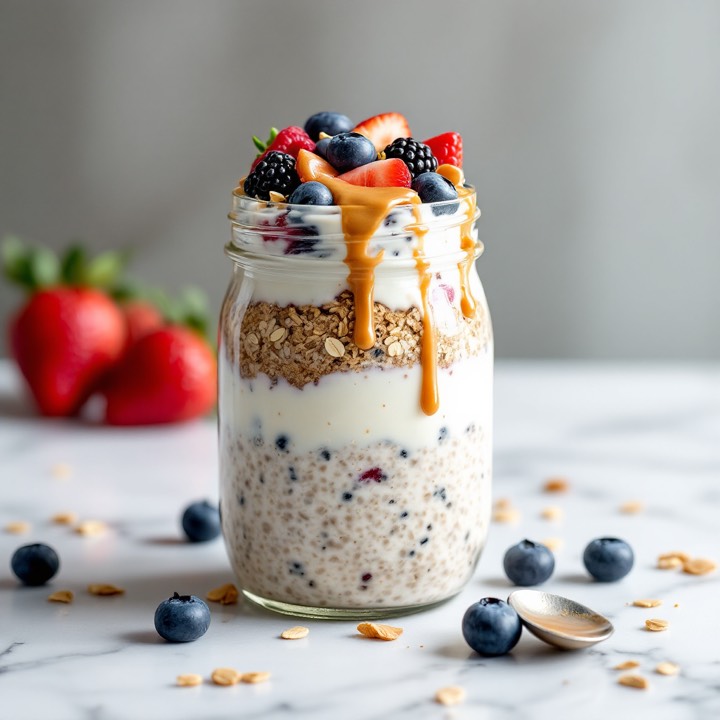
Oats, beans and pasta
Most of your carbs
Slow carbs raise blood sugar gently. In about 10 weeks, this kind of eating led to smaller oil glands.
the scienceSunflower seeds and pecans
A small handful a day
Seeds help the fats that keep dry skin from cracking. People who ate more of them had less dry skin.
the science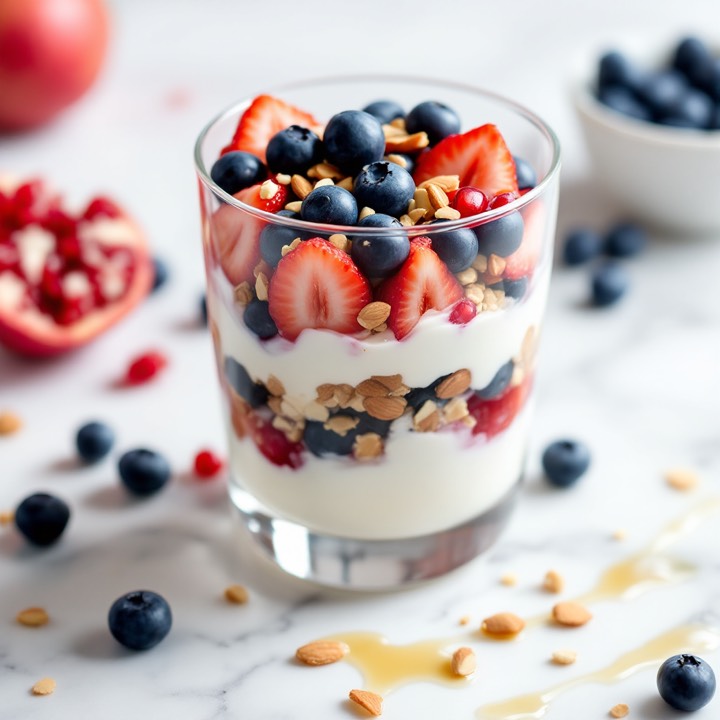
Kiwi and strawberries
A kiwi or a cup of berries
Vitamin C helps skin hold water. People who got more of it had less dry skin.
the science
Make it tonight
recipes from the app
What can oily skin swap?
White bread and sugary cereal→Rolled oats, grainy bread or beans
These spike blood sugar fast. Slow-carb eating led to smaller oil glands in about 10 weeks.
see the researchSugary drinks→Water or unsweetened tea
Sweet drinks are a fast-carb habit. Swap them so more of your carbs come from oats, beans and fruit.
see the research

what about your plate?
Snap your plate in Glowcast
See how it rates for your skin. 7-day trial on iPhone.


What's overhyped?
Foods that change your type
No food has been shown to move anyone from oily to dry, or the other way. Diet can change how skin behaves. It does not rewrite your type.
see the research
How can you tell if you have oily or dry skin?
Wash, pat dry and wait about 30 minutes with nothing on. Oily skin looks shiny and leaves oil on blotting paper everywhere. Dry skin feels tight or rough and leaves little oil. If only your forehead, nose and chin are oily, combo skin is more likely.
What is combo skin?
Combo skin is combination skin: oily on the T-zone, which is your forehead, nose and chin, and normal or dry on the cheeks. After 30 minutes with nothing on, the T-zone shines while the cheeks stay matte. One product rarely suits the whole face.
Is combination skin the most common skin type?
Combination was the type people chose most often in a Korean acne clinic of 709 people. Self-ratings often miss measured oil, so treat that as a clinic snapshot, not a world ranking.
Can your skin type change?
Yes. Oil output shifts through the year, and summer is the oiliest. In Chinese women, oil peaked between 20 and 30 and dropped after 40. Test again when the seasons change.
Can diet change your skin type?
Diet has not been shown to move anyone from one type to another. In a trial of 32 people, 10 weeks of slow-carb eating led to smaller oil glands. Track your own skin.
Is Fitzpatrick skin type the same thing?
No. The Fitzpatrick scale sorts skin into six sun-reactive types. It describes how your skin responds to sun, not how oily or dry it is. You can be a darker type with oily skin or with dry skin.
The research, in full
at a glance
| Food | Result | Human evidence | Mechanism |
|---|---|---|---|
| Oats, beans and pasta | helped | Limited | Supported |
| Sunflower seeds and pecans | helped | Limited | Plausible |
| Kiwi and strawberries | helped | Limited | Plausible |
| High-glycemic foods | linked to worse skin | Limited | Supported |
| Foods that change your type | not tested yet | Too little | Speculative |
The 30-minute home test
There is no single official skin type test. Cleveland Clinic suggests washing and drying your face, waiting 30 minutes, then pressing blotting paper on your T-zone and cheeks (Cleveland Clinic, 2024).
Sebum is the oily substance your sebaceous glands produce. Dry skin is not producing enough sebum. Shine all over after about 30 minutes points to oily skin. Tight, dull or scaly skin points to dry. Comfortable and even points to normal.
The American Academy of Dermatology uses the same five labels: oily, dry, normal, combination and sensitive (AAD). Sensitive skin can go with any of the other types.
| Type | Bare face | Blotting paper |
|---|---|---|
| Oily | Shiny or greasy all over | Oil on every sheet |
| Dry | Tight, rough or flaky | Little or no oil |
| Combination (combo skin) | Oily T-zone, drier cheeks | Oil from the T-zone only |
| Normal | Comfortable, not tight or oily | A light, even film |
| Sensitive | Red, stinging or itchy | Any of the above |
What combo skin is
The T-zone is the T-shaped area covering your forehead, nose and chin. Combination skin is dry in some spots and oily in others, often with an oily T-zone (AAD). Combo skin is the same thing in fewer letters.
Korean researchers who measured oil every season proposed a working test: if your T-zone and cheeks read as different types in more than two seasons, you match what most people describe as combination (Youn et al., 2005).
In a Korean study of 709 people with acne, combination was the type people chose most often (Choi et al., 2013). That is a clinic, not a census.
Why self-ratings miss
Your own sense of your skin can be off. In a Korean study of 83 people, 36 with acne and 47 without, researchers measured facial oil with a Sebumeter. People with acne rated their skin oilier than it measured (Kim et al., 2006).
An earlier Korean study measured oil at four sites on each face and reclassified people by the readings. Most had underestimated their oil output. The authors concluded that self-rated skin type does not match measured sebum (Youn et al., 2002).
A later method using sebum-absorbing tape classified 2,173 samples from Chinese women into four types. The authors found good agreement between self-report and the tape (Qin et al., 2020).
Skin type can shift
Korean researchers measured oil at five spots on the same volunteers' faces every season for a year. Summer was the oiliest of the four seasons (Youn et al., 2005).
In the Chinese tape study, sebum levels peaked between ages 20 and 30 and dropped after 40 (Qin et al., 2020). Skin also holds less moisture as you get older (AAD).
Dry skin is common when the air holds little humidity, and winter heating can strip moisture from skin (AAD). Test again when the seasons turn.
Sensitive skin
Sensitive skin is skin that stings, burns, tingles or itches in response to things that should not cause those feelings, as defined in a 2017 position paper (Misery et al., 2017). It is not an oil level. It can sit on oily, dry, combo or normal skin.
A pooled analysis of 26 studies covering 51,783 people found that 71% reported some sensitivity, and 40% said it was very or moderately sensitive. Questionnaire studies may overestimate it (Chen et al., 2020).
Questionnaires, clinics and Fitzpatrick
The Baumann Skin Type Indicator scores four pairs: oily or dry, sensitive or resistant, pigmented or nonpigmented, and wrinkled or unwrinkled. Together those produce 16 possible skin types (Baumann, 2008).
A Polish version was tested in 103 people, who completed it twice, one day apart. Its oily-or-dry section gave highly repeatable results (Brzozowska, 2025). A clinic can go further and measure oil with a Sebumeter.
Doctors sometimes mean something else by "skin type". The Fitzpatrick scale sorts skin into six sun-reactive types, I through VI (Fitzpatrick, 1988). It says nothing about oil.
Oats, beans and pasta
Glycemic index (GI) is a 100-point scale ranking how much a carbohydrate food raises blood sugar compared with glucose. Foods at 55 or below count as low. Dairy, legumes, pasta and fruit are usually low, while most potatoes are high. Breads, breakfast cereals and rice come in high-, medium- and low-GI versions (Atkinson et al., 2021).
A 2022 review found high-GI diets were linked to more acne, "an observation supported by randomized controlled trials" (Meixiong et al., 2022).
In a 2012 Korean trial, 32 people with acne followed a low-glycemic-load or control diet for 10 weeks. Skin samples from the low-glycemic group showed smaller oil glands and less SREBP-1, a protein that drives fat production in oil glands (Kwon et al., 2012).
In a 12-week trial of 43 young men, spots fell by 23.5 on a low-GI diet against 12.0 on a control diet. The diet group also lost more weight, about 2.9 kg (Smith et al., 2007). Both trials ran 10 to 12 weeks. See our oily skin foods and low-glycemic guide.
Sunflower seeds and pecans
Your skin barrier is largely fat. About 50% of the lipids between your outer skin cells are ceramides, and the barrier's scaffold is built from ceramides carrying linoleic acid (Breiden and Sandhoff, 2014). Linoleic acid is an omega-6 fat your body can't make, so it must come from food (Linus Pauling Institute).
The best human evidence is one large survey of 4,025 American women aged 40 to 74, whose skin was examined by dermatologists. Higher linoleic acid intake was linked to lower odds of age-related dryness, with an odds ratio of 0.75 (Cosgrove et al., 2007). That's a link, not a trial.
We found no trial of linoleic-acid-rich foods that measured skin dryness. Essential fatty acid deficiency causes a dry, scaly rash. Rich sources include oil-roasted sunflower seeds (about 9.7 g of linoleic acid per ounce), pine nuts (9.4 g) and oil-roasted pecans (6.4 g) (Linus Pauling Institute).
Kiwi and strawberries
In the same survey of 4,025 US women aged 40 to 74, those who ate more vitamin C had lower odds of age-related dry skin, with an odds ratio of 0.93 (Cosgrove et al., 2007). The first author worked at Unilever.
A 2026 study of 74 healthy Korean adults found vitamin C intake went with better skin hydration, but only in people with one type of gut bacteria (Kim et al., 2026).
Why it might help: in lab studies, vitamin C helps skin cells make barrier fats, which may help skin protect itself from water loss (Pullar et al., 2017). For a fuller hydration plate, see foods for hydrated skin.
Foods that change your type
We found no trial that has tested whether a food moves someone from one skin type to another. PubMed searches for this page in September 2026 returned no randomised food trial with skin type as the outcome.
When the American Academy of Dermatology updated its acne guidelines in 2024, available evidence was insufficient to develop recommendations for dietary changes (AAD, 2024). That is a guideline gap. The small low-GI trials still measured smaller oil glands and fewer lesions. They did not reclassify anyone's type. See the clear skin foods guide for the acne plate.
Quick questions
How can you tell if you have oily or dry skin?
Wash, pat dry and wait about 30 minutes with nothing on. Oily skin looks shiny and leaves oil on blotting paper everywhere. Dry skin feels tight or rough. If only your T-zone is oily, that is combo skin (Cleveland Clinic, 2024).
What is combo skin?
Combo skin is combination skin: oily on the T-zone (forehead, nose and chin) and normal or dry on the cheeks (AAD). After 30 minutes with nothing on, the T-zone shines while the cheeks stay matte. Eat oats and beans if the T-zone is oily, and sunflower seeds if the cheeks feel dry.
What should oily skin eat?
Build most of your carbs from rolled oats, beans, grainy bread and pasta. In a trial of 32 people, 10 weeks of low-glycemic eating led to smaller oil glands. More swaps sit on our oily skin foods page, including milk and sweets.
What should dry skin eat?
A handful of sunflower seeds or pecans brings linoleic acid, and kiwi or strawberries bring vitamin C. In 4,025 US women, both nutrients went with less dryness. The fuller plate, including flax and water, is on hydrated skin foods.
Can diet change your skin type?
Diet has not been shown to move anyone from one type to another. In a trial of 32 people, 10 weeks of low-glycemic eating led to smaller oil glands. Track your own skin, and see the glass skin diet if dew is the goal.
Sources
- Cleveland Clinic. What is my skin type and why does it matter? Health Essentials. 2024. health.clevelandclinic.org
- American Academy of Dermatology. Skin care tips dermatologists use. aad.org
- American Academy of Dermatology. How to pick the right moisturizer for your skin. aad.org
- American Academy of Dermatology. Dry skin: overview. aad.org
- American Academy of Dermatology. American Academy of Dermatology issues updated guidelines for the management of acne. News release. 2024. aad.org
- Misery L et al. Definition of sensitive skin: an expert position paper from the Special Interest Group on Sensitive Skin of the International Forum for the Study of Itch. Acta Derm Venereol. 2017. pubmed.ncbi.nlm.nih.gov
- Chen W, Dai R, Li L. The prevalence of self-declared sensitive skin: a systematic review and meta-analysis. J Eur Acad Dermatol Venereol. 2020. pubmed.ncbi.nlm.nih.gov
- Kim MK et al. Comparison of sebum secretion, skin type, pH in humans with and without acne. Arch Dermatol Res. 2006. pubmed.ncbi.nlm.nih.gov
- Youn SW et al. Evaluation of facial skin type by sebum secretion: discrepancies between subjective descriptions and sebum secretion. Skin Res Technol. 2002. pubmed.ncbi.nlm.nih.gov
- Youn SW et al. Regional and seasonal variations in facial sebum secretions: a proposal for the definition of combination skin type. Skin Res Technol. 2005. pubmed.ncbi.nlm.nih.gov
- Choi CW, Choi JW, Youn SW. Subjective facial skin type, based on the sebum related symptoms, can reflect the objective casual sebum level in acne patients. Skin Res Technol. 2013. pubmed.ncbi.nlm.nih.gov
- Baumann L. Understanding and treating various skin types: the Baumann Skin Type Indicator. Dermatol Clin. 2008. pubmed.ncbi.nlm.nih.gov
- Brzozowska JM. Baumann Skin Type Questionnaire (BSTQ): creation and validation of the Polish language version - part one. Postepy Dermatol Alergol. 2025. pubmed.ncbi.nlm.nih.gov
- Fitzpatrick TB. The validity and practicality of sun-reactive skin types I through VI. Arch Dermatol. 1988. pubmed.ncbi.nlm.nih.gov
- Kwon HH et al. Clinical and histological effect of a low glycaemic load diet in treatment of acne vulgaris in Korean patients: a randomized, controlled trial. Acta Derm Venereol. 2012. pubmed.ncbi.nlm.nih.gov
- Atkinson FS et al. International tables of glycemic index and glycemic load values 2021: a systematic review. Am J Clin Nutr. 2021. pubmed.ncbi.nlm.nih.gov
- Smith RN et al. A low-glycemic-load diet improves symptoms in acne vulgaris patients: a randomized controlled trial. Am J Clin Nutr. 2007. pubmed.ncbi.nlm.nih.gov
- Breiden B, Sandhoff K. The role of sphingolipid metabolism in cutaneous permeability barrier formation. Biochim Biophys Acta. 2014. pubmed.ncbi.nlm.nih.gov
- Linus Pauling Institute, Oregon State University. Essential fatty acids. Micronutrient Information Center. lpi.oregonstate.edu
- Qin J et al. New method for large-scale facial skin sebum quantification and skin type classification. J Cosmet Dermatol. 2021. pubmed.ncbi.nlm.nih.gov
- Cosgrove MC et al. Dietary nutrient intakes and skin-aging appearance among middle-aged American women. Am J Clin Nutr. 2007. pubmed.ncbi.nlm.nih.gov
- Meixiong J et al. Diet and acne: a systematic review. JAAD Int. 2022. pmc.ncbi.nlm.nih.gov
- Pullar JM, Carr AC, Vissers MCM. The roles of vitamin C in skin health. Nutrients. 2017. pmc.ncbi.nlm.nih.gov
- Kim D et al. Differences in skin health parameters and dietary associations based on gut enterotypes in healthy Korean adults. Food Res Int. 2026. pubmed.ncbi.nlm.nih.gov
Written and fact-checked by Glowcast against the sources above. Spot an error? Tell us via our About page. Food inspo, not medical advice. For skin that worries you, see a dermatologist. How we check the science