at a glance
More colour on your plate.
Mostly, more colour on your plate. In one study, about 3 extra portions of fruit and veg a day for 6 weeks made skin look healthier. Add tomato paste, olive oil and kiwi, and keep up sleep and SPF.
What foods are good for skin?
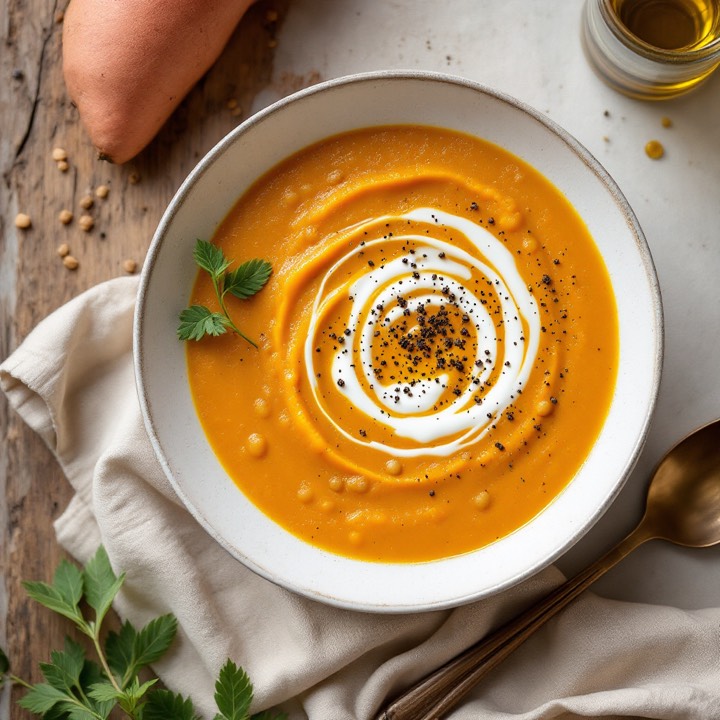
Colourful fruit and veg
Colour at most meals
Colour from fruit and veg builds up in skin. About 3 extra portions a day for 6 weeks made skin look healthier.
the science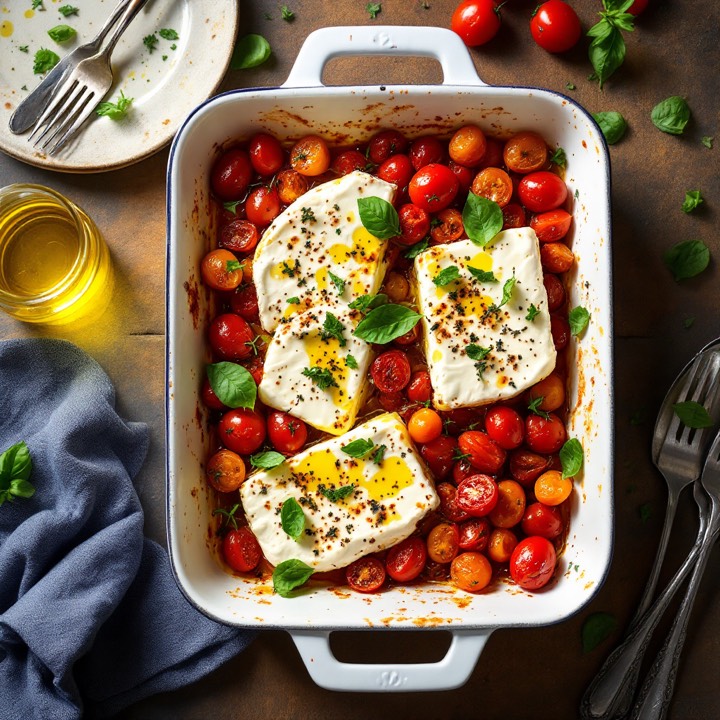
Tomato paste
A spoon in a sauce, most days
A spoon of tomato paste most days. People eating it reddened less in the sun than a comparison group.
the scienceOlive oil
Your usual cooking fat
People who cooked more with olive oil had milder sun ageing. Surveys in more than one country found the same pattern.
the scienceHigh-flavanol cocoa
A high-flavanol cocoa drink, 326 mg a day
A special cocoa drink, not a chocolate bar. It helped skin handle sun and hold water over 12 weeks.
the science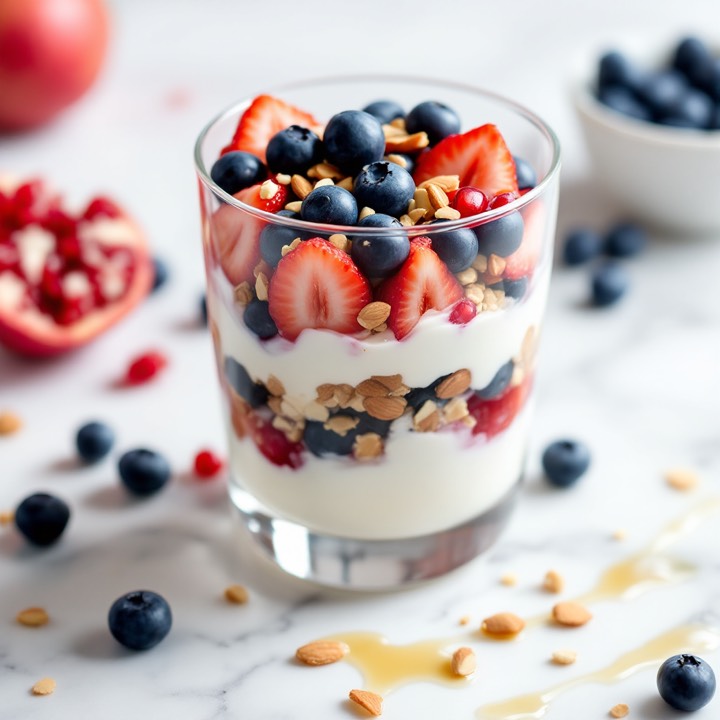
Kiwi and strawberries
A kiwi or a cup of berries
Your skin needs vitamin C to make collagen. People who got more of it had less wrinkled-looking skin.
the science
Make it tonight
recipes from the app
What can you swap?
Sugary drinks→Water or unsweetened tea
Sugar can age skin from the inside. Faces looked older in photos as blood sugar rose.
see the researchButter→Olive oil
More butter went with more sun damage. More olive oil went with less.
see the research
what about your plate?
Snap your plate in Glowcast
See how it rates for your skin. 7-day trial on iPhone.


What's overhyped?
Collagen powder
Pooled trials look good until you split them by funding. The ones not paid for by companies found no effect on hydration, elasticity or wrinkles.
see the researchA supermarket chocolate bar
Ordinary chocolate-making strips out most flavanols. In one trial, a low-flavanol bar left sun tolerance unchanged. The glow data is for a special cocoa drink.
see the research
Which foods make your skin glow?
Colourful fruit and veg, tomato paste, olive oil and a high-flavanol cocoa drink have the best evidence. Olive oil is the one surveys in more than one country agree on.
How long until foods good for skin show?
In studies, skin colour shifted within 4 to 6 weeks. Thirty women eating 7 daily servings of high-carotenoid produce had more golden skin after 4 weeks. Give it at least a month.
What is a glow diet?
A glow diet is eating for how your skin looks: colour, evenness and bounce. Pigments from colourful produce build up in skin and make it more golden. It is not a 7-day makeover.
Does sugar dull your skin?
Sugar can age skin from the inside. In 602 Dutch adults without diabetes, faces looked older in photos as blood sugar rose. Sugar sticks to collagen and elastin in your skin.
How do you get glowing skin beyond food?
Wear sunscreen every day. Dermatologists recommend SPF 30 or higher, and it is the best-tested glow habit there is. Sleep shows fast too: after 2 short nights, faces looked less bright.
Does a collagen-rich diet make skin glow?
Eating collagen-rich food is not the same as the powder trials. Those trials used hydrolyzed collagen, and the ones not funded by companies found no effect on hydration. Bone broth has not been tested on skin.
The research, in full
at a glance
| Food | Result | Human evidence | Mechanism |
|---|---|---|---|
| Colourful fruit and veg | helped | Limited | Supported |
| Tomato paste | helped | Limited | Supported |
| Olive oil | helped | Moderate | Speculative |
| High-flavanol cocoa | helped | Limited | Supported |
| Kiwi and strawberries | helped | Limited | Plausible |
| Butter | linked to worse skin | Limited | Speculative |
| Sugary extras | linked to worse skin | Limited | Plausible |
| Collagen powder | mixed | Limited | Plausible |
| A supermarket chocolate bar | no change | Too little | Speculative |
Colourful fruit and veg
Carotenoids are the yellow, orange and red pigments in carrots, tomatoes, mangoes and spinach. When you eat them, some build up in your skin and make it more golden (Pezdirc et al., 2016).
In a Scottish study of 35 people, fruit and vegetable intake was recorded at baseline and after 3 and 6 weeks. About 3 extra portions a day (2.91 for health, 3.30 for attractiveness) was enough for skin to look healthier to others. All the participants had white skin (Whitehead et al., 2012).
A trial then tested it directly. Thirty women ate 7 daily servings of high- or low-carotenoid produce for 4 weeks. Skin yellowness rose on the high-carotenoid produce (Pezdirc et al., 2016).
The same kind of link shows up when you measure carotenoids in skin. In 108 Korean adults, skin carotenoid scores rose with fruit and vegetable intake (r = 0.40) (Ahn et al., 2023). A 2026 analysis in adults with obesity found the same kind of link between the skin score and reported fruit and vegetable intake (r = 0.33) (Jilcott Pitts et al., 2026). For the dewy, even look, see the glass skin diet.
Tomato paste
Tomato paste is packed with lycopene, the red carotenoid in tomatoes: 40 g gives about 16 mg. In a German trial, 9 people ate that much daily with olive oil for 10 weeks. Their skin reddened 40% less under a UV lamp than in 10 people who had olive oil alone (Stahl et al., 2001).
A UK trial in 20 women found some protection from sun damage and more procollagen after 12 weeks of 55 g a day (Rizwan et al., 2011). A Brazilian trial that gave 10 people tomato paste found no protection (Sokoloski et al., 2015). Tomato paste is not a sunscreen. A tomato sauce is still an easy habit.
Olive oil
The biggest study looked at 1,264 French women and 1,655 men aged 45 to 60. People who got more of their fat from olive oil had a lower risk of severe facial sun ageing. Fat from meat and dairy showed no such link (Latreille et al., 2012).
An earlier study of 453 older adults in Greece, Australia and Sweden found the same pattern for olive oil, vegetables and beans (Purba et al., 2001). Butter ran the other way in that survey: more butter went with more actinic skin damage (r = 0.46), while more olive oil went with less (r = 0.29 in the other direction). We found no trial that tested olive oil on skin. People who use more of it may simply live differently.
High-flavanol cocoa
Flavanols are plant compounds in cocoa beans and tea. In 10 women, a high-flavanol cocoa drink raised blood flow in the skin 1.7-fold two hours later (Neukam et al., 2007). Over 12 weeks, a daily drink with 326 mg of flavanols cut UV redness by 25% and reduced water loss through the skin (Heinrich et al., 2006).
The results are mixed. In 74 women, 30 g a day of high-flavanol chocolate for 12 weeks gave no more sun protection than a low-flavanol bar (Mogollon et al., 2014). A smaller trial of 30 people found sun tolerance more than doubled on a high-flavanol bar. Ordinary chocolate-making strips out much of the flavanol content (Williams et al., 2009).
Kiwi and strawberries
Skin fibroblasts have an absolute dependence on vitamin C for the synthesis of collagen (Pullar et al., 2017). In 4,025 middle-aged American women, higher vitamin C intake went with lower odds of wrinkled or dry-looking skin, even after allowing for supplement use (Cosgrove et al., 2007).
Women need 75 mg a day and men 90 mg, and raw fruit and vegetables are the best sources (MedlinePlus). A 2026 New Zealand study reported higher skin vitamin C after people ate kiwifruit (Pullar et al., 2026). The PubMed record has no abstract, so that title is all we can cite. More on the hydration plate at foods for hydrated skin.
Sugary extras
Glycation is what happens when sugar sticks to proteins. Glucose and fructose bind to collagen and elastin and form cross-links known as advanced glycation end products, or AGEs. High blood sugar speeds this up, and UV light makes it worse (Danby, 2010).
In 602 Dutch adults, faces looked 0.40 years older in photos per 1 mmol/L rise in glucose among people without diabetes (Noordam et al., 2013). That is a snapshot, not proof that sugar caused it.
The WHO advises keeping free sugars under 10% of daily energy, about 12 level teaspoons, and at least 400 g of fruit and vegetables a day (WHO, 2026). In the three-country survey, more butter and sugar products went with more sun damage, and more olive oil went with less (Purba et al., 2001). See how sugar affects breakouts.
Collagen powder
A 2025 analysis pooled 23 trials with 1,474 people. Overall, collagen looked helpful. Split by funding, the trials not funded by companies found no effect on hydration, elasticity or wrinkles, while company-funded ones did. The high-quality trials found no effect either (Myung and Park, 2025).
Those trials used hydrolyzed collagen powder, not a collagen-rich meal. We found no trial of bone broth and skin.
A supermarket chocolate bar
In the Williams trial, sun tolerance more than doubled on a high-flavanol bar and did not change on the low-flavanol bar. The authors noted that during conventional chocolate making, this high antioxidant capacity is greatly reduced due to manufacturing processes (Williams et al., 2009).
A standard bar is closer to that low-flavanol arm. We found no trial of ordinary milk chocolate that measured a glow outcome.
Sleep, SPF and a glow diet
A 2015 review of 27 studies found that 16 tested supplements and only 1 tested whether eating real food changes how skin looks (Pezdirc et al., 2015). Daily sunscreen still has the strongest glow data. In an Australian trial of 903 adults, skin ageing was 24% less in the daily sunscreen group than in the discretionary group after 4.5 years (Hughes et al., 2013). The AAD recommends SPF 30 or higher (AAD).
After 2 nights of 3-hour sleep, facial skin looked less bright in 24 women (Léger et al., 2022). Women who slept 7 to 9 hours had 30% better skin barrier recovery than women who slept 5 hours or less (Oyetakin-White et al., 2015). In 61 women, 16 weeks of aerobic or strength training made skin more elastic (Nishikori et al., 2023).
One study of 298 white women estimated that UV is behind 80% of visible facial ageing signs (Flament et al., 2013). Work out your skin type before you buy a stack of serums, and see foods for clear skin if spots are the goal.
Quick questions
What foods are good for skin?
Colourful fruit and veg, tomato paste, olive oil, a high-flavanol cocoa drink, and kiwi or strawberries. About 3 extra portions of produce a day for 6 weeks made skin look healthier in 35 people (Whitehead et al., 2012). Keep daily SPF.
How long does a glow diet take?
Skin colour shifted within 4 to 6 weeks in the produce studies. Give the plate at least a month, and keep daily SPF. The glass skin diet is the dewy version of the same colourful plate, built on carotenoids rather than a 7-day glow.
Does drinking more water give you glowing skin?
Only a little, and mostly if you drink very little to begin with. Skin holds its water with a barrier of fats, so what you drink matters less than that barrier does. Food helps there: colour at most meals, and the fats in oily fish and flax. The fuller water story is on foods for hydrated skin.
Does green tea help your skin glow?
The skin trials used concentrated green tea extracts, not the mug you brew at home, and their results are mixed. Nothing here rests on green tea. The flavanol evidence that does hold up came from cocoa drinks made for their flavanol content, and that story is in the research below.
Sources
- Whitehead RD et al. You are what you eat: within-subject increases in fruit and vegetable consumption confer beneficial skin-color changes. PLoS One. 2012. pubmed.ncbi.nlm.nih.gov
- Pezdirc K et al. Consuming high-carotenoid fruit and vegetables influences skin yellowness and plasma carotenoids in young women: a single-blind randomized crossover trial. J Acad Nutr Diet. 2016. pubmed.ncbi.nlm.nih.gov
- Ahn S et al. Validation of resonance Raman spectroscopy-measured skin carotenoid status as a biomarker for fruit and vegetable intake in Korean adults. Br J Nutr. 2023. pubmed.ncbi.nlm.nih.gov
- Stahl W et al. Dietary tomato paste protects against ultraviolet light-induced erythema in humans. J Nutr. 2001. pubmed.ncbi.nlm.nih.gov
- Rizwan M et al. Tomato paste rich in lycopene protects against cutaneous photodamage in humans in vivo: a randomized controlled trial. Br J Dermatol. 2011. pubmed.ncbi.nlm.nih.gov
- Sokoloski L, Borges M, Bagatin E. Lycopene not in pill, nor in natura has photoprotective systemic effect. Arch Dermatol Res. 2015. pubmed.ncbi.nlm.nih.gov
- Latreille J et al. Dietary monounsaturated fatty acids intake and risk of skin photoaging. PLoS One. 2012. pubmed.ncbi.nlm.nih.gov
- Purba MB et al. Skin wrinkling: can food make a difference? J Am Coll Nutr. 2001. pubmed.ncbi.nlm.nih.gov
- Neukam K et al. Consumption of flavanol-rich cocoa acutely increases microcirculation in human skin. Eur J Nutr. 2007. pubmed.ncbi.nlm.nih.gov
- Heinrich U et al. Long-term ingestion of high flavanol cocoa provides photoprotection against UV-induced erythema and improves skin condition in women. J Nutr. 2006. pubmed.ncbi.nlm.nih.gov
- Mogollon JA et al. Chocolate flavanols and skin photoprotection: a parallel, double-blind, randomized clinical trial. Nutr J. 2014. pubmed.ncbi.nlm.nih.gov
- Williams S, Tamburic S, Lally C. Eating chocolate can significantly protect the skin from UV light. J Cosmet Dermatol. 2009. pubmed.ncbi.nlm.nih.gov
- Pullar JM, Carr AC, Vissers MCM. The roles of vitamin C in skin health. Nutrients. 2017. pmc.ncbi.nlm.nih.gov
- Cosgrove MC et al. Dietary nutrient intakes and skin-aging appearance among middle-aged American women. Am J Clin Nutr. 2007. pubmed.ncbi.nlm.nih.gov
- Pullar JM et al. Improved human skin vitamin C levels and skin function after dietary intake of kiwifruit: a high-vitamin-C food. J Invest Dermatol. 2026. pubmed.ncbi.nlm.nih.gov
- MedlinePlus. Vitamin C. US National Library of Medicine. medlineplus.gov
- Danby FW. Nutrition and aging skin: sugar and glycation. Clin Dermatol. 2010. pubmed.ncbi.nlm.nih.gov
- World Health Organization. Healthy diet. Fact sheet. 26 January 2026. who.int
- Myung SK, Park Y. Effects of collagen supplements on skin aging: a systematic review and meta-analysis of randomized controlled trials. Am J Med. 2025. pubmed.ncbi.nlm.nih.gov
- Pezdirc K et al. Can dietary intake influence perception of and measured appearance? A systematic review. Nutr Res. 2015. pubmed.ncbi.nlm.nih.gov
- Hughes MC et al. Sunscreen and prevention of skin aging: a randomized trial. Ann Intern Med. 2013. pubmed.ncbi.nlm.nih.gov
- American Academy of Dermatology. How to decode a sunscreen label. aad.org
- Léger D et al. "You look sleepy…" The impact of sleep restriction on skin parameters and facial appearance of 24 women. Sleep Med. 2022. pubmed.ncbi.nlm.nih.gov
- Oyetakin-White P et al. Does poor sleep quality affect skin ageing? Clin Exp Dermatol. 2015. pubmed.ncbi.nlm.nih.gov
- Nishikori S et al. Resistance training rejuvenates aging skin by reducing circulating inflammatory factors and enhancing dermal extracellular matrices. Sci Rep. 2023. pubmed.ncbi.nlm.nih.gov
- Flament F et al. Effect of the sun on visible clinical signs of aging in Caucasian skin. Clin Cosmet Investig Dermatol. 2013. pubmed.ncbi.nlm.nih.gov
- Noordam R et al. High serum glucose levels are associated with a higher perceived age. Age (Dordr). 2013. pubmed.ncbi.nlm.nih.gov
- Jilcott Pitts SB et al. Skin carotenoid scores associate with plasma carotenoids, fruit and vegetable intake in adults with obesity. Nutr Res. 2026. pubmed.ncbi.nlm.nih.gov
Written and fact-checked by Glowcast against the sources above. Spot an error? Tell us via our About page. Food inspo, not medical advice. For skin that worries you, see a dermatologist. How we check the science