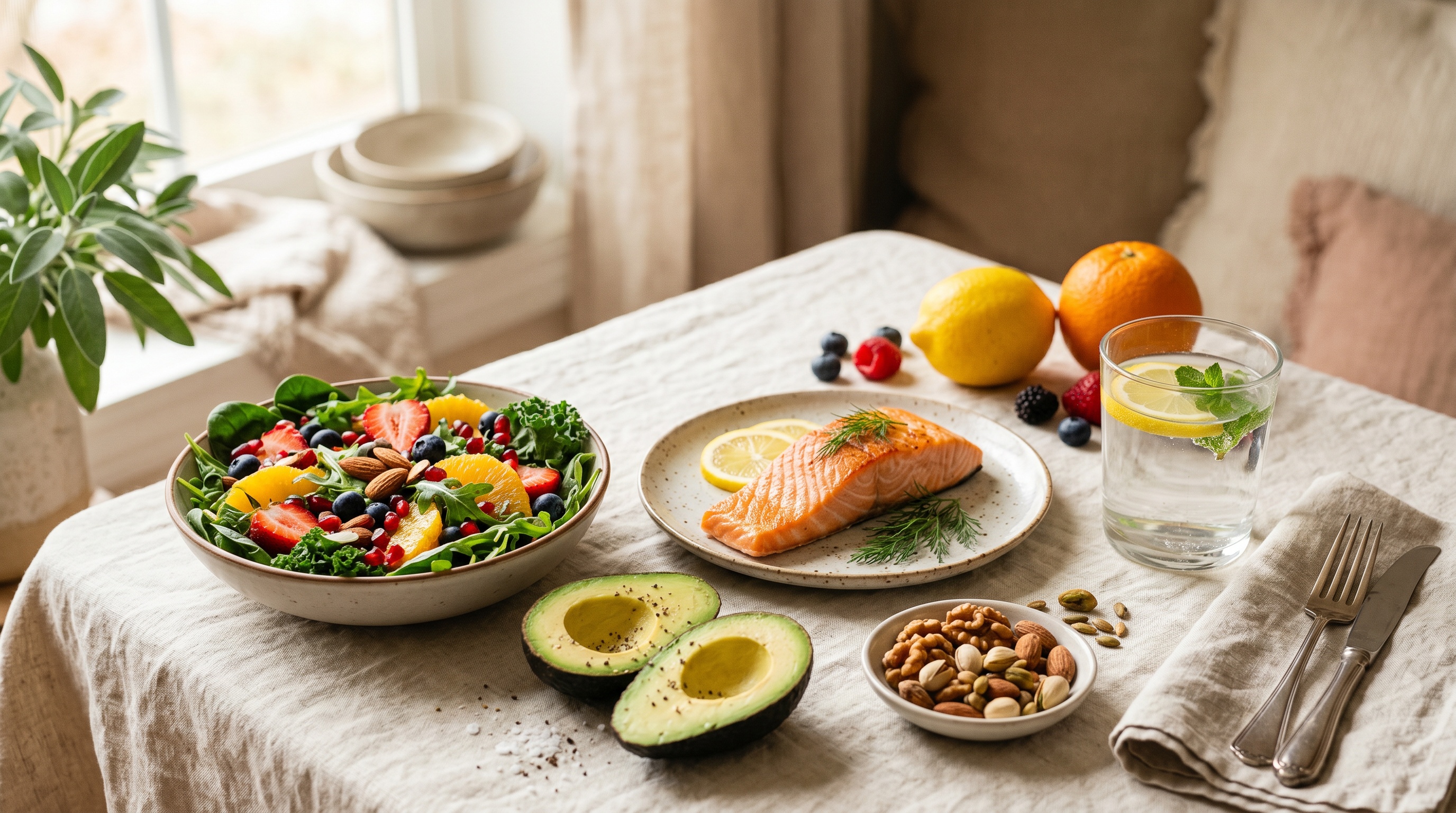
Most glow-up advice fixates on serums, SPF, and sleep - all legitimate. But the tissue doing the glowing is made of what you eat. Skin cells turn over roughly every 28 days; over those four weeks, the building blocks you supply through food either support luminosity or undermine it. The science on this is more solid than the average wellness headline suggests.
This article covers the six food categories with the strongest evidence for skin radiance, the mechanisms behind each, and the specific villains that quietly dull your glow. Think of it as the anchor guide for everything in our glowing-skin library - each section links to dedicated deep-dives where we've gone further.
Carotenoids: The Visible Glow in Produce
In 2012, a study published in PLOS One by Whitehead et al. tracked participants who increased their fruit and vegetable consumption over six weeks. Skin redness and yellowness - the spectral markers judges associate with healthy, attractive appearance - changed measurably. Observers, rating photographs, consistently preferred the higher-carotenoid complexions. This wasn't subtle; the effect was comparable in perceived attractiveness to a light tan, and it came from diet alone.
Carotenoids - the pigments that make carrots orange, tomatoes red, and kale dark green - deposit in the skin's outer layers when consumed regularly. They act as biological sunscreen (absorbing UV-generated free radicals), antioxidants, and visible colorants that shift skin tone toward the warm, luminous range observers read as healthy.
Carrots & sweet potatoes
Rich in beta-carotene, which converts to vitamin A and deposits visibly in skin. Aim for 2-3 servings weekly.
Tomatoes & watermelon
High in lycopene - clinical studies show lycopene-rich diets reduce UV-related DNA damage and skin redness.
Spinach & kale
Lutein and zeaxanthin concentrate in skin tissue and protect against photo-oxidative stress.
Blueberries & raspberries
Anthocyanins (a distinct antioxidant class) neutralize reactive oxygen species before they degrade collagen.
The practical target: aim for at least 5 servings of varied, colorful produce daily - not as a vague wellness platitude, but because the carotenoid pool in skin is dose-dependent. More variety, more benefit.
Omega-3 Fatty Acids: Your Skin's Moisture Lock
In 2024, Handeland et al. published a double-blind, placebo-controlled pilot study in the Journal of Cosmetic Dermatology showing that daily omega-3 supplementation produced significant, dose-dependent improvements in transepidermal water loss (TEWL), skin hydration, and elasticity in healthy adults - with improvements correlating directly to increases in participants' omega-3 index. TEWL is the clinical measure of how well your skin holds moisture in; lower TEWL means a stronger barrier and less dryness, tightness, and dullness.
The mechanism: EPA and DHA - the long-chain omega-3s in fatty fish and algae - are incorporated into cell membrane phospholipids. A more omega-3-rich membrane is more fluid and less prone to moisture loss. These fatty acids also suppress the inflammatory cytokines that trigger redness and reactive breakouts.
- Fatty fish: salmon, sardines, mackerel (2-3 servings per week)
- Walnuts and flaxseed: provide ALA, a shorter-chain omega-3 the body partially converts
- Algae oil: the vegan source of EPA and DHA directly
If you're also managing breakouts, the anti-inflammatory effect of omega-3s does double duty. Our guide on the best foods for clear skin goes deeper on the acne-omega-3 connection.
Vitamin C: The Collagen Rate-Limiter
Vitamin C is essential - not beneficial, essential - for collagen production. The enzymes that hydroxylate proline and lysine residues during collagen assembly (prolyl hydroxylase and lysyl hydroxylase) require vitamin C as a cofactor. Without adequate vitamin C, these enzymes auto-inactivate and collagen synthesis stalls. This mechanism is established biochemistry, documented across multiple review papers including Pullar, Carr, and Vissers in Nutrients (2017) via PMC.
What this means practically: a diet consistently low in vitamin C produces slower collagen turnover, which over months shows up as duller, less firm skin - not scurvy-level deficiency, just suboptimal supply. The skin is a high-demand tissue; it competes with other organs for circulating ascorbate.
Best dietary sources by vitamin C density:
- Red bell peppers (190 mg per 100g - more than citrus)
- Kiwi (93 mg per 100g)
- Strawberries, papaya, broccoli, Brussels sprouts
- Orange and grapefruit juice (convenient but watch the sugar load)
Vitamin C is water-soluble and not stored long-term. Daily intake matters more than occasional large doses. Two servings of vitamin-C-rich vegetables or fruit per day keeps synthesis running.
Glycemic Load: The Collagen Killer You're Ignoring
High sugar intake does not just affect waistlines. In a process called glycation, free glucose and fructose molecules bond irreversibly to collagen and elastin fibers, forming advanced glycation end products (AGEs). AGEs crosslink collagen fibers, making them stiff, brittle, and discolored - the dermatological markers of accelerated aging. A 2010 review in Clinics in Dermatology (Uribarri et al.) documented that this process is accelerated by UV exposure in the skin, creating a compounding cycle: sun damage plus high sugar intake ages skin faster than either alone.
The glow-up diet takes a clear position on this: refined carbohydrates and added sugars are the highest-leverage dietary change for skin radiance. The evidence base for glycemic load and skin outcomes is robust. A 12-week randomized controlled trial by Smith and Mann (American Journal of Clinical Nutrition, 2007) found that participants on a low-glycemic diet saw acne lesions fall by 23.5 lesions on average, versus 12.0 in the control group - nearly twice the improvement. The mechanism is the same one driving dullness: lower insulin spikes mean less IGF-1 signaling, less sebum, less inflammation, and slower glycation of dermal collagen.
The glycemic swap that matters most: replacing white bread, white rice, and sugary cereals with whole grains (oats, quinoa, sourdough, barley) reduces glycemic load without cutting carbs entirely. The fiber slows glucose absorption - insulin stays lower, glycation stays slower.
For a complete breakdown of how blood sugar affects skin at the hormonal level, see our guide on the low-glycemic diet for acne - and our dedicated article on sugar and acne, which covers the insulin-IGF-1-sebum pathway in detail.
Polyphenols and Green Tea: Antioxidant Defense
Free radicals - generated by UV radiation, pollution, and metabolic byproducts - degrade collagen and elastin between skin cells. Polyphenols intercept this damage before it accumulates. Among dietary polyphenols, EGCG (epigallocatechin gallate) from green tea has the strongest documented skin evidence.
Research published in Carcinogenesis (Oxford Academic, 2001) found that topical application of EGCG to human skin before UV exposure reduced hydrogen peroxide production by 68-90% and nitric oxide by 30-100% - both are markers of oxidative skin damage. While that study used topical application, oral EGCG reaches skin tissue through circulation; the evidence for dietary polyphenols reducing systemic oxidative stress is well-established.
Beyond green tea, the broader polyphenol category includes:
- Dark chocolate (70%+): flavanols that improve skin blood flow and hydration
- Red wine (in moderation): resveratrol, a polyphenol with anti-inflammatory properties
- Extra virgin olive oil: oleocanthal and hydroxytyrosol - anti-inflammatory phenolic compounds
- Berries: anthocyanins with high ORAC values and UV-protective capacity
Two to three cups of green tea daily is a low-effort, zero-calorie addition to a glow-up diet. If caffeine is a concern, matcha or decaf green tea retain most of the EGCG content.
The Gut-Skin Axis: Why Fermented Foods Belong Here
Gut health and skin appearance are linked through what researchers call the gut-skin axis - a bidirectional communication pathway between the microbiome, the immune system, and skin barrier function. Dysbiosis (an imbalanced gut microbiome) is associated with higher systemic inflammation, which shows up on the skin as redness, reactivity, and compromised barrier integrity.
A 2024 randomized clinical trial found that 42.5% of acne patients taking oral probiotics showed meaningful improvement on the Global Acne Grading System, versus 20.6% in the placebo group. The implication for radiance: supporting a diverse gut microbiome reduces the low-grade inflammatory background that dulls skin and makes it reactive.
Fermented foods provide live cultures without a supplement:
- Plain yogurt or kefir (dairy or coconut-based)
- Kimchi, sauerkraut, miso
- Kombucha (watch the sugar content in commercial versions)
For the full science on this connection, our guide on the gut-skin axis and acne is the most detailed resource on the site. The same microbiome principles that clear acne support skin radiance.
The Foods That Dull Your Skin
A glow-up diet is as much about what you remove as what you add. These are the biggest evidence-backed offenders:
Refined sugar and high-fructose corn syrup: The fastest route to glycation. Fructose in particular is 10x more reactive than glucose in the Maillard reaction that forms AGEs.
Ultra-processed foods high in omega-6 oils: Seed oils (sunflower, soybean, corn) skew the omega-6/omega-3 ratio, promoting inflammatory pathways. Skin barrier function depends on a balanced ratio.
Alcohol: Depletes zinc (a key cofactor for skin repair), dehydrates systemically, and generates acetaldehyde - a compound that crosslinks collagen. Even moderate drinking reduces skin hydration measurably the morning after.
Conventional dairy (especially skim milk): Linked to increased acne severity in multiple studies, likely through IGF-1 and insulin-spiking proteins. If you notice reactive skin after dairy, our article on the hormonal acne diet explains the mechanism in full.
Putting It Together: The Glow Score Approach
Rather than tracking macros or calories, the GlowCast approach scores each meal across 8 dermatology dimensions - hydration, inflammation, glycemic impact, antioxidants, nutrient density, collagen support, gut-skin axis, and hormonal impact. Every category above maps directly to one or more of those dimensions. A meal of salmon, roasted sweet potato, leafy greens, and a squeeze of lemon hits six of the eight in one plate.
Over roughly 14 days of tracking, patterns emerge: which meals reliably produce your best skin days, and which precede dull or reactive ones. That's the glow-up diet made personal - not a generic 7-day plan, but your specific food-skin map.