Best Foods for Clear Skin: The Science-Backed Guide
The clearest skin diet isn't complicated. Dermatology research points to one consistent finding: swap high-glycemic staples for whole foods low on the glycemic index, add fatty fish twice a week, and support your gut - and lesion counts measurably fall within 10-12 weeks.
- A low-glycemic-load diet cut acne lesion counts nearly twice as much as a standard diet after 12 weeks in a randomized controlled trial (Smith & Mann, American Journal of Clinical Nutrition, 2007).
- 98.3% of acne patients in a 2024 prospective study had a measurable EPA/DHA deficit - suggesting most people aren't eating enough omega-3-rich foods (Guertler et al., Journal of Cosmetic Dermatology, 2024).
- Oral probiotics produced meaningful acne improvement in 42.5% of patients vs. 20.6% on placebo in a 2024 clinical trial (Eguren et al., Acta Dermato-Venereologica, 2024).
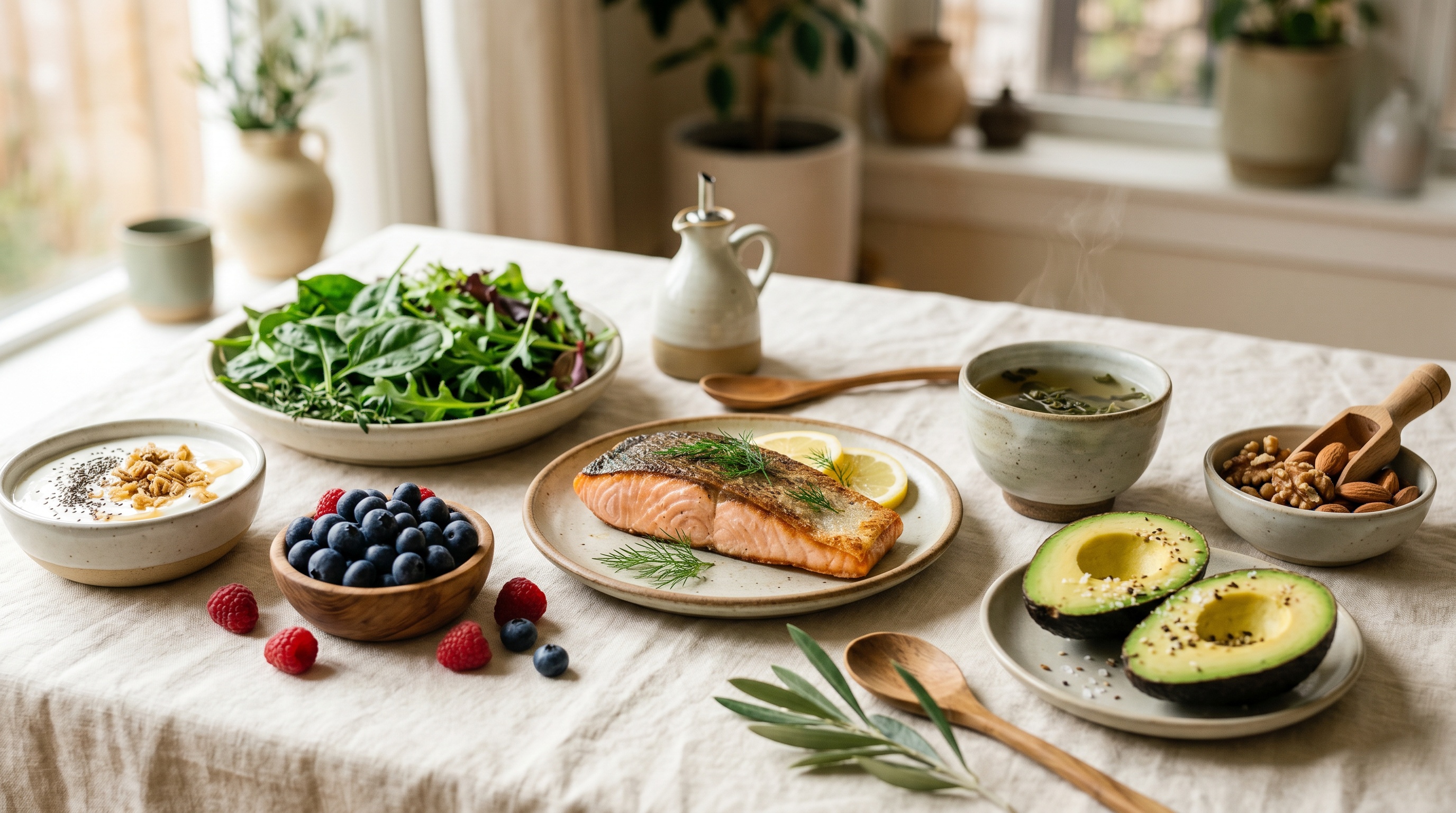
- Specific foods to prioritize: fatty fish, leafy greens, berries, pumpkin seeds, fermented foods, green tea, avocado.
- Top foods to limit: white bread, sugary drinks, conventional dairy, whey protein.
Your skin renews itself every 27 days. What you eat during that cycle directly shapes sebum production, inflammation levels, and the gut microbiome - three of the key drivers behind acne, dullness, and uneven texture. This guide covers the most evidence-backed foods for clear skin and explains the mechanism behind each one, so you know what to actually prioritize on your plate.
Why Glycemic Load Is the Biggest Dietary Lever for Clear Skin
In 2007, Smith and Mann published the first randomized controlled trial comparing a low-glycemic-load diet to a standard high-glycemic-load diet in acne patients (American Journal of Clinical Nutrition). After 12 weeks, the low-glycemic group's total lesion count dropped by 23.5 lesions - nearly double the 12-lesion drop seen in the control group (p = 0.03). That gap is clinically meaningful, and it came purely from a dietary shift, with no medication involved.
The mechanism is well understood. High-glycemic foods spike blood glucose, which drives a surge in insulin and insulin-like growth factor-1 (IGF-1). Elevated IGF-1 stimulates the androgen receptors in sebaceous glands, increases sebum production, and triggers the keratinocyte proliferation that blocks pores. Low-glycemic foods - whole grains, legumes, most vegetables, most fruits - blunt that spike and keep IGF-1 in a range that's far kinder to your skin.
Practical swap: Replace white bread, white rice, and sugary cereals with oats, lentils, sweet potato, and quinoa. These score below 55 on the glycemic index vs. 70-100 for their refined counterparts.
Best choices: Steel-cut oats, lentils, chickpeas, sweet potato, brown rice, most whole fruits, non-starchy vegetables (spinach, broccoli, cucumber).
Fatty Fish and Other Omega-3 Sources: Anti-Inflammatory from the Inside
In 2024, a prospective intervention study by Guertler and colleagues found that 98.3% of acne patients presented with a measurable EPA/DHA deficit at baseline - before any treatment (Journal of Cosmetic Dermatology, 2024). When omega-3 levels were raised through supplementation, acne scores improved significantly. The mean omega-3 index rose from 4.9% to 8.3% over the intervention period, tracking closely with clinical skin improvement.
Omega-3 fatty acids - especially EPA and DHA found in oily fish - work on at least four acne-relevant pathways: they suppress pro-inflammatory cytokines (IL-1, TNF-alpha), reduce sebum production, modulate IGF-1 signalling, and strengthen the skin barrier. The imbalance between omega-6 (pro-inflammatory, abundant in processed foods) and omega-3 (anti-inflammatory) is one reason Western diets correlate so strongly with higher acne rates.
Best food sources of EPA/DHA:
- Salmon - 2,000-3,000mg omega-3 per 100g serving
- Sardines - 1,500mg per 100g; budget-friendly and shelf-stable
- Mackerel - one of the richest sources per gram
- Anchovies - small but dense; dissolve into sauces easily
If you don't eat fish, ALA from flaxseed, chia seeds, and walnuts partially converts to EPA/DHA - though conversion rates are low (roughly 5-10%). A dedicated omega-3 algae supplement bridges the gap for plant-based eaters.
Antioxidant-Rich Foods: Berries, Leafy Greens, and Green Tea
Oxidative stress is a documented driver of inflammatory acne - free radicals damage sebocytes and amplify the inflammatory cascade that turns a blocked pore into a red, swollen lesion. Antioxidant-rich foods neutralize these free radicals before they cause that damage.
Topical green tea extract (EGCG, the primary catechin) has shown acne-lesion reductions of 58-89% in controlled trials using split-face designs (as reviewed in Nutrients, 2022). Oral intake works more slowly and less dramatically - but as a daily habit it delivers anti-inflammatory, anti-androgenic, and sebum-regulating effects that compound over time.
High-antioxidant foods to add:
- Blueberries, strawberries, raspberries - low glycemic, high in anthocyanins and vitamin C
- Spinach and kale - vitamin C, vitamin E, beta-carotene, and folate
- Green tea - drink 2-3 cups daily; EGCG is the most studied polyphenol for skin
- Sweet red pepper - gram for gram, one of the richest vitamin C sources available
- Broccoli - sulforaphane may also reduce UV-related skin damage
Vitamin C is particularly relevant because it's required for collagen synthesis - the structural protein that keeps pores tight and skin smooth. Low vitamin C intake directly correlates with impaired collagen production and slower healing of acne marks.
Fermented Foods and the Gut-Skin Axis
A 2024 randomized clinical trial by Eguren and colleagues in Acta Dermato-Venereologica found that 42.5% of patients taking oral probiotics achieved meaningful improvement on the Global Acne Grading System after the study period, compared to just 20.6% in the placebo group (p = 0.02). That's more than double the response rate from gut bacteria alone.
The gut-skin axis works through several pathways. A disrupted gut microbiome (dysbiosis) raises intestinal permeability, allows lipopolysaccharides to enter circulation, and triggers systemic low-grade inflammation that eventually surfaces in the skin. Probiotic strains like Lactobacillus and Bifidobacterium reduce pro-inflammatory cytokines (IL-1-beta, IL-6, TNF-alpha) and appear to modulate IGF-1 and mTORC1 signalling - the same acne-relevant pathway as glycemic load.
Best food sources of probiotics:
- Plain yogurt with live cultures - look for "Lactobacillus acidophilus" on the label
- Kefir - fermented milk with 10-30 strains vs. 1-2 in most yogurts
- Kimchi and sauerkraut - fermented vegetables; also low glycemic
- Miso and tempeh - fermented soy; high in zinc and protein
Prebiotic fibers (from oats, garlic, onion, asparagus) feed beneficial bacteria and amplify the effect. Pairing fermented foods with high-fiber vegetables is the most efficient way to support a skin-friendly gut microbiome through diet alone.
Zinc-Rich Foods: Pumpkin Seeds, Legumes, Shellfish
Acne patients consistently show lower serum zinc levels than clear-skinned controls. A 2020 systematic review and meta-analysis by Yee and colleagues in Dermatologic Therapy found that acne patients had significantly lower mean zinc levels (96.3 ug/dL) compared to healthy controls (102.4 ug/dL) - and that zinc treatment produced a significant improvement in mean inflammatory papule count.
Zinc regulates sebaceous gland activity, inhibits the growth of Cutibacterium acnes (the bacterium involved in inflammatory acne), reduces inflammation, and supports wound healing - directly relevant to how quickly acne marks fade. It also works with vitamin A to regulate keratinocyte turnover, which is the process that keeps pores from becoming blocked in the first place.
Best dietary sources of zinc:
- Pumpkin seeds - 2.2mg zinc per 28g handful; easy to add to salads or oatmeal
- Oysters - the single richest food source of zinc (74mg per 100g)
- Beef and lamb - 4-6mg per 100g, in a form that's highly bioavailable
- Chickpeas and lentils - 1-2mg per 100g; zinc absorption is lower from plants but still meaningful with regular intake
- Hemp seeds - 3mg per 30g; versatile and easy to blend into smoothies
If you eat a predominantly plant-based diet, soaking legumes before cooking and eating them with vitamin C-rich foods improves zinc absorption by reducing phytate content.
Foods That Work Against Clear Skin
Knowing which foods to add is only half the equation. The research is equally clear about which foods consistently worsen skin - and removing them often produces faster results than any individual "skin superfood."
High-glycemic foods are the most reliably problematic - white bread, white rice, sugary drinks, instant oats, sweetened cereals, and most ultra-processed snacks. The glycemic spike drives the IGF-1 cascade described above.
Conventional dairy has a complex relationship with acne, particularly skim milk. Multiple large studies find that skim milk is more acne-associated than full-fat dairy - likely because it contains whey proteins and bioactive hormones that raise IGF-1 independently of glycemic effects. For the full research breakdown, read our deep dive on whether dairy causes acne.
Whey protein supplements are worth a separate mention. They're highly insulinogenic and deliver concentrated dairy-derived growth factors. If you've started a new fitness routine alongside a skin breakout, the supplement is often the overlooked variable. We cover the evidence in detail in our guide on whether whey protein causes acne.
Plant-based dairy alternatives aren't automatically skin-neutral either. Oat milk, for instance, has a relatively high glycemic index compared to other alternatives. If you've switched from dairy but still experience breakouts, see our guide on oat milk and acne for the full picture.
Glow Score
See what every meal does to your skin.
Glowcast scores each meal on 8 dermatology dimensions - glycemic impact, inflammation, gut-skin axis, and more - personalized to your skin type.
Get the App - FreeFrequently Asked Questions
What are the best foods for clear skin?
The most evidence-backed clear skin foods are: fatty fish (salmon, sardines, mackerel) for omega-3 anti-inflammatory effects; leafy greens and berries for antioxidants; fermented foods (yogurt, kefir, kimchi) for gut-skin axis support; pumpkin seeds and legumes for zinc; and low-glycemic whole grains (oats, lentils, sweet potato) to keep IGF-1 in check.
How quickly can diet changes improve acne?
Clinical trials show measurable improvements within 10-12 weeks. Smith and Mann's 2007 randomized controlled trial in the American Journal of Clinical Nutrition found acne lesion counts fell nearly twice as much in the low-glycemic group compared to controls by week 12. Real-world results vary, but most people notice a meaningful shift within one full skin renewal cycle - roughly 4 weeks.
Does dairy affect skin clarity?
Yes - multiple large studies link high dairy intake, particularly skim milk, with increased acne severity. Dairy contains whey proteins and bioactive growth hormones that raise IGF-1 and stimulate sebum production. The dairy-acne link is stronger for skim milk than full-fat. See our full does dairy cause acne guide for the breakdown.
Are probiotics and fermented foods good for clear skin?
The evidence is promising. A 2024 randomized clinical trial found 42.5% of acne patients taking oral probiotics showed meaningful improvement on the Global Acne Grading System vs. 20.6% on placebo (p = 0.02). Food-based probiotics - yogurt, kefir, kimchi, sauerkraut - deliver live cultures without the cost of a supplement and come with additional fibre and micronutrient benefits.
Does oat milk cause acne?
Oat milk is higher on the glycemic index than most other plant milks - commercial oat milk can spike blood sugar similarly to some low-GI refined grains, depending on processing. If you've already cut conventional dairy and still break out, oat milk may be a factor worth testing. Read our full oat milk and acne guide for the detail.
Sources
- Smith RN, Mann NJ, Braue A, Makelainen H, Varigos GA. "A low-glycemic-load diet improves symptoms in acne vulgaris patients: a randomized controlled trial." American Journal of Clinical Nutrition. 2007;86(1):107-115. Retrieved 2025-06-05. pubmed.ncbi.nlm.nih.gov/17616769
- Guertler A, et al. "Exploring the potential of omega-3 fatty acids in acne patients: a prospective intervention study." Journal of Cosmetic Dermatology. 2024. Retrieved 2025-06-05. doi.org/10.1111/jocd.16434
- Eguren C, Navarro-Blasco A, Corral-Forteza M, et al. "A randomized clinical trial to evaluate the efficacy of an oral probiotic in acne vulgaris." Acta Dermato-Venereologica. 2024;104. Retrieved 2025-06-05. PMC11110809
- Yee BE, Richards P, Sui JY, Marsch AF. "Serum zinc levels and efficacy of zinc treatment in acne vulgaris: a systematic review and meta-analysis." Dermatologic Therapy. 2020;33(6):e14252. Retrieved 2025-06-05. doi.org/10.1111/dth.14252
- Guertler A, et al. "Dietary patterns in acne and rosacea patients: a controlled study and comprehensive analysis." Nutrients. 2023;15:4405. Retrieved 2025-06-05. mdpi.com/2072-6643/15/19/4405