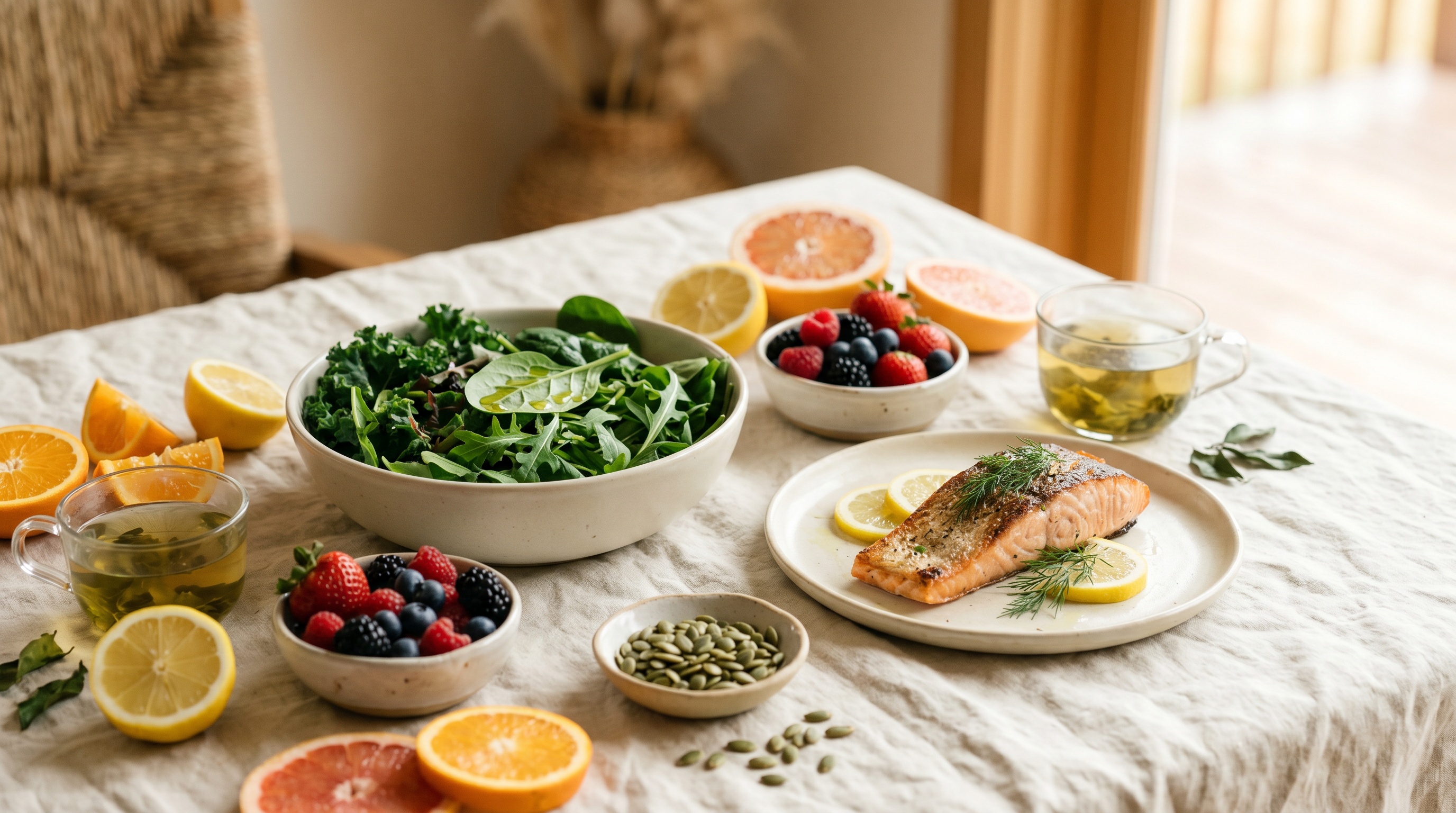
Most people treat glow and clarity as two separate goals. They eat blueberries for brightness and cut dairy for breakouts, as if the skin runs two independent systems that require two separate diets. It doesn't. The same dietary mechanisms that block acne - lower insulin, less inflammation, reduced oxidative stress - are also what produce the warm, even luminosity most people call a glow. Optimize one and you get the other for free.
Key Takeaways
- Carotenoid-rich vegetables (sweet potato, carrots, red pepper) produce a visible skin glow within 6 weeks - independent research rates this tone as more attractive than a tan (Whitehead et al., 2012, PLoS ONE).
- A low-glycemic diet reduces acne lesion counts by roughly twice as much as a standard diet over 12 weeks, per a randomized controlled trial in the American Journal of Clinical Nutrition.
- Omega-3 supplementation significantly improved skin hydration and reduced transepidermal water loss in two 2024 RCTs (Handeland et al., Journal of Cosmetic Dermatology).
- The glow goal and the clear skin goal share the same six dietary levers. You don't need two plans.
Why the Foods That Clear Acne Also Produce the Glow
In 2007, a randomized controlled trial by Smith and Mann, published in the American Journal of Clinical Nutrition, showed that a low-glycemic-load diet reduced total acne lesion counts by an average of 23.5 versus 12 in the control group over 12 weeks. What that trial didn't measure - but later research confirmed - is that the same dietary shift (less refined carbohydrate, more vegetables, more omega-3s) simultaneously deposits carotenoids in the skin, reduces systemic inflammation, and strengthens the skin barrier. The result is clearer skin that also looks more radiant.
The overlap isn't coincidence. It comes down to six mechanisms - all driven by what you eat:
| Mechanism | Clears acne | Produces glow |
|---|---|---|
| Lower glycemic load | Reduces IGF-1 and sebum | Prevents glycation dullness |
| Carotenoid intake | Anti-inflammatory | Warm luminous skin tone |
| Omega-3 fatty acids | Reduces inflammatory cytokines | Strengthens barrier, reduces water loss |
| Zinc from food | Inhibits P. acnes bacteria | Supports collagen turnover |
| Vitamin C | Antioxidant defense | Required for collagen synthesis |
| Gut microbiome support | Reduces systemic inflammation | Modulates skin barrier function |
Each of these mechanisms is covered by a dedicated article in the acne cluster if you want the full clinical evidence: see our guide to the low-glycemic diet for acne and the 7 best foods for clear skin. What this article does is show how those same foods also drive the glow outcome.
The Carotenoid Glow: How Vegetables Change Your Skin Tone
In 2012, Whitehead and colleagues at the University of St Andrews published a within-subject study in PLoS ONE showing that just two additional daily portions of carotenoid-rich fruit and vegetables produced measurable, perceptibly healthier skin coloration in Caucasian participants within six weeks. The change was driven by beta-carotene and lycopene depositing in the skin's outer layers, imparting a warm yellow-orange hue. In a separate attractiveness study, observers rated this carotenoid-driven skin tone as more appealing than a sun tan.
The math is straightforward: blood-borne carotenoids are secreted onto the skin surface. The more orange and red vegetables you eat consistently, the more they accumulate. Sweet potato, carrots, butternut squash, red bell pepper, and papaya are the highest-yield sources. Tomatoes add lycopene - a carotenoid that research also links to reduced skin roughness and fewer wrinkles at higher concentrations (PMC6719967, Nutrients 2019).
This is the clearest single dietary lever for glow. It works independently of acne status - you can have perfectly clear skin and still look dull if carotenoid intake is low.
Omega-3s and the Skin Barrier: Hydration from the Inside
In 2024, Handeland and colleagues published two randomized, double-blind, placebo-controlled studies in the Journal of Cosmetic Dermatology showing that omega-3 supplementation produced statistically significant reductions in transepidermal water loss (TEWL) and improvements in skin hydration and elasticity over 12 weeks. TEWL is the invisible leak of water through the skin barrier - when it's high, skin looks tight, dull, and prone to flaking. When it falls, skin appears plumper and more luminous.
Omega-3s work because the skin barrier is built from fatty acids. EPA and DHA (the long-chain omega-3s in fatty fish) are direct precursors to ceramides and phospholipids that form the "mortar" between skin cells. Inadequate omega-3 intake means a leakier barrier. The best dietary sources are salmon, sardines, mackerel, and anchovies. Walnuts and flaxseeds provide ALA, the plant precursor, though conversion to EPA/DHA is limited.
The acne connection: omega-3s also suppress inflammatory cytokines, including the ones that drive the inflammatory phase of a breakout. That's why the hormonal acne diet prioritizes fatty fish. Same food, two outcomes.
Sugar, Glycation, and Why High-Glycemic Foods Kill Your Glow
High-glycemic foods damage skin clarity via two separate pathways - both worth understanding because they require the same fix.
Pathway 1: IGF-1 and sebum. Foods with a high glycemic index spike insulin, which raises IGF-1 (insulin-like growth factor 1). IGF-1 directly stimulates sebaceous glands to produce excess sebum and promotes the keratinocyte proliferation that clogs pores. This is the mechanism behind the sugar-acne connection - it's not that sugar is "bad" in some vague sense; it's a specific hormonal cascade with a known endpoint: breakouts.
Pathway 2: Glycation and dullness. Excess glucose in the bloodstream binds to collagen and elastin proteins in a process called glycation, forming advanced glycation end products (AGEs). AGEs make collagen fibres rigid and discoloured, dulling the skin tone over time and accelerating the appearance of aging. This is a slower process than the acne pathway but cumulative - years of high sugar intake produce a distinctly dull, sallow complexion that no amount of topical product can fully reverse.
Cutting refined carbohydrates addresses both pathways at once. White bread, sugary drinks, breakfast cereals, and processed snacks are the highest-impact targets. The low-glycemic diet guide has a practical swap list.
The 6 Foods with the Strongest Evidence for Glow and Clarity
These aren't generic "superfoods." Each earns its place through at least one controlled study or well-established mechanism - and each targets multiple Glow Score dimensions simultaneously.
Sweet Potato
Carotenoids + Low GIOne medium sweet potato delivers around 12,000 mcg of beta-carotene - more than enough to shift skin tone measurably over 6 weeks. Its glycemic index (around 44) is half that of white potato, so it feeds the glow mechanism without spiking insulin.
Wild Salmon
Omega-3 + AstaxanthinA 100 g serving of wild salmon provides roughly 2.2 g of EPA and DHA. It also contains astaxanthin, a carotenoid with potent antioxidant activity. Two to three servings per week covers both the barrier-hydration and anti-inflammatory targets.
Berries
Vitamin C + AntioxidantsBlueberries, strawberries, and blackberries are dense in vitamin C and anthocyanins. Vitamin C is a required cofactor for collagen hydroxylation - without enough of it, collagen fibres form improperly and skin loses firmness. Anthocyanins quench free radicals that accelerate dullness.
Pumpkin Seeds
Zinc + Omega-6 BalanceAt 7.8 mg of zinc per 100 g, pumpkin seeds are one of the richest plant sources. A 2020 meta-analysis in Dermatologic Therapy (Yee et al.) confirmed that acne patients have significantly lower serum zinc than controls, and that zinc treatment improved inflammatory papule counts. The food-first approach keeps intake steady without supplementation risk.
Leafy Greens
Folate + Carotenoids + Vitamin CSpinach, kale, and Swiss chard deliver a combination of lutein, zeaxanthin, vitamin C, and folate. Lutein and zeaxanthin accumulate in skin tissue and have demonstrated photoprotective effects in placebo-controlled trials - shielding against UV-induced dullness and pigmentation changes.
Green Tea
EGCG + Anti-inflammatoryEGCG (epigallocatechin gallate), green tea's primary polyphenol, inhibits lipogenesis in sebocytes in vitro and reduces sebum production. A 2022 systematic review in Nutrients confirmed its anti-inflammatory and antimicrobial activity relevant to acne. Two to three cups daily is the amount used in most positive studies.
What to Cut First: The Four Skin Villains
Addition is the pleasant part of a skin-first diet. But the evidence is clear that some foods actively work against both glow and clarity. Cutting these four has the highest return per change.
- Refined carbohydrates and added sugar. White bread, sugary drinks, and breakfast cereals drive the IGF-1 and glycation pathways described above. These are the highest-priority cuts for both acne and dullness.
- Skim milk and whey protein. Both are potent IGF-1 stimulators. The Harvard Nurses' Health Study of 47,355 women found a significant association between dairy consumption and acne. Skim milk shows a stronger link than whole milk - fat removal concentrates the hormonal compounds. See the full evidence in the gut-skin axis article.
- Ultra-processed foods high in omega-6 oils. Refined vegetable oils in packaged snacks tip the omega-3 to omega-6 ratio toward inflammation, degrading the anti-inflammatory effect of the omega-3s you're trying to build up.
- Alcohol. Alcohol is a direct vasodilator and a dehydrator. It increases TEWL, disrupts the gut microbiome (compromising the gut-skin axis), and depletes B vitamins needed for skin cell turnover.
Tracking the Overlap: Your Daily Glow Score
The challenge with a dual-goal diet is that it's easy to optimize one axis and neglect the other. Eating plenty of carotenoid-rich vegetables (glow) but still drinking two glasses of wine and eating pasta for dinner (glycation, barrier disruption) produces a mixed signal your skin has to resolve.
The Glow Score approach scores each meal across eight skin dimensions - antioxidants, glycemic impact, hydration, collagen support, inflammation, gut-skin axis, hormonal impact, and nutrient density - so you can see, meal by meal, whether you're net-positive or net-negative on both the glow and clarity axes. Over 14 days, patterns emerge: which meals consistently pull your score down, which day-of-week habits are the real culprits, which swaps would make the biggest difference to your specific profile.
Scan your plate with the Glowcast app and get an instant Glow Score across 8 dermatology dimensions - antioxidants, glycemic impact, hydration, and more.
Download Glowcast - FreeFrequently Asked Questions
What foods give you glowing clear skin?
Foods that produce both glow and clarity share three properties: low glycemic index (preventing insulin-driven breakouts), rich in carotenoids like beta-carotene (producing visible luminosity within 6 weeks per Whitehead et al., 2012), and high in omega-3s (reinforcing the skin barrier and reducing transepidermal water loss). Top choices: sweet potato, salmon, berries, leafy greens, green tea, and pumpkin seeds.
How long does it take for diet changes to improve skin glow and clarity?
Carotenoid-driven skin tone improvements can appear in as little as 6 weeks with just 2-3 extra daily portions of carotenoid-rich vegetables (Whitehead et al., 2012, PLoS ONE). Acne reduction from a low-glycemic diet typically shows meaningful results in 10-12 weeks, based on an RCT by Smith and Mann published in the American Journal of Clinical Nutrition (2007).
Does cutting sugar really make your skin glow?
Yes, through two routes. High-glycemic foods spike insulin and IGF-1, driving sebum overproduction and breakouts. They also trigger glycation - sugar binding to collagen and elastin - which dulls skin tone and accelerates visible aging. Reducing added sugar addresses both pathways at the same time.
What is the single most important food group for glowing clear skin?
Carotenoid-rich orange and red vegetables have the strongest combined evidence for visible glow. They deposit beta-carotene in the skin's outer layers, producing a warm luminous tone that independent research rates as healthier and more attractive than a sun tan (Stephen et al., 2011, Evolution and Human Behavior).
Can the foods that clear acne also make skin look more radiant?
Yes - anti-inflammatory, low-glycemic, antioxidant-rich foods do both jobs at once. They block the IGF-1 and sebum pathway (clearing acne), deliver carotenoids (producing glow), reinforce the skin barrier via omega-3s (improving hydration and plumpness), and reduce oxidative stress (preventing dullness). The glow and clarity outcomes share the same six dietary levers.
Sources
- Whitehead RD, Re D, Xiao D, Ozakinci G, Perrett DI. "You Are What You Eat: Within-Subject Increases in Fruit and Vegetable Consumption Confer Beneficial Skin-Color Changes." PLoS ONE, 2012. Retrieved 2025-06-15. pubmed.ncbi.nlm.nih.gov/22412966
- Smith RN, Mann NJ, Braue A, et al. "A low-glycemic-load diet improves symptoms in acne vulgaris patients: a randomized controlled trial." American Journal of Clinical Nutrition, 2007. Retrieved 2025-06-15. researchgate.net/publication/6220674
- Handeland M, et al. "Krill oil supplementation improves transepidermal water loss, hydration and elasticity of the skin in healthy adults." Journal of Cosmetic Dermatology, August 2024. Retrieved 2025-06-15. doi.org/10.1111/jocd.16513
- Yee BE, Richards P, Sui JY, Marsch AF. "Serum zinc levels and efficacy of zinc treatment in acne vulgaris: A systematic review and meta-analysis." Dermatologic Therapy, September 2020. Retrieved 2025-06-15. doi.org/10.1111/dth.14252
- Fabbrocini G, et al. "Green Tea and Other Tea Polyphenols: Effects on Sebum Production and Acne Vulgaris." PMC5384166, Antioxidants, 2017. Retrieved 2025-06-15. pmc.ncbi.nlm.nih.gov/articles/PMC5384166
- Stephen ID, Law Smith MJ, Stirrat MR, Perrett DI. "Facial Skin Coloration Affects Perceived Health of Human Faces." International Journal of Primatology, 2009; and follow-up: Lefevre CE, Perrett DI, Evolution and Human Behavior, 2015. Retrieved 2025-06-15.
- Darvin ME, et al. "Do We Utilize Our Knowledge of the Skin Protective Effects of Carotenoids Enough?" Nutrients, PMC6719967, 2019. Retrieved 2025-06-15. pmc.ncbi.nlm.nih.gov/articles/PMC6719967