Skin Science
Foods for Glowing,
Hydrated Skin
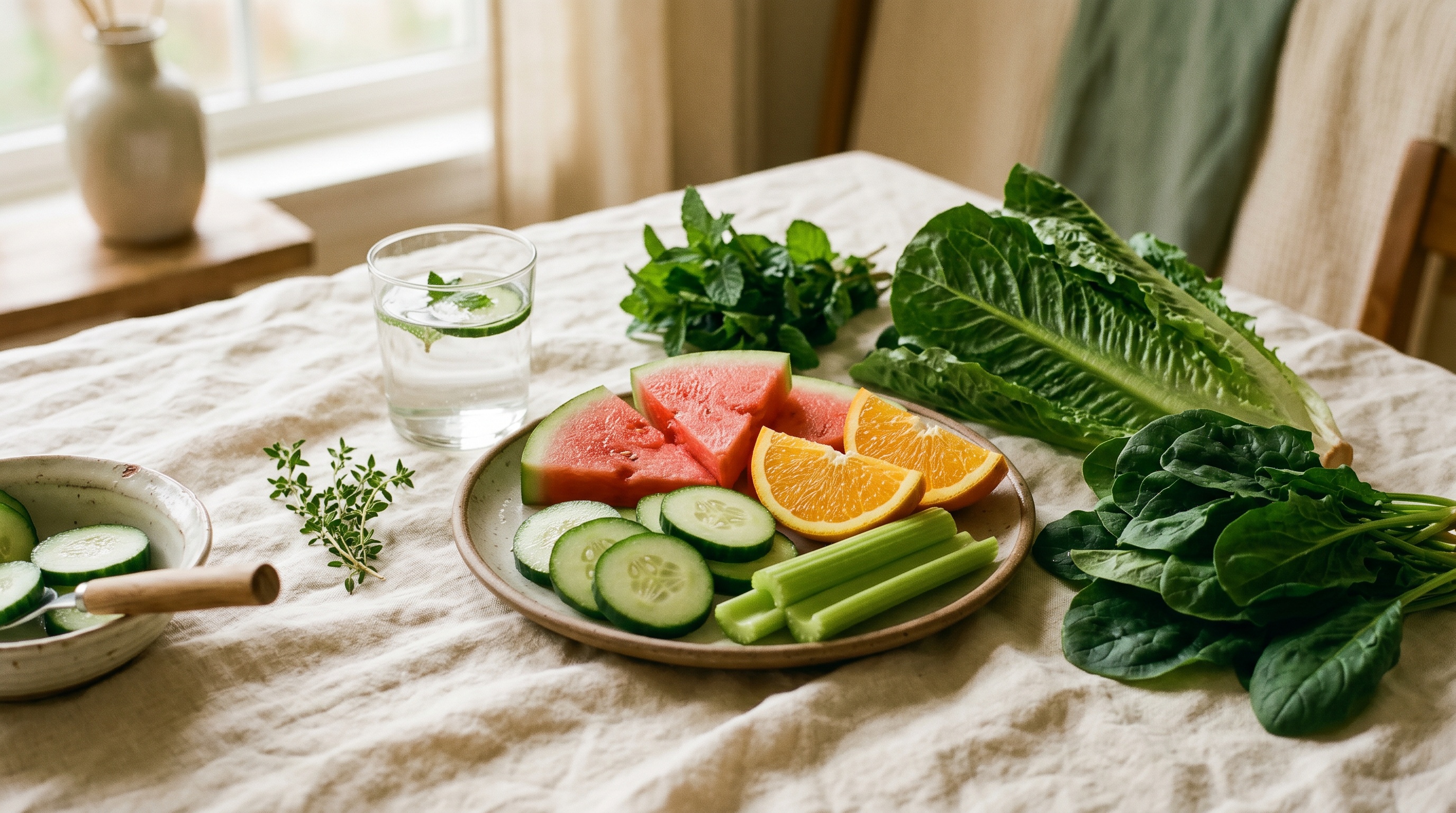
Your moisturiser locks in water. Your diet determines how much water was there to lock in. Most people spend freely on serums while eating foods that actively dehydrate their skin - a losing trade-off, and an invisible one. The foods below fix the problem at the source, using three separate mechanisms that your topical routine simply cannot reach.
Key Takeaways
- In 2024, a peer-reviewed randomized controlled trial found daily omega-3 supplementation produced statistically significant reductions in transepidermal water loss and measurable increases in skin hydration within 12 weeks (Handeland et al., Journal of Cosmetic Dermatology, 2024).
- Roughly 22% of daily water intake in the US comes from food, not drinks - high-water fruits and vegetables are an underrated hydration source (NIH, Nutrition Reviews, 2010).
- Carotenoid glow from eating more fruit and vegetables is measurable in the skin within 8 weeks, independent of skin tone (Whitehead et al., Frontiers in Psychology, 2020).
- Alcohol, high-sodium processed foods, and refined carbohydrates are the three main dietary barriers to glowing, hydrated skin - their mechanisms are distinct and cumulative.
Why Your Skin Loses Water - and How Diet Changes That
Skin hydration is not primarily about how much water you drink. It is about how well your skin barrier holds water inside the dermis and stops it evaporating through the outer layers - a process measured in clinical research as transepidermal water loss (TEWL). When the barrier is intact, skin looks plump, reflective, and glowing. When it is compromised, skin looks dull, tight, and creased under fine lines.
The barrier is made of ceramides, fatty acids, and cholesterol - lipids your body builds partly from what you eat. That is the direct link between diet and hydration. It is not about adding more water to the system; it is about stopping the water that is already there from escaping.
Three dietary pathways govern this:
- Barrier reinforcement - omega-3 and omega-6 fatty acids that build and repair the lipid barrier
- Cellular hydration - water-dense foods and electrolytes that maintain turgor inside skin cells
- Structural support - vitamin C and antioxidants that protect the collagen matrix that anchors water in the dermis
The foods below target at least one of these pathways. The strongest ones target all three.
Omega-3 Fatty Acids: The Barrier's Most Studied Building Block
In 2024, Handeland, Wakeman, and Burri published two randomized, double-blind, placebo-controlled trials in the Journal of Cosmetic Dermatology testing oral omega-3 supplementation in healthy adults with mildly elevated TEWL. Both studies found statistically significant reductions in TEWL and significant increases in skin hydration and elasticity versus placebo over 12 weeks - with effects correlating directly with each participant's rise in their omega-3 index. Put simply: the more omega-3 in the blood, the lower the water loss through the skin.
Time to statistically significant improvement in skin hydration and TEWL in the 2024 omega-3 RCT - Handeland et al., Journal of Cosmetic Dermatology
An earlier 12-week clinical trial - published in Skin Pharmacology and Physiology (Neukam et al., 2011; PMID 21088453) - using oral flaxseed (linseed) oil in women with self-reported sensitive skin found significant reductions in skin roughness, scaling, and water loss, alongside measurably smoother and better-hydrated skin. The improvements correlated with plasma alpha-linolenic acid (ALA) levels - the plant form of omega-3.
The best dietary sources of omega-3 for skin hydration:
| Food | Omega-3 type | Easy daily serving |
|---|---|---|
| Salmon (wild-caught) | EPA + DHA (most bioavailable) | 100 g fillet, 2-3x per week |
| Sardines | EPA + DHA | Half a tin on sourdough |
| Flaxseed (ground) | ALA (plant omega-3) | 1-2 tbsp in yogurt or smoothie |
| Walnuts | ALA | Small handful (28 g) daily |
| Chia seeds | ALA | 2 tbsp in overnight oats |
If you eat primarily plant-based, combining ground flaxseed with walnuts daily gives you meaningful ALA. The conversion to EPA and DHA is limited, but the Neukam flaxseed trial showed skin hydration benefits from ALA sources alone - so they work, they just work differently to marine omega-3s.
High-Water Foods: The Missing Layer in Most Routines
The NIH estimates roughly 22% of daily water intake in the United States comes from food, not beverages (Popkin, D'Anci, and Rosenberg, Nutrition Reviews, 2010). In countries with higher fruit and vegetable intake - Greece, for example - that percentage is meaningfully higher. The practical implication is direct: eating more water-dense produce adds to your total body water, supports cellular turgor in the skin, and delivers electrolytes (potassium, magnesium) that regulate how water moves in and out of cells.
Water content of common hydrating foods:
| Food | Water content | Bonus skin nutrients |
|---|---|---|
| Cucumber | ~96% | Silica, vitamin K |
| Celery | ~95% | Vitamin K, potassium |
| Watermelon | ~92% | Lycopene, vitamin C |
| Strawberries | ~91% | Vitamin C, anthocyanins |
| Spinach | ~91% | Beta-carotene, folate, iron |
| Peaches | ~89% | Beta-carotene, vitamin C |
The standout here is watermelon - it combines high water content with lycopene (a carotenoid associated with UV protection) and vitamin C. Cucumber and celery add silica, a trace mineral linked to collagen formation. These are not superfoods in a vague marketing sense; they are just genuinely water-rich foods with documented micronutrient co-benefits for skin.
Vitamin C: Why Your Skin's Water-Holding Capacity Depends on Collagen
Skin holds water not just in surface cells but deep in the dermis, where the extracellular matrix - primarily collagen - acts as a sponge. Collagen makes up roughly 75% of the dermis dry weight. Its capacity to bind and retain water is central to skin plumpness and the way light reflects off the surface. What determines collagen quality? In large part, vitamin C.
A 2017 review by Pullar, Carr, and Vissers in Nutrients (PMC5579659) confirmed that normal skin contains high concentrations of vitamin C specifically to support two functions: stimulating collagen synthesis in fibroblasts, and providing antioxidant protection against UV-induced photodamage that breaks down existing collagen. Without adequate vitamin C, collagen crosslinks are structurally weak - and structurally weak collagen holds less water.
The best dietary sources of vitamin C for skin are:
- Red bell pepper - one medium pepper delivers roughly 190 mg of vitamin C, more than double the RDA
- Kiwi fruit - around 90 mg per fruit, with additional flavonoids
- Broccoli - 80-90 mg per 100 g raw; drops with cooking, so lightly steam or eat raw
- Strawberries - 60 mg per 100 g, plus the high water content above
- Citrus fruits - orange, grapefruit, lemon; well-established sources, though often overstated relative to bell pepper
The practical note on cooking: vitamin C is water-soluble and heat-sensitive. Boiling broccoli in water can destroy 50% or more of its vitamin C content. Steaming or roasting at lower temperatures preserves significantly more. If you're eating vegetables specifically for skin benefit, how you cook them matters.
Carotenoids: The Dietary Source of Visible Glow
Carotenoids - the pigments that make carrots orange, tomatoes red, and spinach dark green - deposit in the skin's outer layers and produce a measurable warm, golden tone that humans perceive as healthy and attractive. This is distinct from tan, which comes from melanin. It is a separate optical effect, and it is driven entirely by diet.
In 2020, Whitehead et al. published a study in Frontiers in Psychology showing that changes in skin carotenoid levels - from changes in fruit and vegetable intake - were visible and measurable in skin color within 8 weeks, independent of changes in skin lightness or melanin. A separate PLOS ONE study (Stephen et al., 2011) found that a daily fruit and vegetable smoothie measurably shifted facial skin reflectance within 5 weeks, with spectral signatures matching beta-carotene and lycopene deposition.
Time for dietary carotenoid changes to produce measurably visible differences in skin tone - Whitehead et al., Frontiers in Psychology, 2020
Carotenoid-rich foods that produce this glow effect:
- Cooked tomatoes - cooking concentrates lycopene and increases bioavailability; tomato paste is one of the richest sources
- Carrots - high beta-carotene; fat-soluble, so pair with olive oil for maximum absorption
- Sweet potato - beta-carotene plus potassium; one medium sweet potato can provide the full RDA for vitamin A
- Mango - beta-carotene plus vitamin C; one of the few fruits that meaningfully contributes to carotenoid skin color
- Dark leafy greens - spinach, kale, and Swiss chard contain lutein and zeaxanthin, which concentrate in skin and support UV resilience
The glow effect from carotenoids has nothing to do with sun exposure, and it does not carry UV damage. It is purely dietary. For anyone concerned about clear skin as well as glow, leafy greens and sweet potato are ideal: they are low-glycemic, anti-inflammatory, and carotenoid-rich simultaneously.
The Three Foods That Quietly Kill Your Glow
You can eat all the salmon and sweet potato you want. If these three categories dominate your daily intake, they will offset most of the benefit.
1. Alcohol
Alcohol is a diuretic - it suppresses anti-diuretic hormone (ADH), increasing urine output and pulling water from cells, including skin cells. A single heavy drinking session measurably reduces skin hydration the following morning. Chronic high consumption compounds this with systemic inflammation, dilated blood vessels (the redness associated with rosacea), and disrupted sleep - all of which worsen skin quality independent of the dehydration effect.
2. High-sodium processed foods
Excess sodium disrupts osmotic balance across cell membranes, drawing water out of cells and into circulation (where it is excreted). The result is puffiness - water in the wrong place - combined with cellular dehydration in the skin. Processed meats, cheese, sauces, and stock cubes are the primary culprits. The effect is visible within 24-48 hours of a high-sodium day.
3. Refined carbohydrates and added sugar
High-glycemic foods spike blood glucose, which elevates insulin and IGF-1, worsens sebum production, and accelerates glycation - the process where sugar molecules bind to collagen and elastin fibres, making them stiff and less able to hold water. The result is dullness, not just breakouts. This is also why the foods that support a low-glycemic diet for acne are largely the same foods that produce glowing, hydrated skin: the enemy is the same glucose spike, just with different visible outcomes.
For a deeper look at exactly which foods trigger skin problems, the science-backed guide to clear skin foods covers the overlap between the hydration and breakout sides of the equation.
See what every meal does to your skin
Snap your plate. Get a Glow Score across 8 skin dimensions - including hydration, inflammation, and glycemic impact - in seconds.
Download Glowcast - FreePutting It Together: A Week That Scores Well for Skin Hydration
The pattern across all the evidence above is consistent. Glowing, hydrated skin comes from meals that combine:
- At least one omega-3 source per day (fatty fish 2-3 times per week; flaxseed or walnuts on other days)
- Two or more portions of carotenoid-rich produce daily (any colour combination of carrot, sweet potato, leafy greens, tomato, mango)
- Regular vitamin C from whole food sources (bell pepper, kiwi, strawberries, broccoli), ideally alongside the carotenoid foods since vitamin C aids their metabolism
- Consistent hydrating produce as volume foods (cucumber, watermelon, celery, spinach)
What makes this hard to track manually is that hydration, inflammation, glycemic load, and collagen support are all happening simultaneously in every meal. A grilled salmon salad with spinach, cherry tomatoes, and a squeeze of lemon scores well across all four. A takeaway noodle bowl with soy-heavy sauce might undercut it in sodium alone.
GlowCast's Glow Score was built to track exactly this - scoring each meal across 8 dermatology dimensions including hydration, antioxidants, and glycemic impact, personalized to your skin type. Instead of guessing, you snap your plate and see in seconds which dimension is pulling your score down. After 14 days, the pattern is usually obvious. See how the Glow Score works or explore more skin science on the blog.
Frequently Asked Questions
What foods hydrate your skin from within?
The best foods for skin hydration work through three pathways: omega-3 fatty acids (fatty fish, flaxseed, walnuts) that reinforce the skin barrier and reduce transepidermal water loss; high-water-content foods (cucumber 96%, watermelon 92%) that support cellular turgor; and vitamin C-rich foods (bell pepper, kiwi, broccoli) that protect the collagen matrix holding moisture in the dermis.
How long does diet take to improve skin hydration?
Clinical trials suggest 6-12 weeks for measurable changes. A 2024 RCT in the Journal of Cosmetic Dermatology found statistically significant reductions in transepidermal water loss and increases in skin hydration within 12 weeks of daily omega-3 supplementation versus placebo. Carotenoid-driven glow from fruit and vegetables has been observed in as little as 8 weeks.
Do cucumber and watermelon actually hydrate skin?
Yes, systemically. The NIH estimates 22% of daily US water intake comes from food. High-water foods add to total body water, which supports skin turgor and plumpness. They also supply potassium and magnesium - electrolytes that regulate how water moves into and out of skin cells. The effect is real but indirect, not a substitute for consistent fluid intake overall.
What foods dry out skin the most?
Alcohol (a diuretic that pulls water from skin cells), high-sodium processed foods (disrupts osmotic balance and cellular hydration), and refined carbohydrates (accelerate glycation, stiffening collagen so it holds less water) are the three biggest dietary dehydrators. Their effects are cumulative and distinct - meaning a diet high in all three causes significantly more damage than any single one.
Is the diet for glowing skin the same as the diet for clear skin?
Largely, yes. Anti-inflammatory, low-glycemic, omega-3-rich foods produce both outcomes by different mechanisms: for hydration, omega-3s build the skin barrier; for acne, they suppress IGF-1 and sebum overproduction. The villain foods overlap almost entirely - refined carbs and alcohol worsen both. See the full breakdown in the clear skin foods guide.
Sources
- Handeland K, Wakeman M, Burri L. "Krill oil supplementation improves transepidermal water loss, hydration and elasticity of the skin in healthy adults: Results from two randomized, double-blind, placebo-controlled, dose-finding pilot studies." Journal of Cosmetic Dermatology. 2024 Dec;23(12):4285-4294. PMID 39169540. Retrieved 2025-06-17. pubmed.ncbi.nlm.nih.gov/39169540
- Neukam K et al. "Supplementation of flaxseed oil diminishes skin sensitivity and improves skin barrier function and condition." Skin Pharmacology and Physiology. 2011;24(2):67-74. PMID 21088453. Retrieved 2025-06-17. pubmed.ncbi.nlm.nih.gov/21088453
- Pullar JM, Carr AC, Vissers MCM. "The Roles of Vitamin C in Skin Health." Nutrients. 2017 Aug 12;9(8):866. PMC5579659. Retrieved 2025-06-17. pmc.ncbi.nlm.nih.gov/articles/PMC5579659
- Whitehead RD et al. "Skin Color Cues to Human Health: Carotenoids, Aerobic Fitness, and Body Fat." Frontiers in Psychology. 2020 Feb 20;11:392. PMC7078114. Retrieved 2025-06-17. pmc.ncbi.nlm.nih.gov/articles/PMC7078114
- Stephen ID et al. "Daily Consumption of a Fruit and Vegetable Smoothie Alters Facial Skin Color." PLOS ONE. 2015;10(7):e0133445. Retrieved 2025-06-17. journals.plos.org
- Popkin BM, D'Anci KE, Rosenberg IH. "Water, Hydration and Health." Nutrition Reviews. 2010 Aug;68(8):439-58. PMC2908954. Retrieved 2025-06-17. pmc.ncbi.nlm.nih.gov/articles/PMC2908954