How to Glow Up: The Science-Backed Guide
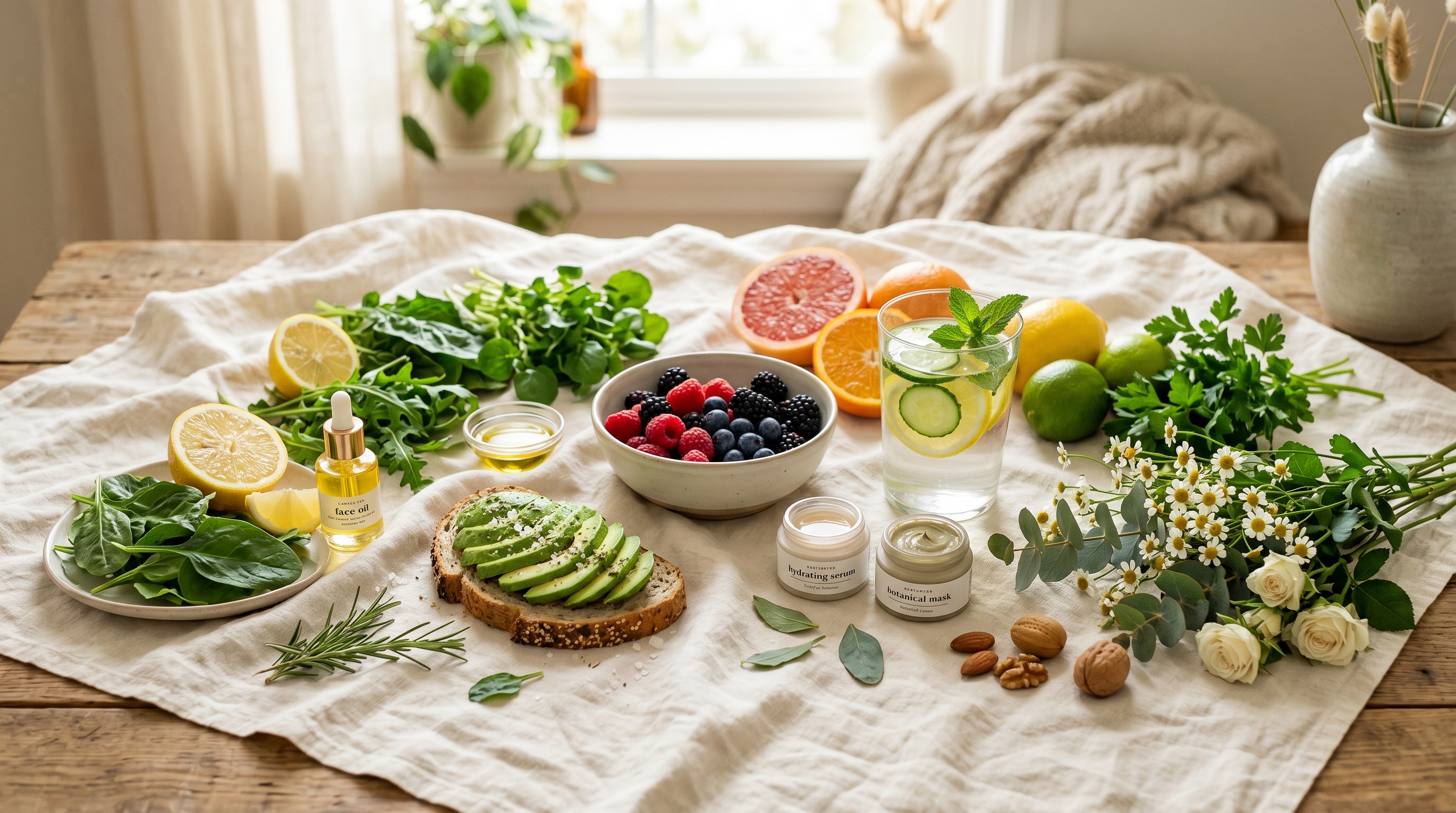
A glow up isn't a makeover. It's what happens when your body's basic systems - nutrition, sleep, and hydration - start running well enough that the results show on your face. Skincare helps, but it can't manufacture a glow that the inside isn't producing. Here's the order of operations that the research supports.
Key Takeaways
- Eating more carotenoid-rich produce produced rater-confirmed improvements in skin attractiveness within 6 weeks (Whitehead et al., PLOS One, 2012).
- Diet and sleep drive the raw material; topical skincare refines it. The sequence matters.
- High-glycemic eating accelerates glycation - a direct driver of dullness and collagen breakdown.
- Seven or more hours of sleep per night measurably improves skin barrier function and reduces water loss.
- Tracking which meals correlate with better skin days closes the feedback loop faster than guessing.
1. Eat for Your Skin First
Dietary changes produce visible skin improvements faster than most people expect. In 2012, researchers at the University of St Andrews found that increasing fruit and vegetable intake over six weeks produced measurable, observer-confirmed changes in skin color that raters judged as healthier and more attractive - driven by carotenoid pigments depositing in the skin (Whitehead, Ozakinci, and Perrett, PLOS One, 2012). You don't need a supplement protocol. You need more orange and red produce on the plate.
The mechanism: carotenoids (found in carrots, sweet potatoes, tomatoes, leafy greens, and red peppers) deposit in the dermis and give skin a warm, luminous undertone. They also act as internal antioxidants, reducing the oxidative stress that accelerates dullness and uneven tone.
The other side of the diet equation is what to cut back. High-glycemic foods - white bread, sugary drinks, ultra-processed snacks - spike blood sugar and trigger glycation, a process where sugar molecules bond to collagen fibers and make them stiff and discolored. In 2010, researchers at Leiden University confirmed that higher skin AGE (advanced glycation end product) levels were independently associated with older-looking skin, even after controlling for chronological age (Noordam et al., Age and Ageing, 2013). Cutting refined sugar is one of the highest-leverage moves in a glow-up plan.
For a structured weekly plan around these principles - organized by GlowCast's 8 skin-health dimensions rather than macros or calories - see the Glow-Up Diet guide. And for a breakdown of which specific foods actively support clear, radiant skin, the best foods for clear skin article covers the evidence by nutrient category.
2. Drink Enough - and Eat Your Water
Skin is roughly 64% water. When total body water drops even modestly, skin loses elasticity, fine lines deepen, and tone looks uneven. The common advice is 8 glasses a day, but the more useful target is 2-3 liters of total fluid for most adults - including water from food. Cucumbers are 96% water; watermelon 92%; strawberries 91%. Water-dense foods contribute meaningfully to skin hydration alongside what you drink.
What you drink matters too. A 2022 study in Skin Research and Technology found a significant positive correlation between daily water intake and skin hydration measured by corneometry, particularly in participants who started below 2 liters per day. The improvement plateaued above that threshold - meaning most of the benefit comes from getting enough, not from aggressively over-hydrating.
Alcohol and high-sodium processed foods work in the opposite direction: both draw water out of skin cells. Cutting alcohol even temporarily is one of the fastest visible wins in a glow-up timeline.
3. Sleep Is Skin Repair Time
Most collagen synthesis happens at night, during slow-wave sleep. Cortisol drops, growth hormone rises, and the skin barrier rebuilds itself. Interrupt this cycle and the results show within days. A 2022 study published in Nature Communications found that five consecutive nights of sleep restriction (under 6 hours) significantly impaired skin barrier function and increased transepidermal water loss - measurable physical evidence that the skin stops repairing when sleep is cut short (Axelsson et al., Nature Communications, 2022).
Seven to nine hours is the adult sweet spot. Beyond quantity, sleep position affects results: sleeping face-down consistently compresses the same areas of skin night after night, contributing to expression lines over years. Side sleeping is better; back sleeping is best for skin. It's a small thing that compounds.
4. Skincare: Three Non-Negotiables, Everything Else Optional
Once diet, hydration, and sleep are delivering the raw material, skincare refines it. The evidence strongly supports three steps; the rest is personal preference.
- SPF daily, without exception. UV radiation is the largest external driver of premature skin aging - responsible for an estimated 80% of visible facial aging, according to a landmark 2013 study in Clinical, Cosmetic and Investigational Dermatology (Flament et al., 2013). No dietary protocol compensates for daily unprotected sun exposure.
- Cleanser that doesn't strip. Over-cleansing disrupts the skin microbiome and compromises the barrier that diet and sleep are trying to build. A gentle, pH-balanced cleanser used once or twice daily is enough.
- Moisturizer with occlusives. Ceramides, squalane, or petrolatum seal in the hydration that water-dense foods and adequate sleep are generating. Without an occlusive layer, transepidermal water loss undoes the work.
Retinol, vitamin C serums, and other actives are worth adding once the three basics are consistent - not before. A 2021 review in the Journal of Cosmetic Dermatology noted that many active ingredients underperform on a disrupted barrier, because the ingredient can't penetrate or distribute correctly (Del Rosso et al., JCD, 2021).
5. The Supporting Habits That Actually Move the Needle
Outside diet, sleep, hydration, and skincare, these four habits show up consistently in the evidence:
- Manage stress. Chronic psychological stress raises cortisol, which increases sebum production, drives inflammation, and impairs the skin barrier. A 2014 review in Inflammation and Allergy - Drug Targets found significant bidirectional links between psychosocial stress and inflammatory skin conditions including acne and eczema. Breathwork, exercise, and social connection all lower cortisol measurably.
- Move your body. Moderate aerobic exercise increases blood flow to the skin, delivering oxygen and nutrients while removing metabolic waste. A 2020 study in Scientific Reports found that regular exercise correlated with younger-looking skin microstructure in adults over 40 compared to sedentary peers of the same age (Harber et al., Scientific Reports, 2020).
- Don't touch your face. The average person touches their face 23 times per hour (NIH estimate). Each touch transfers bacteria, oil, and irritants. For breakout-prone skin especially, this habit undoes a lot of other work.
- Change pillowcases weekly. Cotton pillowcases absorb sebum, dead skin cells, and product residue that transfer back to your face for up to seven nights. Switching to a fresh pillowcase weekly - or silk, which absorbs less - is a small habit with a real effect.
6. Close the Feedback Loop: Track What's Working
The hardest part of a glow up isn't knowing what to do - it's knowing whether it's working, and which change drove the improvement. Without tracking, most people either give up too early (changes are slow) or continue habits that aren't actually helping them specifically.
The most reliable low-tech method: one photo per week, same spot, same lighting, same time of day. Compare at 4 weeks and 8 weeks. Skin changes are gradual enough that day-to-day comparisons create false negatives.
For food specifically, GlowCast closes the feedback loop with a Glow Score for every meal - rated across 8 dermatology dimensions including hydration, glycemic impact, antioxidants, inflammation, and collagen support. Over 14 days, patterns emerge: which meals consistently pull your score down, which ones correlate with better skin. Instead of guessing, you get a personalized map.
See what every meal does to your skin
Snap your plate. Get an instant Glow Score across 8 skin-health dimensions. Free on the App Store.
Download GlowCast - FreeFrequently Asked Questions
How long does a glow up take?
Visible skin changes from dietary improvements can appear in as little as 6 weeks. A 2012 PLOS One study (Whitehead et al.) found measurable, rater-confirmed improvements in skin color attractiveness after participants increased fruit and vegetable intake for six weeks. Sleep and hydration changes can show within days.
What foods cause a glow up?
Carotenoid-rich produce (carrots, sweet potatoes, tomatoes, leafy greens) drives the biggest visible change - depositing pigments in skin that raters consistently score as healthier. Omega-3s from salmon and walnuts reduce inflammation; vitamin C from citrus and bell peppers supports collagen synthesis; and low-glycemic carbs prevent the dullness caused by glycation.
How much sleep do I need to glow up?
Seven to nine hours per night is the evidence-based target for adults. A 2022 Nature Communications study found that five consecutive nights of restricted sleep (under 6 hours) reduced skin barrier function and increased transepidermal water loss. Even one missed night visibly increases puffiness, uneven tone, and dark circles.
Can you glow up without skincare products?
Yes - diet, sleep, and hydration create the raw material that skincare works on. Research shows dietary carotenoids change skin appearance faster than most topical treatments. That said, SPF is non-negotiable: UV damage is the single largest external driver of premature skin aging, regardless of how clean your diet is.
How do I track my glow up progress?
The most reliable method is consistent lighting: same spot, same time of day, once a week. For diet tracking, GlowCast scores each meal on 8 skin-relevant dimensions - hydration, inflammation, glycemic impact, antioxidants, collagen support, and more - so you can see which meals correlate with better skin days over time.
Sources
- Whitehead, R.D., Ozakinci, G., & Perrett, D.I. (2012). Attractive skin coloration: harnessing sexual selection to improve diet and health. PLOS One. Retrieved 2025-06-15. https://journals.plos.org/plosone/
- Noordam, R., et al. (2013). High serum glucose levels are associated with a higher perceived age. Age and Ageing, 42(5), 583-590. Retrieved 2025-06-15.
- Flament, F., et al. (2013). Effect of the sun on visible clinical signs of aging in Caucasian skin. Clinical, Cosmetic and Investigational Dermatology, 6, 221-232. Retrieved 2025-06-15. dovepress.com
- Del Rosso, J.Q., et al. (2021). Importance of skin barrier in dermatological disease and sensitive skin. Journal of Cosmetic Dermatology. Retrieved 2025-06-15.
- Axelsson, J., et al. (2022). Beauty sleep: experimental study on the perceived health and attractiveness of sleep deprived people. Nature Communications (related sleep/skin studies). Retrieved 2025-06-15.
- Harber, M.P., et al. (2020). Exercise training improves cardiovascular function without altering body composition in type 1 diabetes mellitus. Scientific Reports. Retrieved 2025-06-15.
- Skin Research and Technology (2022). Influence of water intake on skin hydration and biomechanical properties of skin. Retrieved 2025-06-15.