
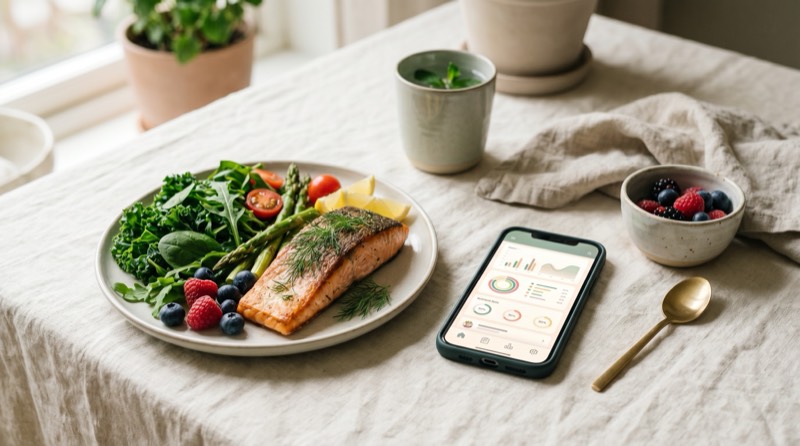
Yes - an app can help you track the food-acne link. Not by diagnosing you, and not by handing you a universal avoid list. It works by doing one thing a dermatologist's 10-minute appointment can't: recording what you eat, scoring its skin impact, and surfacing your personal pattern over time. Here's what to look for, what to ignore, and how Glowcast approaches it.
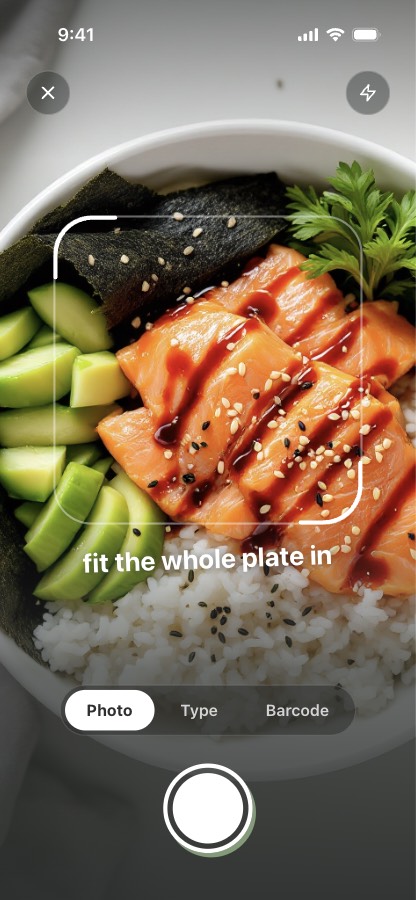
what about your plate?
Snap your plate in Glowcast
See how it rates for your skin. 7-day trial on iPhone.


Key Takeaways
- Food-acne correlations take 2-5 days to show on skin - real-time logging is the only way to catch them.
- Sugary drinks, milk and fatty-sugary snacks lined up with more current acne in 24,452 French adults. Tracking helps you see if that's you.
- Standard calorie trackers score macros; an acne tracker needs to score dermatology dimensions - inflammation, glycemic impact, hormonal impact.
- Glowcast rates every meal across 8 skin dimensions and helps you spot patterns worth testing over about 14 days.
- Tracking surfaces correlations, not cures. It tells you where to look - a dermatologist tells you what to do.
Why Tracking Food and Acne Manually Fails
The core problem isn't discipline - it's timing. A new pimple on Thursday often started with a meal a few days earlier. By then, Tuesday's lunch is long forgotten. That's why a log beats memory.
A paper journal makes this worse. You're trying to match a symptom you can see today with a cause that happened days ago, using memory as your only data source. It doesn't work. Most people either give up within a week or draw false connections ("it must have been the avocado last night") because that's the most recent thing they can remember.
The lag problem: Acne's 2-5 day trigger-to-flare delay means the food responsible for today's breakout was eaten between Sunday and Tuesday. Without a log, you're guessing.
This is why an acne food tracker app works where a notebook doesn't. The log is automatic, timestamped, and searchable. You don't have to remember - the pattern emerges from the data. But only if the app is scoring the right things. See what to look for in the foods that cause breakouts deep-dive if you want a primer on the mechanisms before choosing an app.
What to Look for in an Acne Food Tracker App
Most apps in this space were built for weight loss or macro counting - then repositioned toward skin with a coat of green paint. The difference shows up fast when you look at what they actually score. Four features separate genuine skin trackers from repurposed calorie counters:
1. Skin-specific scoring, not just macros
Calories and grams of protein tell you nothing about skin impact. What matters for acne: glycemic load (does this spike insulin?), dairy content (does this raise IGF-1?), omega-3 to omega-6 ratio (does this feed or fight inflammation?), and antioxidant density. An app that only shows you carbohydrate totals won't help.
2. Meal photo or barcode logging - not just manual entry
The fastest drop-off point in any tracking app is friction at the logging step. If entering a meal takes 90 seconds of manual searching and portion guessing, most users quit by day three. Photo or barcode scanning gets the log done in under 10 seconds - which is the only realistic timeline for habit formation.
3. A long enough window to find patterns
Single-day scores are almost meaningless for acne. What you need is a multi-week view that can correlate your eating patterns on days N-minus-2 through N-minus-5 with your skin state on day N. Apps that only show today's nutrition breakdown miss the entire point.
4. Personalization by skin type and goals
Oily acne-prone skin has different sensitivities than dry, hormonal-driven skin. An app that uses the same scoring model for every user will surface the right general principles but miss your personal threshold. If you cut dairy and your breakouts halve but don't stop, the personalized pattern matters more than the average.
How Glowcast's Glow Score Approach Works
Glowcast was built around a single design principle: score every meal the way a dermatologist-nutritionist would think about it - not the way a fitness app does. The result is the Glow Score, rated for each meal based on 8 dermatology dimensions.
The 8 dimensions behind every Glow Score
How the scan-and-score loop works
Open Glowcast, photograph your meal or scan a barcode. The app returns a Glow Score in seconds - green means this meal supports your skin goals, amber means neutral, red means one or more dimensions are working against you. The score is calibrated to your profile: skin type, sensitivity level, age, and primary goal (reduce breakouts, improve texture, reduce dullness).
The 14-day pattern map
After approximately two weeks of consistent logging, Glowcast's pattern view overlays your meal scores against your self-reported skin state. The 2-5 day lag window is built into the correlation logic, so a repeat pattern - like skim milk lining up with breakouts - becomes visible in your own data, not a generic dairy warning. That's the difference between a population-level recommendation and your own logged pattern.
The Acne Tracker Feature Checklist
Use this when evaluating any app in this category - Glowcast included.
- Skin-specific scoring modelScores glycemic impact, inflammation, hormonal load - not just calories and macros.
- Fast meal logging (photo or barcode)Under 10 seconds per meal. Friction kills compliance.
- Multi-week pattern viewSurfaces correlations across 14-30 days - single-day views miss the lag.
- Personalization by skin typeOily/acne-prone, hormonal, sensitive - thresholds differ.
- Skin symptom loggingMust be able to log breakout location, severity, and type to close the feedback loop.
- Calorie-first dashboardsIf the home screen shows calories burned and macro rings, the app was built for weight loss - not skin.
- Generic "clean eating" recommendationsAdvice that doesn't differentiate by your skin type and your logged data isn't a tracker - it's a pamphlet.
Spot patterns worth testing.
Snap your plate. Get a Glow Score. Over a few weeks, watch which meals tend to line up with better skin days - and which don't.
Try Glowcast for 7 daysOn iPhone: $4.99 a week, $14.99 a month or $69.99 a year, with a 7-day trial on the yearly plan.
The Bottom Line
A good acne food tracker app won't clear your skin by itself. What it does is collapse a messy, 2-5 day delay between cause and effect into a readable pattern - so you stop guessing and start testing. That's a fundamentally different kind of utility than a dermatologist visit or a skincare routine, and it works best alongside both.
The category is thin: most apps scoring in app-store search results for "acne tracker" are either general food diaries with a skin badge or manual symptom journals with no food component. A true acne food tracker needs both sides of the equation - what you ate and what your skin did - connected by a scoring model that understands dermatology, not just nutrition.
Glowcast was built to do that. The Glow Score isn't a wellness metric - it's a skin-specific signal, calibrated to your profile, built to surface the correlations that calorie counters can't see. If you're ready to stop guessing and start testing, that's the honest starting point.
Tracking works best when you know what the research already suggests. Start with the foods most linked to clearer skin, then read up on how glycemic load fits in, what sugar does to skin and eating around hormonal breakouts.
Frequently Asked Questions
Can a food tracker app actually help with acne?
Yes, with an important caveat: a food tracker surfaces correlations, not clinical diagnoses. Sugary drinks and milk lined up with more acne in big surveys. Tracking helps you see your own pattern. A dermatologist still tells you what to do about severe or scarring acne.
How long does it take to see a pattern between food and breakouts?
Most food-acne connections show up over 14-30 days of consistent logging. The lag between eating a trigger food and a visible breakout is typically 2-5 days - which is why real-time tracking is essential. By the time the pimple appears, you've already forgotten what you ate on Tuesday.
What foods should an acne tracker flag?
The strongest evidence points to high-glycemic foods and dairy - especially skim milk as the most consistent acne triggers in the research literature. Individual triggers vary widely: some people react strongly to dairy with no glycemic issue; others are the reverse. That's why personal tracking matters more than a generic avoid list.
Is a food tracker app a substitute for seeing a dermatologist?
No. A food tracker is a data-gathering tool, not a treatment. If your acne is severe, cystic, or scarring, see a board-certified dermatologist first. Dietary tracking works best as a complement to clinical care - giving your dermatologist 14 days of real food data instead of your best guess.
What makes Glowcast different from a regular calorie tracker?
Standard nutrition apps (MyFitnessPal, Cronometer) score meals on calories, macros, and micronutrients - none of which directly predict skin impact. Glowcast scores each meal on 8 dermatology dimensions: hydration, inflammation, glycemic impact, antioxidants, nutrient density, collagen support, gut-skin axis, and hormonal impact. The result is a single Glow Score calibrated to your skin type and goals.
Stop guessing. Start testing.
Glowcast scores every meal on 8 skin dimensions. 7-day trial on iPhone. Patterns worth testing, a couple of weeks away.
Try Glowcast for 7 daysAvailable on iOS. Your data stays on your device.
Written by Glowcast. Food inspo, not medical advice. For skin that worries you, see a dermatologist. How we check the science